Solid Wood Console Models – Import and Export, Turkey: Artisanal Hardwood Engineering, Phytosanitary Compliance, and Global Luxury Trade Guide
In the international luxury furniture and architectural casegoods market, Solid Wood Console Models – Import and Export, Turkey occupies an elite commercial tier distinct from mass-produced flat-pack or veneered composite furniture. Discerning interior architects, luxury retail showrooms, boutique hoteliers, and high-net-worth residential collectors increasingly demand authentic, 100% solid hardwood construction—valuing organic grain continuity, heirloom structural longevity, natural patina evolution, and superior acoustic and tactile weight.
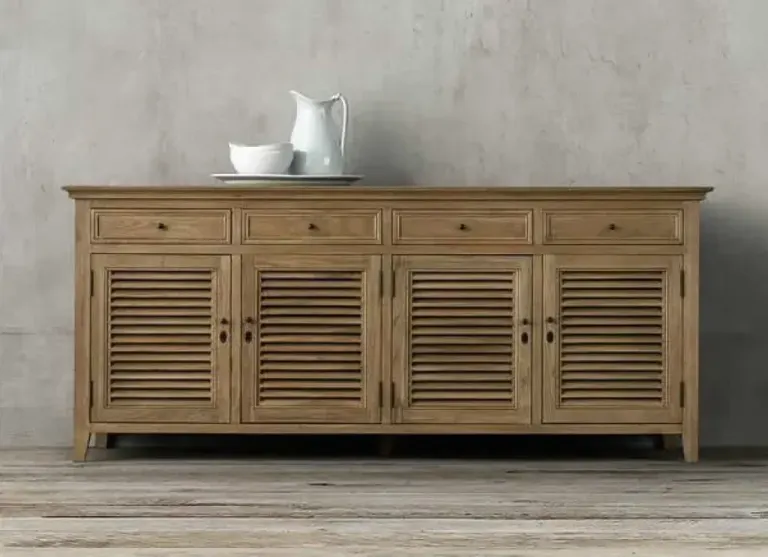
Because Turkey possesses abundant indigenous reserves of prized temperate hardwoods alongside centuries-old joinery traditions in hubs like Ankara (Siteler), İnegöl, Istanbul, and the Black Sea timber belt, Solid Wood Console Models – Import and Export, Turkey has become a premier global sourcing channel for authentic solid timber casegoods.
However, trading solid hardwood furniture across international borders introduces technical challenges that do not exist with engineered MDF or melamine boards. Solid timber is an anisotropic, hygroscopic living material that responds continuously to ambient relative humidity, faces strict international biosecurity and phytosanitary quarantine controls, requires specialized expansion-accommodating joinery, and falls under rigorous forestry legality mandates. This authoritative technical manual examines every facet of Solid Wood Console Models – Import and Export, Turkey—from Anatolian botanical timber grading and kiln-drying thermodynamics to expansion-slot engineering, ISPM-15 / phytosanitary quarantine protocols, EUDR geolocation compliance, and high-value export logistics.
1. Botanical Taxonomy and Mechanical Grading of Turkish Export Hardwoods
Understanding Solid Wood Console Models – Import and Export, Turkey begins in the forest and sawmill. Unlike composite panels with uniform isotropic density, every solid hardwood species exhibits distinct radial and tangential shrinkage ratios, Janka hardness ratings, interlocked vs. straight grain behavior, and natural extractive chemistry.
Premier Solid Hardwood Species Utilized in Turkish Export Consoles
Timber Species Botanical Name Primary Turkish Harvest Region Janka Hardness (lbf) Tangential / Radial Shrinkage Ratio Aesthetic & Structural Role in Solid Wood Consoles
Anatolian Walnut Juglans regia Kahramanmaraş, Bitlis, Hakkari, Black Sea valleys 1,010 – 1,220 7.8% / 5.5% (Low T/R ratio: 1.41 – exceptionally stable) Flagship luxury live-edge slabs, sculpted monolithic tops, carved baroque/neoclassical aprons
Oriental Steamed Beech Fagus orientalis Western & Central Black Sea (Bolu, Düzce, Bartın, Sinop) 1,300 – 1,450 11.8% / 5.8% (High movement; requires steaming & strict EMC) Structural underframes, turned tapered legs, mortise-and-tenon rails, steam-bent curved silhouettes
Anatolian Sessile Oak Quercus petraea Thrace (Istranca Mountains), Bolu, Kastamonu 1,290 – 1,360 10.6% / 5.4% (High strength & tannin durability) Heavy architectural plank tops, wire-brushed/cerused contemporary consoles, fluted solid tambour doors
European / Turkish Ash Fraxinus excelsior Marmara & Black Sea coastal forests 1,320 – 1,480 7.8% / 4.6% (Superior elasticity & shock resistance) Minimalist Scandinavian/Japandi consoles, ebonized open-grain finishes, cantilevered leg frames
Black Sea Sweet Chestnut Castanea sativa Eastern Black Sea (Artvin, Rize, Trabzon, Giresun) 750 – 850 6.7% / 3.4% (Exceptionally low shrinkage & high rot resistance) Rustic Mediterranean consoles, reclaimed-look weathered finishes, lightweight solid carcasses
Mediterranean Olive Wood Olea europaea Aegean & Mediterranean groves (pruned/salvaged trees) 2,700+ 8.5% / 5.2% (Extreme density; dramatic swirling grain) Boutique statement console tops, artisanal epoxy-inlaid river slabs, ultra-luxury collector editions
FAS (First and Seconds) Lumber Grading Standards
In Solid Wood Console Models – Import and Export, Turkey, export-grade manufacturers reject low-grade knotty construction lumber in favor of FAS (First and Seconds) and Select hardwood grades:
• Minimum Clear Cuttings: At least 83.3% (10/12ths) of the board surface must yield clear, defect-free face cuttings free from pith, sapwood streaks (unless specifically requested for live-edge contrast), bark pockets, wane, or radial shake checks.
• Sapwood Steaming & Color Equalization: For Anatolian Walnut and Oriental Beech, Turkish sawmills execute controlled low-pressure steam-conditioning chambers prior to kiln drying. Steaming migrates natural heartwood pigments into pale outer sapwood zones, yielding rich, uniform chocolate-brown (walnut) or warm pinkish-amber (beech) coloration across wide multi-stave solid tabletops.
2. Thermodynamic Kiln-Drying and Hygroscopic Stabilization
The single greatest technical risk in Solid Wood Console Models – Import and Export, Turkey is dimensional movement caused by seasonal and geographic shifts in Relative Humidity (RH). A solid oak console top measuring 45 cm wide crafted from timber dried to 14% moisture content in humid northern Turkey will shrink by nearly 9 to 11 mm across its width when placed inside a centrally heated winter apartment in New York, Berlin, or Riyadh (where indoor RH drops below 25%), causing catastrophic panel splitting and miter joint rupture.
Multi-Stage Vacuum and Conventional Kiln Calibration
Leading solid wood exporters in Turkey operate computerized conventional hot-air kilns alongside high-frequency vacuum kilns (specifically used for thick 50mm to 80mm live-edge walnut slabs):
1. Moisture Equalization & Stress Relief: Computerized probes inserted deep into the thickest timber core track internal moisture gradients. At the end of the drying cycle, high-temperature steam conditioning relieves case-hardening stresses so planks remain dead-flat when ripped and planed.
2. Destination-Specific Equilibrium Moisture Content (EMC) Targeting:
• North America & Central/Northern Europe: Kiln-dried strictly to 7.5% – 8.5% EMC.
• Middle East / GCC Arid Climates (Saudi Arabia, UAE, Qatar): Kiln-dried strictly to 6.0% – 7.0% EMC.
• Mediterranean & UK Maritime Climates: Kiln-dried strictly to 8.5% – 9.5% EMC.
3. Acclimatization Resting Period: After exiting the kiln, timber stacks rest for a minimum of 14 days inside climate-controlled factory conditioning halls maintained at 20°C and 40%–45% RH prior to CNC milling.
3. Structural Joinery Engineering for Solid Wood Movement
Unlike engineered MDF panels—which remain dimensionally static—solid hardwood console tops expand and contract across their grain width throughout every year. Competent engineering in Solid Wood Console Models – Import and Export, Turkey never traps a wide solid wood tabletop with rigid screws or cross-grain glue joints. Instead, Turkish master joiners deploy time-tested mechanical expansion systems:
Five Essential Solid Wood Engineering Techniques
1. Narrow-Stave Alternating Growth-Ring Glue-Ups:
• Wide solid console tops (35 cm to 50 cm deep) are milled from narrow kiln-dried staves (65 mm to 95 mm wide) with alternating bark-side / heart-side growth rings bonded with waterproof D4-rated PVAc or Polyurethane (PUR) adhesives. Alternating ring orientation neutralizes cupping forces across the panel width.
2. Elongated Expansion Slots & Figure-8 Tabletop Fasteners:
• Solid wood tops are anchored to underlying apron frames using slotted steel Z-clips, figure-8 desktop fasteners, or oversized slotted screw pockets oriented perpendicular to the grain—allowing the tabletop to float smoothly by ±6 mm during seasonal humidity swings without cracking.
3. Sliding Dovetail Battens & Breadboard Ends:
• For ultra-long architectural console planks (200 cm to 300 cm spans), Turkish craftsmen machine tapered sliding dovetail battens across the underside or fit traditional mortised breadboard ends pinned with elongated outer drawbore dowel holes—keeping the slab flat while permitting unrestricted lateral expansion.
4. Haunched Mortise-and-Tenon Frame Joinery:
• Leg-to-apron junctions utilize deep CNC-cut haunched mortise-and-tenon joints reinforced with internal corner blocks, providing superior racking resistance during transcontinental shipping.
5. Butterfly (Bowtie) Keys for Live-Edge Slabs:
• Natural heartwood checks or drying splits in single-slab Anatolian Walnut consoles are structurally stabilized using inlaid contrasting hardwood butterfly (dutchman) keys (e.g., Ebony or Maple inlaid into Walnut), turning natural timber character into permanent mechanical reinforcement.
4. Phytosanitary Quarantine, Fumigation, and Biosecurity Regulations
Because Solid Wood Console Models – Import and Export, Turkey involves genuine natural timber rather than heat-pressed reconstituted fibers, shipments face strict agricultural biosecurity scrutiny at destination customs ports (such as US Customs and Border Protection / USDA APHIS, EU Phytosanitary Border Control Posts, Australian DAFF, and GCC agricultural authorities).
Mandatory Biosecurity and Wood-Boring Pest Controls
• Kiln-Drying Sterilization (KD 56°C / 30 Min): Properly kiln-dried hardwood furniture heated to a core temperature exceeding 56°C for at least 30 minutes is biologically sterile against wood-boring beetles (Lyctus powderpost beetles, Anoplophora longhorned beetles) and fungal pathogens. Turkish exporters must include an official Kiln-Drying & Heat-Treatment Declaration on company letterhead signed by the plant’s wood technology engineer.
• Bark-Free Requirement: International quarantine inspectors strictly reject any live-edge solid wood console retaining remnants of raw outer bark (cambium layer), as bark harbors quarantine pests. Live edges must be mechanically debarked, wire-brushed, sanded smooth, and sealed prior to export.
• Phytosanitary Certificate (Bitki Sağlık Sertifikası): For unfinished solid wood consoles, raw slab exports, or shipments entering high-biosecurity jurisdictions (such as Australia, New Zealand, Chile, or specific GCC ports), the Turkish exporter obtains an official Phytosanitary Certificate issued by the Provincial Directorate of the Republic of Turkey Ministry of Agriculture and Forestry (Tarım ve Orman Bakanlığı) following pre-shipment inspection.
• ISPM-15 Certified Crating & Pallets: All solid wood shipping crates, skids, and dunnage enclosing luxury solid wood consoles must bear legible IPPC ISPM-15 Heat Treatment (HT) stamps on at least two opposite faces.
5. Customs Classification, CITES, and EUDR Legal Compliance
Navigating international customs nomenclature and forestry conservation laws is critical for uninterrupted clearance in Solid Wood Console Models – Import and Export, Turkey.
HS Tariff Classification and Duty Optimization
• Primary HS Code: 9403.60.10.00.00 (Other wooden furniture of a kind used in dining rooms and living rooms) or 9403.60.90.00.00 (Other wooden furniture – entryway/hallway consoles).
• Preferential Duty Status:
• European Union: 0% Customs Duty under the EU-Turkey Customs Union when accompanied by a validated A.TR Movement Certificate.
• United Kingdom: 0% Customs Duty under the UK-Turkey Free Trade Agreement with a valid Origin Declaration.
• United States: 0% MFN Customs Duty (exempt from Section 301 China punitive tariffs and AD/CVD furniture duties), subject to mandatory US Lacey Act PPQ Form 505 filing declaring exact botanical genus and species (e.g., Juglans regia, Country of Harvest: Turkey).
CITES (Convention on International Trade in Endangered Species) Verification
While native Turkish hardwoods (Juglans regia, Quercus petraea, Fagus orientalis, Fraxinus excelsior, Castanea sativa) are not CITES-listed, importers ordering bespoke Turkish consoles incorporating exotic imported inlays—such as Brazilian Rosewood (Dalbergia nigra – Appendix I), Bubinga, or certain Mahogany species (Swietenia)—must secure valid CITES Export and Import Permits prior to shipping to prevent permanent customs seizure.
EUDR (Regulation (EU) 2023/1115) Forest Plot Traceability
Under the European Union Deforestation Regulation, every solid wood console exported from Turkey to the EU must be backed by:
1. WGS 84 Polygon Geolocation Coordinates of the exact Turkish State Forestry (OGM) harvest compartment where the logs were felled.
2. Official OGM Transport Permits (Nakliye Tezkeresi) proving legal timber auction purchase after December 31, 2020.
3. Zero-Mixing Batch Segregation: Ensuring traceable Anatolian timber is never commingled with unverified third-country logs in the sawmill or rough mill.
6. Artisanal Surface Finishing for Solid Hardwoods
Unlike flat veneered MDF panels that rely on high-build plastic-like roller coatings, Solid Wood Console Models – Import and Export, Turkey celebrates the tactile warmth, natural chatoyancy, and open wood pores of solid timber. Turkish finishing masters utilize specialized breathable and high-durability coating systems:
• Open-Pore Matte Acrylic-Polyurethane (5–10 Gloss Units): Preserves the raw, unvarnished tactile feel of wire-brushed Anatolian Oak or Ash while providing invisible waterproof and stain-proof protection against coffee, wine, and cosmetics.
• Penetrating Plant-Based Hardwax Oils (Rubio Monocoat / Osmo / Tier-1 Turkish Bio-Oils): Bonds molecularly with top-layer cellulose fibers in solid Anatolian Walnut and Olive Wood, enriching natural grain contrast with zero film thickness and enabling effortless spot-repair by end consumers.
• Traditional Hand-Rubbed Shellac & Patina Glazing (Siteler Ankara Specialty): Multi-step antiquing glazes, aniline dye toning, and hand-rubbed satin varnishes applied to hand-carved neoclassical solid beech and walnut consoles for luxury residences and diplomatic interiors.
• 6-Side Balanced Sealing Protocol: Every solid wood console component—including undersides of tabletops, interior drawer bottoms, and hidden mortise cheeks—must receive equal primer and topcoat film thickness so moisture absorption occurs uniformly across all surfaces, preventing seasonal cupping.
7. Heavy-Duty Export Crating and Climate-Controlled Logistics
Solid wood consoles weigh significantly more than hollow-core or veneered MDF alternatives—often ranging from 45 kg to over 110 kg per piece for thick live-edge walnut slabs or carved solid oak credenzas. In Solid Wood Console Models – Import and Export, Turkey, standard cardboard cartons alone are insufficient for high-value solid wood pieces.
Engineered Export Packaging Standards for Solid Wood Consoles
1. ISPM-15 Fumigated Plywood / Hardwood Skeleton Crates: Heavy single-piece solid wood consoles are bolted onto reinforced wooden skid bases and enclosed within custom 12mm exterior-grade plywood crates lined with 30mm closed-cell EPE foam slabs, preventing forklift puncture and top-load crushing.
2. Vapor-Barrier Foil & Desiccant Protection: Solid wood consoles are wrapped in breathable non-woven spunbond fabric followed by a sealed aluminized vapor-barrier bag containing silica gel desiccant packs—isolating the kiln-dried wood from dramatic ocean humidity fluctuations during 20-day sea voyages.
3. ShockWatch & TiltWatch Impact Indicators: Affixed to exterior export crates for high-value luxury gallery and hospitality shipments to enforce careful carrier handling and establish indisputable liability evidence during transit.
8. B2B Procurement Checklist for Solid Wood Console Importers
Before finalizing a contract in Solid Wood Console Models – Import and Export, Turkey, verify these eight technical clauses in your Purchase Order:
• Botanical Species & Grade Clause: Specify exact Latin binomial name (e.g., Juglans regia – FAS Grade, minimum 85% clear heartwood, zero live bark).
• EMC Tolerance Guarantee: Mandate 8.0% ± 0.5% moisture content (or 6.5% for GCC) verified via pin-meter testing during third-party Pre-Shipment Inspection.
• Expansion Joinery Detail: Require CAD confirmation of elongated screw slots, figure-8 clips, or sliding dovetails attaching solid tops to base frames.
• 6-Side Finish Sealing: Confirm equal coat application on unseen bottom surfaces to guarantee dimensional stability.
• Lacey Act & EUDR Data Package: Require harvest geolocation coordinates, OGM Nakliye Tezkeresi permits, and scientific species breakdown prior to final balance payment.
• ISPM-15 & Phytosanitary Documentation: Verify valid IPPC heat-treatment stamps on all wooden crating and phytosanitary certificates where required.
• Spare Touch-Up & Repair Kit: Include color-matched hardwax oil / stain touch-up pens and care instructions for end-client maintenance.
• Institute Cargo Clauses (A) Insurance: Insure full 110% CIF value under "All Risks" marine coverage including pair-and-set protection.