Mastering the Craft and Commerce: Production, Import, and Export of Distressed Solid Wood TV Units in Turkey
The global furniture industry has undergone a profound aesthetic and structural transformation over the past decade, pivoting away from disposable, flat-pack particleboard toward tactile, enduring, and sustainably sourced natural materials. At the epicenter of this movement sits a rapidly expanding manufacturing powerhouse:
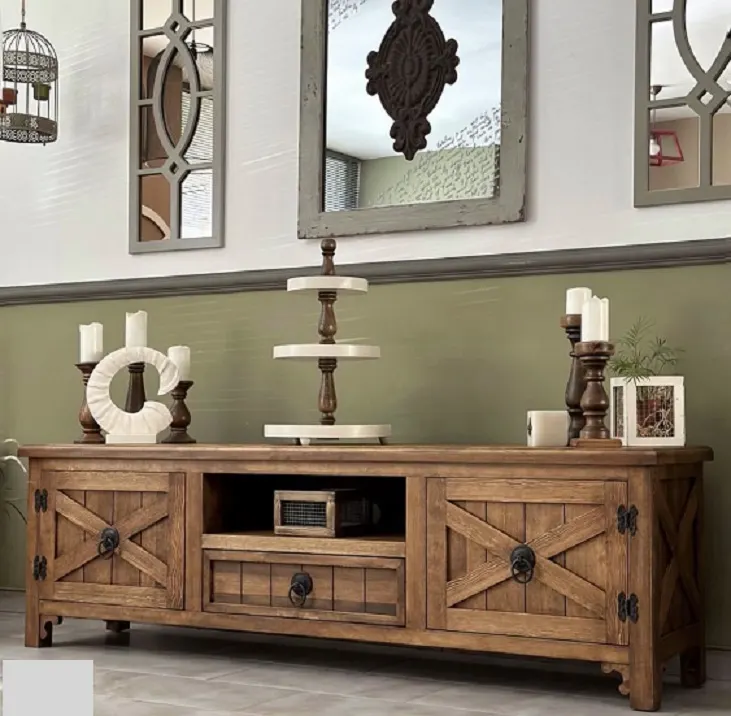
the production, import, and export of distressed solid wood TV units in Turkey. Combining centuries-old Anatolian woodworking heritage with modern European CNC automation, Turkey has positioned itself as a premier sourcing hub for interior designers, hospitality procurement specialists, and B2B furniture retailers across North America, Europe, and the Middle East.
Understanding the full lifecycle of these artisanal yet industrially scalable pieces requires an exhaustive look into timber metallurgy, kiln-drying thermodynamics, mechanical and chemical distressing techniques, customs harmonizations, and international freight logistics. Whether you are a procurement director evaluating Turkish OEM manufacturers, an importer navigating European Union Deforestation Regulation (EUDR) compliance, or a domestic producer scaling operations for global export, mastering the production, import, and export of distressed solid wood TV units in Turkey is essential for capturing market share in the high-margin luxury and rustic-modern furniture sectors.
1. The Macroeconomic Landscape of the Turkish Furniture Sector
Turkey’s furniture manufacturing sector is no longer a regional workshop economy; it is a highly organized, export-driven industrial ecosystem. Ranked consistently among the top ten furniture exporters globally, Turkey leverages its strategic geopolitical location at the crossroads of Europe, Asia, and the Middle East to offer unmatched lead times and competitive landed costs.
Key Manufacturing Hubs in Turkey
The production, import, and export of distressed solid wood TV units in Turkey is concentrated in several specialized industrial clusters, each possessing distinct infrastructural advantages:
• İnegöl (Bursa): Widely recognized as the furniture capital of Turkey, İnegöl accounts for a massive percentage of the nation's total furniture output. While historically known for upholstered goods and modern panel furniture, İnegöl hosts an elite tier of solid wood ateliers and large-scale factories equipped with Italian and German woodworking machinery.
• Kayseri: Located in Central Anatolia, Kayseri is the powerhouse of mass-production furniture and flat-pack engineering. In recent years, Kayseri manufacturers have heavily invested in solid-wood hybrid lines, combining sturdy kiln-dried timber frames with distressed solid wood veneers and forged iron accents for high-volume export.
• Ankara (Siteler): Siteler represents the artisanal heart of Turkish bespoke woodworking. Home to thousands of master craftsmen (ustalar), Siteler specializes in custom, hand-distressed solid oak, walnut, and chestnut media consoles tailored for boutique retailers and luxury hotel projects.
• İstanbul (Masko & Modoko ecosystems): Serving primarily as the commercial, design, and export management nerve center, İstanbul connects high-capacity factories in the Marmara and Black Sea regions with international buyers, offering sophisticated showrooms, R&D design studios, and consolidated container port access via Ambarlı and Haydarpaşa.
• İzmir & Aegean Region: Leveraging proximity to major container ports (Alsancak and Aliağa), İzmir-based manufacturers focus heavily on Mediterranean, coastal, and reclaimed-style distressed solid wood TV units destined for Western European and North American markets.
Why Distressed Solid Wood TV Units?
In modern residential architecture, the living room media console serves as the visual anchor of the home. Unlike dining tables or bed frames, a TV unit must balance heavy structural load-bearing capacity (supporting large-format OLED screens, soundbars, and AV receivers) with intricate cable management, thermal ventilation, and aesthetic warmth. Distressed solid wood—characterized by intentional saw marks, wormholes, chamfered edges, wire-brushed grain, and multi-layered patinas—offers a distinct commercial advantage: it masks everyday wear and tear while delivering an authentic, heirloom-grade aesthetic that mass-produced melamine cannot replicate.
2. Timber Sourcing and Raw Material Import Dynamics
A critical paradox in the production, import, and export of distressed solid wood TV units in Turkey lies in raw material supply. While Turkey possesses vast forestry resources managed by the General Directorate of Forestry (Orman Genel Müdürlüğü - OGM), domestic timber yields are heavily regulated to prevent deforestation and preserve ecological balance. Consequently, Turkish manufacturers rely on a strategic dual-sourcing model: combining domestic hardwoods with high-grade imported lumber.
Domestic Turkish Timber Species
1. Anatolian Chestnut (Castanea sativa): Harvested primarily from the Black Sea region (Kastamonu, Sinop, Bartın, and Bolu), Turkish chestnut is prized for its rich tannin content, natural rot resistance, and pronounced, coarse grain. When wire-brushed and distressed, chestnut reveals deep valleys and ridges that hold dark glazing stains exceptionally well.
2. Turkish Oak (Quercus robur & Quercus petraea): Grown across Thrace and the Marmara region, domestic oak provides high density (approx. 700–750 kg/m³) and exceptional structural rigidity, making it ideal for wide-span TV units exceeding 220 cm in length without central sagging.
3. Steamed Beech (Fagus orientalis): Abundant in northern Turkey, beech is a fine-grained, hard timber. While naturally uniform, skilled Turkish finishers use chemical fuming and mechanical denting to transform steamed beech into convincing rustic or antique-style media consoles at a competitive price point.
4. Turkish Walnut (Juglans regia): Although more expensive and reserved for high-end luxury lines, domestic walnut offers unmatched chocolate-brown hues and figure variations that require minimal artificial staining.
Imported Timber Species and Supply Chains
To meet the sheer volume required for global export—and to satisfy specific international buyer specifications—Turkish factories import substantial quantities of rough-sawn lumber and logs. Understanding the import side of the production, import, and export of distressed solid wood TV units in Turkey is vital for calculating Bill of Materials (BOM) costs.
• American White Oak & Red Oak: Imported heavily via Mersin and İstanbul ports from the United States (Appalachian region). American White Oak is the gold standard for North American buyers seeking heavy cerused, distressed, or reclaimed-look TV units.
• European Oak & Ash: Sourced from Ukraine, Romania, Croatia, and France. European oak offers tighter growth rings and a slightly more rustic knot structure compared to its North American counterpart, making it ideal for authentic "distressed" aesthetics where natural knots and checks are celebrated rather than discarded.
• Siberian Larch & Scandinavian Pine: Imported from Russia and Northern Europe for budget-friendly, farmhouse-style distressed media units. Softwoods take mechanical distressing (chains, hammers, rasps) effortlessly, allowing rapid production cycles.
• Exotic Hardwoods (Iroko, Teak, Acacia): Imported from West Africa and Southeast Asia for coastal, tropical, or high-moisture indoor/outdoor entertainment units.
Import Regulations, Phytosanitary Standards, and Customs Duties
Importing raw timber into Turkey requires strict adherence to agricultural and customs protocols:
• Phytosanitary Certificates: All imported logs and sawn lumber must be accompanied by an official Phytosanitary Certificate issued by the exporting country’s agricultural authority, certifying freedom from quarantine pests (such as the pine wood nematode or emerald ash borer).
• ISPM 15 Compliance: Any wood packaging material used during raw timber transit must bear the IPPC mark confirming heat treatment (HT) or methyl bromide fumigation.
• GTİP (HS Code) Classification: Raw sawn wood typically falls under HS Code 4407 (Wood sawn or chipped lengthwise, sliced or peeled, whether or not planed, sanded or end-jointed, of a thickness exceeding 6 mm).
• Inward Processing Regime (Dahilde İşleme Rejimi - DİR): One of the most powerful financial instruments available to Turkish exporters is the DİR system. Under DİR, a Turkish furniture manufacturer can import American White Oak or European Ash exempt from customs duties and Value Added Tax (KDV), provided the timber is processed into finished distressed solid wood TV units and exported within a designated timeframe (typically 6 to 12 months). This policy drastically lowers working capital requirements and enhances Turkey's price competitiveness on the global stage.
3. Technical Engineering and Production Process of Distressed Solid Wood TV Units
Manufacturing a solid wood TV unit that can survive international ocean freight, fluctuating indoor relative humidity (RH), and decades of consumer use requires rigorous wood science and engineering discipline. The production, import, and export of distressed solid wood TV units in Turkey follows a multi-stage industrial workflow.
Stage 1: Kiln Drying and Moisture Content (MC) Equilibrium
Solid wood is hygroscopic; it absorbs and releases moisture until it reaches Equilibrium Moisture Content (EMC) with its surrounding environment. If a TV unit built in humid coastal Bursa (where ambient EMC might be 12–14%) is shipped to a centrally heated apartment in Chicago or Munich during winter (where indoor EMC drops to 6–8%), the wood will shrink, warp, split, and tear apart its joinery.
Leading Turkish manufacturers utilize computer-controlled, vacuum or conventional steam-heated drying kilns (such as Nardi or Mühlböck systems) to bring timber moisture content down to a precise target:
• For Export to North America & Northern/Central Europe: Target MC is 7% to 9%.
• For Export to Middle East & Mediterranean Climates: Target MC is 9% to 11%.
• Conditioning & Stress Relief: After drying, timber undergoes a conditioning phase in the kiln to equalize core-to-shell moisture gradients and relieve case-hardening stresses, ensuring boards remain flat when ripped and planed.
Stage 2: Lumber Grading, Ripping, and Stave Preparation
For a distressed TV unit, lumber selection differs radically from traditional fine furniture. While conventional manufacturers pay premiums for "FAS" (First and Seconds) clear wood free of knots, distressed furniture makers intentionally purchase #1 Common, #2 Common, or Rustic Grade timber. Natural character marks—tight sound knots, mineral streaks, heartwood-sapwood color variations, and small pith checks—are desirable assets that authenticate the distressed look.
Boards are ripped into narrow staves (typically 45 mm to 90 mm wide) using multi-blade gang rip saws. Why narrow staves? Wide solid wood boards are far more prone to cupping across the grain. By laminating narrower staves together with alternating growth ring orientations (bark-side up, bark-side down), Turkish engineers neutralize internal wood movement, creating an ultra-stable solid wood panel.
Stage 3: Finger-Jointing vs. Full-Length Stave Lamination
Depending on the price tier and aesthetic target, manufacturers choose between two lamination methods:
• Full-Length Stave (Solid Plank) Lamination: Continuous staves run the entire length of the TV unit top (e.g., 180 cm or 240 cm). This yields a seamless, high-end solid plank appearance preferred by luxury buyers.
• Finger-Jointed Solid Wood: Shorter off-cuts are precision-milled with interlocking fingers and glued end-to-end before edge-gluing into panels. While structurally stronger than single pieces and highly sustainable (minimizing timber waste), finger-joints must be carefully concealed beneath opaque or heavily glazed distressed finishes if the buyer desires an authentic antique plank look.
• Adhesive Standards: Export-grade Turkish factories utilize EN 204 D3 or D4 rated Polyvinyl Acetate (PVA) or Polyurethane (PUR) adhesives, ensuring glue lines remain waterproof, heat-resistant, and invisible under dark stains.
Stage 4: Structural Engineering for Media Consoles
A TV unit is a specialized piece of casegoods engineering. During the production, import, and export of distressed solid wood TV units in Turkey, engineers incorporate specific functional features:
• Span Deflection Prevention: A 200 cm solid oak top supporting a 45 kg television and heavy audio gear will sag over time unless properly reinforced. Manufacturers integrate hidden steel C-channels routed into the underside of the top panel, or design thick solid wood aprons (minimum 60 mm height) and central vertical dividers.
• Breadboard Ends & Figure-8 Fasteners: Solid wood tops expand and contract across their width (perpendicular to the grain) by up to 3–5 mm over a 45 cm depth. Fixing a solid wood top rigidly to a metal or cross-grain wood base will cause the top to crack. Turkish craftsmen attach tops using elongated slotted screw holes, Z-clips, or traditional mortise-and-tenon breadboard ends pinned only at the center, allowing the wood to "breathe" seasonally.
• Thermal Dissipation & Cable Management: Modern AV equipment generates substantial heat. Export-ready units feature CNC-routed ventilation slots in the bottom and back panels, recessed backboards (inset by 20–30 mm to accommodate wall outlets and bulky HDMI plugs), and integrated solid wood or brass cable grommets.
• Hardware Integration: Soft-close undermount drawer slides (Blum, Hettich, or Turkish equivalents like Samet) and concealed European cup hinges are precision-bored via 5-axis CNC machining centers, merging rustic exteriors with modern mechanical smoothness.
4. The Art and Science of Distressing Techniques
What separates an amateur, artificially battered piece of wood from an authentic, high-value distressed solid wood TV unit is the layering of textures and chemical reactions. In the production, import, and export of distressed solid wood TV units in Turkey, manufacturers employ a hybrid approach combining automated mechanical tooling with hand-applied artisanal artistry.
Mechanical Distressing Methods
1. Wire Brushing (Texturing): Panels are passed through automated brushing machines equipped with rotating Tynex (abrasive nylon) or steel wire rollers. The bristles abrade the softer earlywood (spring growth) while leaving the harder latewood (summer growth) raised. This creates a deeply tactile, three-dimensional wood grain that feels aged by decades of wind and wear.
2. Skip-Planing and Rough-Sawn Milling: To replicate 19th-century barn wood or hand-hewn beams, planer knives are set slightly unevenly, or band-saw blades with irregular tooth sets are grazed across the timber surface. This leaves authentic perpendicular kerf marks and subtle thickness variations.
3. Edge Chamfering and Rasping: Sharp 90-degree edges instantly betray newly machined furniture. Artisans use drawknives, spoke shaves, and coarse wood rasps to heavily soften, round over, and irregularly notch all exposed corners, drawer fronts, and tabletop edges.
4. Simulated Wormholes and Buckshot: Using specialized awls, pneumatic pin-nailers, or multi-needle rollers, craftsmen create clustered pinhole patterns mimicking Anobium punctatum (woodworm) tunnels. Crucially, authentic distressing places these holes in irregular, organic clusters near knots and sapwood—never in uniform, repetitive grids.
5. Denting, Gouging, and Burnishing: Heavy chains, custom-forged iron hammers, and ball bearings are struck against the surface at varying angles. Afterward, the panels are lightly orbital-sanded (120–150 grit) so that the sharp edges of the dents are smoothed over, mimicking decades of gentle polishing and human touch.
Chemical and Multi-Step Finishing Systems
Once physical distressing is complete, the finishing department transforms raw timber into an heirloom artifact:
1. Tannin Staining and Fuming: For high-tannin woods like Turkish chestnut and oak, craftsmen apply iron acetate solutions (iron dissolved in acetic acid) or expose the wood to ammonia vapor in sealed chambers. This reacts chemically with the wood’s natural tannins, aging the timber from within to deep grays, weathered browns, or rich ebonized tones without obscuring the grain.
2. Base Barrier Stain & NGR (Non-Grain Raising) Dyes: A penetrating dye stain establishes the underlying color tone.
3. Glazing and Hang-Up: A thicker, pigmented glaze (often raw umber, Van Dyke brown, or charcoal black) is sprayed over the entire piece and then hand-wiped away with lint-free rags. The glaze remains trapped ("hung up") inside the wire-brushed grain valleys, wormholes, saw kerfs, and corners, creating dramatic depth and antique patina.
4. Cerusing (Liming): Extremely popular in contemporary coastal and modern-organic TV units, cerusing involves applying a white or light-gray pigmented paste into the open pores of wire-brushed oak or ash, wiping the surface clean, and sealing it so the white grain pops against a darker wood background.
5. Distressed Paint & Rub-Through (Shabby Chic / Farmhouse): For painted solid wood media units, a dark base coat is applied, followed by a contrasting topcoat (such as antique white, sage green, or navy). Artisans then hand-sand high-wear areas—drawer pulls, edges, and kickplates—to reveal the underlying dark coat and raw wood.
6. Protective Topcoats (VOC Compliant): To ensure durability against spills, scratches, and UV yellowing, Turkish factories apply two-component polyurethane (2K PU), conversion varnish, or zero-VOC natural hardwax oils (such as Rubio Monocoat or Osmo). For European and Californian markets, coatings strictly comply with REACH and CARB Phase 2 / TSCA Title VI formaldehyde and VOC emission limits.
5. Navigating Global Export Standards, Compliance, and Sustainability
Successfully scaling the production, import, and export of distressed solid wood TV units in Turkey requires strict adherence to international environmental laws, product safety standards, and customs protocols. International retail chains and hospitality groups will immediately disqualify suppliers who cannot provide verifiable compliance documentation.
EUDR (European Union Deforestation Regulation)
The EU Deforestation Regulation (Regulation (EU) 2023/1115) represents the single most consequential regulatory shift for Turkish wood furniture exporters. Because the EU is Turkey’s largest export destination (accounting for over 35–40% of total furniture exports), compliance is mandatory:
• Geolocation Traceability: Exporters placing solid wood TV units on the EU market must prove that the timber was harvested from land that has not been subject to deforestation or forest degradation after December 31, 2020.
• Due Diligence Statements (DDS): Turkish manufacturers must collect exact polygon geolocation coordinates of the forestry plots where the domestic chestnut/oak or imported American/European lumber was harvested, linking raw material batch numbers directly to finished export invoices.
FSC® and PEFC Chain-of-Custody Certification
Leading Turkish factories maintain FSC® (Forest Stewardship Council) and PEFC (Programme for the Endorsement of Forest Certification) Chain-of-Custody (CoC) certifications. When sourcing imported American oak or domestic OGM-managed timber, certified factories segregate certified lumber throughout milling, distressing, and finishing, allowing the final TV unit to carry an official FSC label—a critical requirement for major US and European retailers.
Structural Safety and Stability Standards
TV units carry inherent tip-over risks, particularly in households with young children. Exporters must engineer and test their products against:
• ASTM F2057 (USA - STURDY Act): Mandatory safety standard for clothing storage units, increasingly referenced by major US retailers for heavy media consoles as well. Includes mandatory inclusion of heavy-duty anti-tip restraint kits (steel braided cables and wall anchors) inside every carton.
• EN 14749 (Europe): European safety standard for domestic and kitchen storage units and worktops, testing structural strength, shelf load deflection, and stability under open-drawer/door conditions.
• ISTA 3A / ISTA 2A Packaging Testing: Drop, vibration, and compression testing conducted in accredited labs to guarantee that a 60 kg distressed solid wood TV unit survives parcel or LTL (Less-Than-Truckload) transit without corner crushing or finish abrasion.
6. Export Logistics, Packaging Engineering, and HS Codes
Shipping solid wood furniture across oceans is an exercise in volumetric optimization and damage prevention. A single damaged corner on a hand-distressed solid oak TV unit cannot simply be swapped out like a flat-pack particleboard panel; it often results in a total loss or costly local restoration claim.
Export Packaging Best Practices
1. Pre-Assembled (Setup) vs. Knock-Down (KD) Design: High-end distressed solid wood TV units are typically shipped fully assembled (setup) to preserve the integrity of mortise-and-tenon joinery and hand-applied glazes. However, legs or metal bases are often packed detached inside the cabinet interior to reduce cubic meter (CBM) volume by 15–25%.
2. Multi-Layer Protection Protocol:
• Layer 1: Non-abrasive PE foam wrap or micro-foam sheeting to prevent friction marks against the textured wood finish.
• Layer 2: High-density expanded polystyrene (EPS) or honeycomb cardboard edge and corner protectors (minimum 25 mm thickness).
• Layer 3: Double-wall or triple-wall kraft corrugated export carton (minimum 275–350 lbs bursting strength) reinforced with heavy-duty polypropylene strapping.
• Desiccants: Calcium chloride moisture-absorbing desiccant bags placed inside the carton and hung inside the shipping container to prevent "container rain" (condensation caused by temperature swings during sea transit) from causing wood swelling or mold growth.
Customs Classification and Export Documentation
When executing the production, import, and export of distressed solid wood TV units in Turkey, customs brokers utilize specific tariff codes and trade agreements:
• Primary HS Code (GTİP): 9403.60.10.00.00 — Other wooden furniture, of a kind used in dining rooms and living rooms. (TV units, sideboards, and media consoles fall squarely under 9403.60).
• ATR Movement Certificate (EU Exports): Under the EU-Turkey Customs Union, distressed solid wood TV units manufactured in Turkey qualify for 0% import duty into all European Union member states when accompanied by a validated A.TR Movement Certificate.
• EUR.1 Movement Certificate: Grants preferential duty-free or reduced-duty access to EFTA countries (Switzerland, Norway, Iceland, Liechtenstein), the UK (under the UK-Turkey Free Trade Agreement), and Balkan nations.
• Certificate of Origin (Menşe Şahadetnamesi): Required for exports to the United States, Canada, Gulf Cooperation Council (GCC) countries (UAE, Saudi Arabia, Qatar), and other non-FTA jurisdictions.
• Container Loading Optimization:
• A standard 40' High Cube (40' HC) container offers roughly 68–70 usable CBM. Depending on dimensions (e.g., an assembled 180x45x55 cm TV unit occupies ~0.55 CBM packed), a 40' HC container holds approximately 115 to 125 assembled TV units, maximizing freight efficiency per unit.
7. Quality Control (QC) Protocols for B2B Importers
International buyers sourcing from Turkey must implement a rigorous, multi-stage Quality Control checklist to avoid costly post-shipment disputes. Professional third-party inspection agencies (such as SGS, Bureau Veritas, Intertek, or specialized furniture QC teams in İnegöl and İstanbul) evaluate batches across four critical checkpoints:
1. Pre-Production Inspection (PPI)
• Verification of timber species (confirming 100% solid oak/chestnut rather than veneered MDF cores disguised with solid wood edge banding).
• Pin-type and pinless digital moisture meter readings across at least 20 random boards (verifying strict adherence to the 7–9% MC threshold).
• Approval of signed "Golden Samples" (physical control swatches showing exact wire-brush depth, wormhole density, stain tone, and sheen level).
2. During Production Inspection (DUPRO)
• Checking glue-line integrity and clamping pressure during stave lamination.
• Verifying joinery tolerances (dovetail drawers, mortise-and-tenon frames) and hardware alignment (soft-close slides operating smoothly without binding).
• Inspecting anti-warp steel channel installation on long spans.
3. Final Random Inspection (FRI - AQL Sampling)
Conducted when 100% of goods are produced and at least 80% are packed, typically following ANSI/ASQ Z1.4 (ISO 2859-1) sampling standards (Critical: 0, Major: 1.5, Minor: 4.0):
• Color & Finish Consistency: Placing units side-by-side under standardized D65 daylight lamps to ensure color harmony across a production batch—a crucial check because natural wood absorbs stains differently depending on grain density.
• Wobble & Flatness Test: Placing the TV unit on a calibrated granite or steel surface plate; diagonal corner wobble must not exceed 1.5 mm.
• Drop Test: Performing ISTA carton drop tests on packed units to verify internal corner foam resilience.
4. Container Loading Supervision (CLS)
• Inspecting the shipping container floor, walls, and roof for holes, water leaks, or residual odors prior to loading.
• Checking container floor moisture content (must be below 14%).
• Verifying heavy cartons are stacked at the bottom, desiccant packs are properly hung, and dunnage airbags are inflated to prevent load shifting at sea.
8. Comparative Analysis: Turkey vs. Competing Global Manufacturing Hubs
To understand why global procurement directors are increasingly shifting volume toward the production, import, and export of distressed solid wood TV units in Turkey, it is helpful to benchmark Turkey against other major solid wood furniture exporters.
Evaluation Metric Turkey (İnegöl / Kayseri / Ankara) Vietnam & Southeast Asia China Eastern Europe (Poland / Romania)
Transit Time to EU 4–8 days (Road/Intermodal) 28–38 days (Sea Freight) 30–42 days (Sea Freight) 1–3 days (Road)
Transit Time to US East Coast 16–22 days (Direct Sea) 32–40 days (Sea Freight) 30–38 days (Sea Freight) 14–20 days (Sea Freight)
Minimum Order Quantities (MOQs) Low to Medium (20–50 units/SKU) High (150–300+ units/SKU) High (100–300+ units/SKU) Medium (50–100 units/SKU)
Artisanal Distressing Skill Very High (Hand-carving & patina heritage) High (Strong in acacia/rubberwood) High (Highly automated) Moderate to High (Strong in European Oak)
Customization & Bespoke Agility Exceptional (Rapid prototyping in 2–3 weeks) Low (Rigid mass-production lines) Moderate Moderate
EU Customs Tariff 0% (via A.TR Certificate) 0% (via EVFTA, strict origin rules) Standard MFN Duties 0% (EU Single Market)
US Section 301 Tariffs Exempt (Standard MFN rates apply) Exempt Heavy (25% punitive tariffs) Exempt
The Strategic "Nearshoring" Advantage
Following global supply chain disruptions, high container freight volatility, and US Section 301 tariffs on Chinese furniture, Turkey has emerged as the premier nearshoring destination. A European retailer can order a mixed 40' HC container of distressed solid oak TV units from İnegöl, receive bespoke finishes tailored to seasonal trends, and have the goods on showroom floors within three weeks—locking in faster inventory turnover and dramatically lower working capital exposure compared to six-month Asian procurement cycles.
9. Digital Marketing, B2B Trade Shows, and Sourcing Channels
For international buyers looking to connect with vetted Turkish manufacturers—or for Turkish producers expanding their export footprint—several established B2B channels anchor the industry:
• Flagship Trade Fairs:
• İİFF (Istanbul Furniture Fair): Held annually in January across Tüyap and İstanbul Expo Center, İİFF is one of the largest furniture exhibitions in Europe and the Middle East, showcasing hundreds of solid wood and rustic-modern manufacturers.
• MODEF Expo (İnegöl): Held twice yearly in spring and autumn, MODEF brings international buyers directly to the factory doorsteps in İnegöl, allowing immediate factory audits alongside showroom viewings.
• Institutional Export Associations:
• MOSFED (Federation of Furniture Associations) and İMMİB (Istanbul Mineral and Metals Exporters' Association - Wood & Forestry Products division) provide verified exporter directories, trade delegation matchmaking, and legal arbitration support.
• B2B Sourcing Specifications (RFQ Best Practices):
When requesting quotes for the production, import, and export of distressed solid wood TV units in Turkey, buyers should always submit a comprehensive Technical Data Sheet (TDS) specifying:
1. Exact external and internal compartment dimensions (in millimeters).
2. Timber species and grade (e.g., 100% Solid American White Oak, Rustic Grade, 7–9% MC).
3. Back panel and drawer box construction (e.g., solid wood vs. oak-veneered birch plywood—never raw MDF).
4. Distressing level (Light, Medium, Heavy) with high-resolution macro reference photos.
5. Finish system, sheen level (e.g., 10-degree dead matte), and regulatory compliance (EUDR, FSC, TSCA Title VI).
6. Incoterms requested (EXW factory, FOB Gemlik/Ambarlı/Mersin, or DDP warehouse).
10. Future Outlook: Smart Integration and Circular Timber Economy
As the production, import, and export of distressed solid wood TV units in Turkey evolves toward the end of the decade, two major innovations are redefining product development:
1. Invisible Smart-Home Integration: Modern luxury buyers love the rugged, centuries-old appearance of distressed solid chestnut, yet demand seamless modern convenience. Forward-thinking Turkish manufacturers are routing hidden cavities beneath 35 mm solid wood tops to house Qi wireless charging transmitters, integrated LED ambient backlighting with concealed touch-capacitive sensors, and acoustically transparent slatted wood doors that allow soundbars and subwoofers to operate behind closed doors without signal attenuation.
2. Reclaimed and Upcycled Timber Traceability: Driven by circular economy mandates in Europe, Turkish ateliers are increasingly sourcing genuinely reclaimed oak and pine timbers from demolished historic Anatolian barns, railway sleepers, and aging olive-press beams. By pairing certified reclaimed lumber with modern kiln sterilization and CNC precision joinery, Turkish exporters command premium wholesale margins while offering authentic sustainability narratives that resonate deeply with eco-conscious consumers.
Frequently Asked Questions (FAQ)
What is the standard lead time for exporting distressed solid wood TV units from Turkey?
For standard B2B orders (one to two 40' HC containers), production lead times typically range from 30 to 45 days after deposit receipt and Golden Sample approval. Sea transit takes approximately 10–14 days to Western European ports (Rotterdam, Hamburg, Felixstowe) and 16–22 days to US East Coast ports (New York, Savannah).
How do Turkish manufacturers prevent solid wood TV units from cracking in dry climates?
Reputable Turkish factories kiln-dry all timber to an Equilibrium Moisture Content of 7% to 9%, laminate narrow staves with alternating growth rings, integrate hidden steel C-channels underneath long tops, and attach tabletops using slotted fasteners that allow natural seasonal wood expansion and contraction without splitting.
Are Turkish distressed solid wood TV units subject to US anti-dumping duties?
No. While wooden bedroom furniture from China is subject to heavy anti-dumping duties and Section 301 tariffs in the United States, living room furniture (HS Code 9403.60) manufactured in Turkey enters the US under standard Most Favored Nation (MFN) tariff rates, which are currently 0% (duty-free) for wooden living room furniture.
What is the difference between solid wood and solid wood veneer in Turkish export specs?
"100% Solid Wood" means all structural components—tops, sides, legs, and drawer fronts—are milled from solid timber staves. "Solid Wood Hybrid" typically pairs solid wood tops, legs, and frames with solid-oak-veneered marine-grade birch plywood for side panels and drawer bottoms, which reduces weight, prevents seasonal panel movement, and lowers landed costs while maintaining high durability.