Industry 4.0 Automation, Mechanical Durability Testing, and Third-Party Quality Assurance in Turkish Solid Wood Hotel Furniture Manufacturing: Engineering Zero-Defect Bed Frames, Wardrobes,
For global hotel chains, institutional REITs, and international FF&E (Furniture, Fixtures, and Equipment) procurement directors, consistency across scale is the ultimate benchmark of manufacturing excellence. Fabricating a single bespoke walnut dresser in an artisanal workshop is one discipline; producing 450 identical solid oak bed frames, 450 acoustically damped wardrobes, and 900 dovetailed nightstands with ±0.3mm dimensional repeatability—and shipping them zero-defect across international borders—requires advanced industrial engineering. Mastering Industry 4.0 automation, mechanical durability testing, and third-party quality assurance in Turkish solid wood hotel furniture manufacturing is how Tier-1 export facilities in İnegöl (Bursa), Kayseri, Ankara, and Istanbul guarantee commercial reliability at scale.
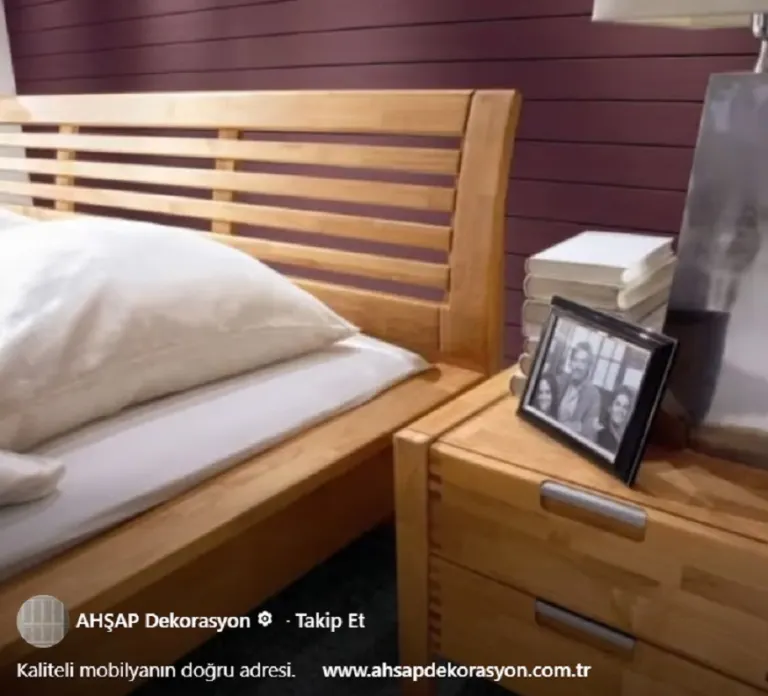
When foreign buyers audit Industry 4.0 automation, mechanical durability testing, and third-party quality assurance in Turkish solid wood hotel furniture manufacturing, they encounter fully digitized shop floors where 5-axis CNC nesting centers, reciprocating spray robots, barcode-driven MES (Manufacturing Execution Systems), and in-house mechanical fatigue laboratories operate under strict ISO 9001 and ANSI/ASQ Z1.4 inspection protocols. This technological convergence eliminates human cutting errors, prevents finish batch variations, and ensures every commercial piece passes international structural and anti-tip safety laws before container doors are sealed.
This deep-dive engineering guide dissects the digital machinery architecture, laboratory destructive/non-destructive testing protocols, and third-party Pre-Shipment Inspection (PSI) checklists governing Turkey’s export-grade solid wood hospitality furniture sector.
1. Industry 4.0 Shop-Floor Automation in Turkish Contract Casegoods Plants
Over the last decade, Turkey’s leading contract furniture exporters have invested hundreds of millions of euros into European woodworking machinery (including Biesse, SCM, Homag, and Cefla automated lines). Understanding Industry 4.0 automation, mechanical durability testing, and third-party quality assurance in Turkish solid wood hotel furniture manufacturing begins on the digital production floor:
1. Timber Optimization Scanners & Automated Cross-Cut Lines
• Optical Defect Detection: Rough-sawn, kiln-dried Anatolian beech, oak, or walnut planks pass through multi-sensor laser and optical vision scanners that map knots, sapwood edges, and grain deviations in milliseconds.
• Algorithmic Yield Optimization: Optimizing cross-cut saws automatically chop boards into clear, defect-free lengths for bed rails, wardrobe stiles, and drawer fronts—maximizing solid timber yield by 12% to 18% while ensuring structural components contain zero hidden knots.
2. 5-Axis CNC Machining Centers & Nesting Workcells
• Single-Setup Multi-Face Milling: Solid hardwood bed posts and mortised wardrobe frames are clamped onto vacuum-pod tables inside 5-axis CNC machining centers. In a single automated cycle, the spindle mills deep mortises, drills angled pocket holes for steel corner brackets, bores precision holes for brass threaded inserts, and routs concealed internal channels for bedside USB-C wiring.
• Sub-Millimeter Repeatability: Digital tool-length laser probes verify cutter wear automatically between cycles, maintaining ±0.2mm to ±0.3mm dimensional accuracy across a 500-room hotel production run so every knock-down bed rail bolts together effortlessly on site without hand-planing.
3. PUR Hot-Melt Edgebanding & Automated Dovetail Lines
• Zero-Glue-Line PUR Edgebanding: On wide wardrobe doors and dresser panels featuring thick solid wood lippings (3mm to 15mm), automated edgebanders apply Polyurethane Reactive (PUR) hot-melt adhesives via closed nitrogen-blanketed pre-melters, followed by diamond-tipped pre-milling, corner-rounding, and buffing units.
• High-Speed Dovetail & Case Clamping: Automated multi-spindle dovetail machines cut interlocking English dovetail pins and tails simultaneously on 16mm solid steamed beech drawer sides, feeding directly into pneumatic servo-controlled case clamps that square drawer boxes within 0.2mm diagonal tolerance.
4. Robotic Spraying & UV-Curing Finishing Lines
• Spectrophotometer Stain Formulation: Before mass finishing begins, laboratory spectrophotometers scan the interior designer’s signed physical control swatch, calculating exact pigment and dye ratios to eliminate human color-matching bias.
• Reciprocating & Anthropomorphic Spray Robots: Flat panels travel through automated brushing and dust-blowoff tunnels into pressurized spray lines where vision-guided spray arms read each part’s exact geometry and apply uniform micron-level coats of 2K waterborne polyurethane or intumescent fire-retardant lacquer—recovering overspray and reducing coating waste by 30%.
2. Barcode-Driven MES (Manufacturing Execution Systems) & Batch Traceability
In bespoke hospitality manufacturing, a single 250-room hotel project often comprises 12 distinct room types (Standard King, Twin Queen, Corner Junior Suite, ADA Accessible, Presidential Suite) totaling over 15,000 individual wood sub-components. A core pillar of Industry 4.0 automation, mechanical durability testing, and third-party quality assurance in Turkish solid wood hotel furniture manufacturing is real-time digital part tracking:
• Unique Component Barcoding: At the initial CNC sizing stage, an automated labeler applies a scannable thermal barcode to the hidden edge of every solid wood rail, door stile, shelf, and drawer panel.
• Real-Time Bottleneck & Rework Alerts: Scanning parts at every workstation (CNC milling → sanding → staining → topcoating → sub-assembly → final QC → export cartoning) updates the factory’s central MES dashboard in real time. If a solid walnut dresser top is flagged for a minor finish blemish at QC, the system automatically triggers a priority CNC replacement order so the complete room set ships intact without missing pieces.
• EUDR & Moisture Log Linking: Each barcode links digitally to the raw lumber batch’s kiln-drying moisture graph and FSC® / EUDR geolocation harvest record, creating a permanent audit trail for international compliance.
3. Mechanical Durability and Safety Testing Standards for Hotel Casegoods
Commercial hotel casegoods undergo far more abusive mechanical loading than residential furniture. Tier-1 facilities practicing Industry 4.0 automation, mechanical durability testing, and third-party quality assurance in Turkish solid wood hotel furniture manufacturing validate prototypes and production batches against strict European and North American standards:
International Test Standard Covered Hotel Casegood SKU Technical Testing Methodology & Load Parameters Pass Criteria in Turkish Export Labs
EN 1725 / EN 16139 (Level 2) Solid Wood Hotel Bed Frames Vertical static load tests (up to 1,400 N per point), cyclic fatigue impact drops (10,000+ cycles), and horizontal frame-racking shear tests. Zero joint separation, rail cracking, brass insert pull-out, or permanent deflection exceeding 2.0mm.
ASTM F2057-23 (STURDY Act Compliance) Hotel Dressers & Clothing Storage Units Mandatory U.S. federal stability standard for clothing storage units ≥ 27 inches (686mm) tall: tests tip-over resistance with drawers filled (8.5 lb/ft³), all drawers open simultaneously, and a 60-lb (27.2 kg) dynamic test weight applied to the open drawer front. Unit must remain completely upright without tipping; supported by concealed rear steel counterweights and mandatory wall anti-tip brackets.
EN 16122 / ANSI/BIFMA X5.9 Commercial Hotel Wardrobes & Storage Cyclic door opening/closing fatigue (80,000–100,000 cycles with weighted doors), vertical downward load on open wardrobe doors (300 N), and hanging rod deflection tests (500 N/m). Smooth soft-close function retained; zero hinge screw tear-out or permanent rod sag > 1/300 span.
EN 12720 / ASTM D3359 All Lacquered & Oiled Solid Wood Surfaces 16-hour spot exposure to ethanol, acetone, hot coffee (85°C), olive oil, and commercial detergents; followed by cross-hatch lattice adhesion tape pull test. Chemical resistance Rating 5 (zero gloss loss, blistering, or softening); Adhesion Class 0/1 (0% flaking).
4. Third-Party Pre-Shipment Inspection (PSI) and AQL Sampling Protocols
Before releasing the final 30%–40% milestone balance or authorizing container sealing, international hotel procurement directors rely on independent Pre-Shipment Inspections (conducted by SGS, Bureau Veritas, Intertek, or TÜV) governed by ISO 2859-1 (ANSI/ASQ Z1.4) statistical sampling. Implementing Industry 4.0 automation, mechanical durability testing, and third-party quality assurance in Turkish solid wood hotel furniture manufacturing enforces strict AQL (Acceptance Quality Limit) thresholds:
• Inspection Level II — Standard AQL Thresholds:
• Critical Defects (AQL 0.0 — Zero Tolerance): Sharp exposed splinters or metal burrs, missing anti-tip hardware, non-compliant moisture content (>10.5% MC), live wood-boring insects, or incorrect electrical voltage ratings on integrated headboard sockets.
• Major Defects (AQL 1.5 – 2.5): Visible structural joint gaps >0.5mm, scratched or blistered lacquer on primary show-wood surfaces, binding drawers, stain color mismatch outside ΔE 1.5 tolerance against the golden control swatch, or damaged export cartons.
• Minor Defects (AQL 4.0): Slight finish orange-peel on hidden underside panels or minor carton scuffing that does not compromise inner EPS corner armor.
The 8-Step On-Site PSI Execution Sequence in Turkey
1. Random Carton Selection: The inspector randomly pulls sample cartons across all production lots (minimum square root of total cartons + 1) from the finished-goods warehouse—never allowing the factory to pre-select "golden" boxes.
2. Packaging & Drop-Test Verification: Verify 5-ply BC-flute corrugated box bursting strength, 3mm PE foam surface wrap, high-density EPS corner blocks, and IPPC ISPM-15 stamps on wooden pallets.
3. Full Trial Assembly (SKD Units): Assemble complete king bed frames and knock-down wardrobes using only the factory-supplied hex keys and hardware kits to verify hole alignment and assembly time.
4. Calibrated Moisture Content Audit: Record pin-type hygrometer readings across solid beech rails, oak headboard frames, and walnut drawer fronts—confirming 7.5% to 9.5% MC across 100% of sampled units.
5. Dimensional & Squareness Check: Measure overall width, depth, height, and diagonal squareness against stamped CAD shop drawings (±1.0mm tolerance).
6. Colorimetric & Gloss Meter Audit: Verify finish sheen using a 60-degree calibrated gloss meter (e.g., 10 ± 2 gloss units for dead matte) and compare against the signed master control sample under D65 and 3000K lighting.
7. Electrical Hi-Pot & Continuity Testing: Test all pre-wired bedside USB-C/power outlets and wardrobe LED strips for insulation resistance, ground continuity, and proper switching.
8. Container Loading Supervision (CLS): Inspect the empty 40' High Cube container or 13.60m trailer for dry, odor-free floors and watertight roof seals, verify installation of calcium chloride desiccant poles, and record the high-security bolt seal number upon door closure.
5. Frequently Asked Questions (FAQ)
How do Turkish contract factories ensure color consistency across hundreds of solid wood hotel rooms?
Tier-1 Turkish plants combine optical timber color-sorting prior to milling, spectrophotometer-formulated stain batches, and automated reciprocating spray robots that apply exact wet-film thicknesses measured in microns—verifying every production lot against a signed physical master control sample using calibrated colorimeters (maintaining ΔE ≤ 1.5).
Do Turkish solid wood hotel dressers comply with the U.S. STURDY Act (ASTM F2057-23) anti-tip safety law?
Yes. Export-oriented Turkish manufacturers engineer all hotel dressers and clothing storage units destined for North America to pass ASTM F2057-23 stability testing—incorporating concealed steel counterweight plates in the lower rear plinth, drawer-extension interlocks where required, and heavy-duty steel anti-tip wall-anchoring kits.
What inspection standard is recommended before releasing final payment to a Turkish furniture exporter?
International FF&E buyers should mandate a third-party Pre-Shipment Inspection (PSI) conducted by SGS, Bureau Veritas, or Intertek under ISO 2859-1 Level II using AQL 0.0 (Critical) / AQL 2.5 (Major) / AQL 4.0 (Minor), paired with Container Loading Supervision (CLS) to verify moisture readings, trial assembly, and container sealing.
How fast can a Turkish Industry 4.0 factory produce replacement parts if an item is damaged during hotel installation?
Because Tier-1 Turkish factories archive every component’s parametric CNC toolpath and barcode metadata in their MES database, exact replacement solid wood drawer fronts, wardrobe doors, or dresser tops can be milled, finished to the archived stain formula, and air-freighted to the hotel within 7 to 10 business days.