Door Models with Metal Inlays and Brass Trim: Design Options and Care for Hotel Use
A wooden door brass inlay adds a premium, crafted look to hotel doors, but metal behaves differently from timber in daily use. This guide covers design options, finish choices, tarnish and cleaning so you can specify with confidence.
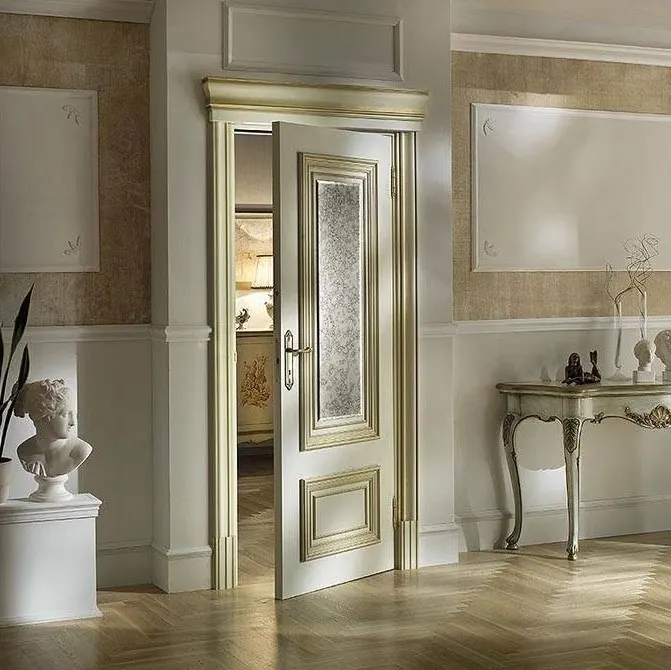
A wooden door brass inlay is one of the most recognisable ways to lift a hotel door from functional to memorable. Thin lines of metal set into veneer or lacquer catch the light, frame the leaf and signal a higher category of finish. The trade-off is that brass is a living material: it changes colour, shows fingerprints and needs a care plan that housekeeping can actually follow.
This article explains the main metal inlay and trim options, how they are built into a door leaf, what happens to them over time and what to include in your specification. It is written for hotel owners, designers and procurement teams who want decorative door details that still behave well in service.
What is a metal inlay door?
A metal inlay door has strips, lines or shapes of metal set flush into the surface of the leaf. The metal sits in a routed groove and is bonded and finished level with the surrounding veneer or lacquer, so you see a crisp line without a raised edge. This is different from a surface-applied trim, which sits proud of the face and is fixed on top.
Both approaches fall under decorative door details, and both can be combined on a single model. The right choice depends on the look you want, the door finish and how much physical contact the surface will receive.
Inlay, trim and applied profile: the differences
Hotel projects tend to use three constructions. Understanding them helps you read a drawing and compare quotations on equal terms.
- Flush inlay: a thin strip set into a routed groove, level with the face. It gives the cleanest, most architectural line and is the most protected from knocks.
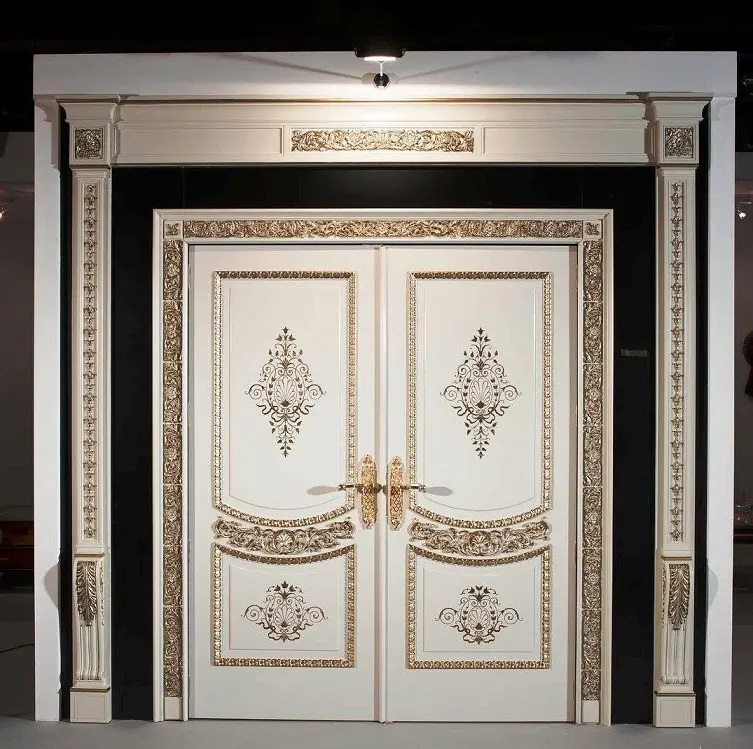
- Applied brass trim: a profile, angle or flat bar fixed to the surface or edge. It creates relief and shadow but can catch trolleys, clothing and cleaning cloths if poorly placed.
- Edge or reveal trim: metal fitted to the leaf edge or around a glazed opening. It protects vulnerable corners and acts as a design feature at the same time.
A brass trim door is not always a fully inlaid door. Many models use only a few lines or a frame around a panel, which keeps cost and maintenance under control.
Common design patterns for hotel doors
Metal details work best when they are restrained and repeated consistently. These patterns appear often in hospitality projects:
- Single vertical line: one inlay near the lock stile or centre of the leaf, often paired with a fluted or veneered face.
- Framed panel: a rectangular inlay line set in from the edge, echoing wall panelling or headboard details.
- Horizontal bands: thin lines at handle height or across the leaf to create rhythm along a corridor.
- Room number plate zones: a metal plate or inlaid frame around the number, linked to the signage design.
- Kick or edge protection in brass: a functional detail at the base of the leaf that also reads as decoration.
Keep the metal lines aligned with other elements: hinge positions, handle centres, wall joints and ceiling lines. Misaligned details are more visible in metal than in timber.
Metal choices: brass is not the only option
Brass is popular because of its warm tone, but it is one of several metals used for inlay and trim. Each has a different visual result and maintenance profile.
| Metal | Look | Behaviour in service |
|---|---|---|
| Solid brass | Warm gold, can be polished, satin or brushed | Develops patina or tarnish unless sealed; can be restored |
| Lacquered brass | Consistent bright or satin tone | Slower to tarnish; the clear coat can wear or lift at contact points |
| Stainless steel | Cool silver, or PVD-coloured in gold, bronze and black tones | Very stable and easy to clean; colour is more uniform than brass |
| Aluminium | Light, anodised in several tones | Stable and economical; less depth of colour than brass |
| Bronze | Darker, brownish gold | Ages gracefully and hides handling marks better than bright brass |
If you like the look of brass but worry about upkeep, PVD-finished stainless steel or anodised aluminium in a gold tone can be a practical alternative. Ask for physical samples, because tones vary and photographs can mislead.
How the inlay is built into the door
The quality of a metal inlay depends on preparation. A groove is routed to a controlled width and depth, the metal strip is cut to length and fixed with adhesive suitable for the substrate, and the surface is then finished around it. On a lacquered door, the lacquer sequence must protect the wood without clouding or burying the metal. On a veneered door, masking and sanding must be done carefully so the metal edge stays crisp.
Several construction points are worth confirming with your manufacturer:
- Groove tolerance: a tight fit prevents gaps that collect dirt and moisture.
- Strip thickness: very thin strips can bend or ripple during handling; slightly thicker ones stay straighter.
- Movement: timber moves with humidity and metal does not, so long continuous lines need sensible joint positions or a flexible bonding approach.
- Corners: mitred corners in a framed pattern need precise cutting; rounded corners need pre-formed strips.
Tarnish and patina: setting realistic expectations
Bare brass reacts with air, moisture and skin oils. It darkens, develops spots and can turn brownish or even greenish in humid or coastal environments. Some owners value this ageing as part of the character; others expect the door to look new for years. Decide which camp your brand is in before specifying.
Common approaches include:
- Unlacquered brass: the most authentic, with an evolving patina. Expect uneven ageing, especially where hands touch.
- Lacquered or sealed brass: stays brighter longer, but a worn spot can tarnish unevenly and the coating can look patchy.
- Pre-aged or antiqued brass: starts with a darker, controlled tone so further change is less noticeable.
- Brushed or satin surface: hides fingerprints and fine scratches better than a mirror polish.
Position matters too. An inlay at shoulder height on a corridor wall is touched more than one set near the leaf centre. Humid climates, spa areas and seaside properties increase tarnish risk, so choose more stable metals there.
Cleaning and housekeeping guidance
Metal details need a simple routine that a housekeeping team will actually follow. Provide written guidance at handover, and keep it short.
- Dust and wipe with a soft, dry or slightly damp microfibre cloth.
- Avoid abrasive pads, powders and strong chemical cleaners, which can scratch metal and damage the surrounding finish.
- Do not spray cleaner directly onto the door; apply it to the cloth, so liquid does not run into the inlay joint.
- Use only products recommended for the specific metal finish, and test on a hidden area first.
- For unlacquered brass, decide in advance whether you will polish periodically or allow patina to develop, and apply the same rule across the property.
Polishing lacquered brass with metal polish can remove the coating, so brief the team clearly. Cleaning instructions should come from the manufacturer and the finish supplier for your exact specification.
Protecting the surrounding finish
Metal lines draw attention, so damage to the adjacent wood or lacquer shows quickly. High-traffic corridors often benefit from a protective detail at the leaf base or edges. Our related guidance on kick plates and protection details covers this in more depth. If you are working with dark stains or very pale lacquers, remember that contrast with the metal can emphasise scratches and marks.
Coordinating metal details with hardware
Door handles, hinges, escutcheons and signage should work with the inlay rather than compete with it. Matching tones exactly between inlay and hardware is difficult, because different suppliers use different plating and lacquers. A deliberate contrast, such as brass inlay with black hardware, can look more intentional than a near-match that falls slightly off.
Also check that inlay lines do not collide with lock preparation, closers, hinge positions or electronic lock routing. These conflicts are easy to resolve on a drawing and costly to fix on a finished leaf.
Fire-rated and acoustic doors
Metal inlays and trims on fire-rated or acoustic doors need extra care. Routing into the leaf face may affect certified construction, and any decorative detail must stay within what the test evidence and the destination market's requirements allow. Raise this at the start of the project rather than after the design is fixed, and ask your manufacturer what modifications are acceptable for the relevant door type.
Cost and lead time drivers
Metal inlay adds labour and materials compared with a plain veneered or lacquered leaf. We do not quote generic prices here, because cost depends on the project. The main factors are:
- Number and length of metal lines per leaf.
- Metal type and finish, including any lacquer or PVD coating.
- Pattern complexity, including corners, curves and panel frames.
- Finish system around the inlay and the number of sample rounds needed.
- Order quantity and whether the detail repeats across all door types.
Finish approval is the step most likely to affect timing, so allow time for samples under real lighting conditions.
What to include in your specification
To get an accurate quotation and avoid misunderstandings, include the following in your door schedule or drawings:
- Elevation drawing showing exact inlay positions and dimensions.
- Metal type, finish and whether it is lacquered, brushed, polished or antiqued.
- Groove width and depth if you have a preferred detail.
- Surrounding finish: veneer species, lacquer colour or HPL reference.
- Door type, fire or acoustic requirements, and hardware positions.
- Care expectations: patina accepted or bright finish required.
Approve a sample before production
A single sample door or sample board is the most reliable way to judge a metal detail. Check colour under the hotel's lighting, feel the edge of the inlay with your fingers, and confirm it is flush. Ask for a short cleaning test on the sample so you know how the finish reacts. This is a good moment to also review how the door sits with wall panelling, furniture and adjacent materials.
Is a metal inlay right for your project?
Choose metal details when they support the brand identity and when you are prepared for the maintenance that comes with them. For boutique hotels, suites, lobbies and signature corridors they can be very effective. For high-volume budget corridors, a simpler detail or a stable metal such as PVD stainless steel may serve you better. A mix, with richer details in premium zones and plainer doors elsewhere, often balances cost and impact.
Next step
If you are considering a wooden door brass inlay or another metal detail for your hotel, send us your door schedule, elevations or a reference image. We will review the design, suggest suitable metals and finishes and come back with a quotation and a practical care recommendation for your project.
Sıkça Sorulan Sorular
Does a brass inlay on a wooden door tarnish?
Unsealed brass will darken and develop a patina over time, faster in humid or coastal areas and where hands touch it. Lacquered, brushed or pre-aged brass slows or hides the change. Decide early whether you want a bright finish or an ageing look, and specify accordingly.
How do you clean a door with metal inlay in a hotel?
Wipe with a soft, slightly damp microfibre cloth and dry afterwards. Avoid abrasive pads and strong chemicals, and do not spray liquid directly onto the door. Follow the cleaning advice for your exact metal finish, because polishing can strip a lacquer coating.
Are there alternatives to solid brass for a similar look?
Yes. PVD-finished stainless steel and anodised aluminium can reproduce gold and bronze tones with better stability and easier cleaning. They have less natural depth than brass, so request physical samples and compare them under your hotel's lighting before deciding.
Can fire-rated or acoustic doors have metal inlays?
Possibly, but routing into the leaf can affect certified construction. The allowed details depend on the door type and the requirements of the destination market. Raise the design intent at the start so the manufacturer can advise on what is acceptable.
What drawings does a factory need to quote a door with brass trim?
Send an elevation showing inlay positions and dimensions, the metal type and finish, the surrounding veneer or lacquer, the door type, and hardware positions. A door schedule with quantities and any fire or acoustic requirements helps the factory price accurately.
Every hotel project is different. Send us your drawings or room schedule for a tailored proposal on materials, lead time and shipping.