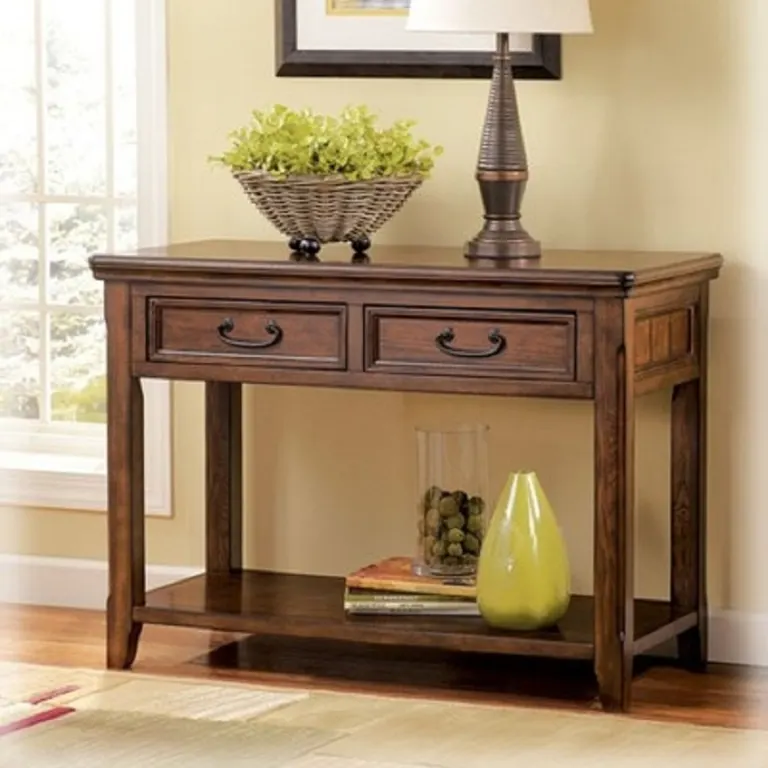
Wooden Console Models Import and Export, Turkey: Multimodal Logistics, Customs Brokerage, and Cross-Border Trade Finance Masterclass
Executing high-volume cross-border furniture transactions requires far more than selecting aesthetically compelling designs or verifying factory joinery tolerances. In Wooden Console Models Import and Export, Turkey: Multimodal Logistics, Customs Brokerage, and Cross-Border Trade Finance Masterclass, we address the operational backbone that determines whether an international furniture shipment arrives on schedule with intact profit margins or stalls indefinitely in customs demurrage.

Because wooden consoles combine high volumetric cubic measurement (CBM) with fragile finished surfaces and strict phytosanitary rules, mastering the logistics and financial architecture of Wooden Console Models Import and Export, Turkey: Multimodal Logistics, Customs Brokerage, and Cross-Border Trade Finance Masterclass is essential for global procurement executives, freight forwarders, and Turkish export directors.
This authoritative operational manual dissects multimodal freight corridors departing Turkish ports, container load engineering, customs clearance workflows, marine insurance underwriting, and international trade finance mechanisms governing Wooden Console Models Import and Export, Turkey: Multimodal Logistics, Customs Brokerage, and Cross-Border Trade Finance Masterclass.
1. Strategic Multimodal Freight Corridors Out of Turkey
Turkey’s transcontinental geography enables exporters and importers to select among sea, overland road, rail, and Ro-Ro (Roll-on/Roll-off) corridors depending on cargo volume, delivery urgency, and destination infrastructure. Optimizing transit selection is a core pillar of Wooden Console Models Import and Export, Turkey: Multimodal Logistics, Customs Brokerage, and Cross-Border Trade Finance Masterclass.
Primary Maritime Export Gateways
Over 75% of containerized furniture exports from Turkey move through four major deep-water port complexes:
1. Ambarlı Port Complex (Istanbul – Marport, Kumport, Mardaş):
• Catchment Area: Serves İnegöl (Bursa), Istanbul (Masko/Modoko), Sakarya, and Düzce manufacturing hubs.
• Strategic Advantage: Highest weekly vessel sailing frequency to North America (New York, Savannah, Houston, Los Angeles), Northern Europe (Rotterdam, Antwerp, Hamburg), and the United Kingdom (Felixstowe, London Gateway).
2. İzmir & Aliağa Ports (Alsancak, APM Terminals, Nemport):
• Catchment Area: Serves Aegean furniture manufacturers in İzmir, Manisa, Aydın, and Denizli.
• Strategic Advantage: Eliminates Bosphorus Strait transit congestion, saving 24 to 48 hours on westbound Mediterranean and transatlantic routes.
3. Mersin International Port (MIP):
• Catchment Area: Primary maritime gateway for Kayseri (Turkey’s largest mass-production furniture cluster), Ankara (Siteler), and Konya.
• Strategic Advantage: Direct connectivity to Middle Eastern, Red Sea, Gulf Cooperation Council (GCC), and East African ports, plus rail freight links directly into Central Anatolia.
4. Gemlik & Evyap Ports (Marmara Sea):
• Catchment Area: Located directly adjacent to İnegöl and Bursa industrial zones.
• Strategic Advantage: Minimizes inland drayage costs for İnegöl console factories, reducing pre-carriage trucking expenses by up to 35% compared to routing through Istanbul.
European Overland Trucking & Ro-Ro Intermodal Corridors
For European importers prioritizing speed and flexible inventory replenishment, Wooden Console Models Import and Export, Turkey: Multimodal Logistics, Customs Brokerage, and Cross-Border Trade Finance Masterclass highlights two high-velocity alternatives to standard container shipping:
Transport Mode Transit Route Average Transit Time Ideal Shipment Profile Key Operational Advantage
Full Truckload (FTL - Mega Trailer) Factory -> Kapıkule/Hamzabeyli Border -> Bulgaria/Romania -> Central/Western EU 5 – 8 Days 85–100 CBM volume; mixed console collections; urgent retail restocks Door-to-door delivery without port double-handling
Ro-Ro + Rail/Road Intermodal Pendik/Yalova/Çeşme Port -> Trieste (Italy) or Sète (France) -> EU Rail/Truck 4 – 7 Days High-value assembled luxury consoles; bypasses Balkan border queues Avoids transit permit quotas and highway congestion
Less-than-Truckload (LTL / Groupage) Istanbul Consolidation Hub -> European Regional Terminals 8 – 14 Days Small boutique orders (2 to 15 CBM); showroom floor samples Low minimum volume threshold; shared freight cost
40' High Cube (40' HC) FCL Sea Ambarlı / Mersin / Aliağa -> Global Deep-Water Ports 10 – 25 Days High-density flat-pack (RTA) or Knock-Down (KD) wholesale orders Lowest per-unit freight cost across long-haul routes
2. Container Load Engineering and Volumetric Optimization
In Wooden Console Models Import and Export, Turkey: Multimodal Logistics, Customs Brokerage, and Cross-Border Trade Finance Masterclass, freight cost per console is dictated by cubic volume rather than gross tonnage. A 40-foot High Cube (40' HC) container offers an internal capacity of 76.4 CBM (practical loadable volume 67 to 70 CBM after accounting for carton clearances) and a maximum payload exceeding 26,000 kg. Because a full container of wooden consoles typically weighs only 7,500 to 13,500 kg, importers "cube out" long before they "weigh out."
Precision Loading Strategies to Maximize CBM Utilization
• Floor-Loading vs. Palletization:
• Floor-Loading (Loose-Loaded Cartons): Eliminates the 12% to 15% cubic volume lost to wooden Euro/ISPM-15 pallets. Turkish loading crews use interlocking brick-stacking patterns (çapraz istifleme) from floor to ceiling, maximizing unit count per container.
• Palletized Loading: Required by big-box retailers (e.g., Walmart, Target, Costco, or major European DIY chains) utilizing automated high-bay racking warehouses. Cartons are unitized onto 1200 x 800 mm (Euro) or 1200 x 1000 mm (Industrial) heat-treated ISPM-15 pallets, corner-boarded, and machine stretch-wrapped.
• Mixed-SKU Nesting & Tetris Planning:
• Using specialized 3D container load planning software (such as CargoWiz or Cape Pack), Turkish export logistics engineers mix tall narrow console cartons with compact side-table or mirror cartons to fill dead air gaps above wheel wells and near container doors.
• Container Moisture & Condensation Mitigation:
• Wood is hygroscopic; sudden temperature drops between the Mediterranean Sea and the North Atlantic cause water vapor trapped inside timber and corrugated cartons to condense on the container roof ("container rain").
• Mandatory countermeasures include suspending calcium chloride desiccant poles (minimum 8 to 12 units of 1.5 kg each per 40' HC container), lining container ceilings with kraft moisture-absorbent blankets, and inspecting container door rubber gaskets for watertightness using the "light-leak test" prior to stuffing.
3. Turkish Export Customs Brokerage and Electronic Filing Architecture
Navigating Turkish customs administration (Gümrük İdaresi) smoothly is vital for avoiding port storage charges and vessel roll-overs. Under Wooden Console Models Import and Export, Turkey: Multimodal Logistics, Customs Brokerage, and Cross-Border Trade Finance Masterclass, every export consignment undergoes digital processing through Turkey’s BİLGE (Computerized Customs Activities) system.
Mandatory Export Documentation and Digital Verification
1. e-Fatura / e-Arşiv Export Invoice:
• Turkish exporters must generate an official electronic export invoice through the Turkish Revenue Administration (Gelir İdaresi Başkanlığı - GİB) portal, transmitted directly to the Customs Directorate via the Tek Pencere Sistemi (Single Window System).
• The invoice must explicitly specify unit net weights, gross weights, exact HS codes (e.g., 9403.60.10.00.00), Incoterms 2020 delivery terms, and bank IBAN details for foreign currency repatriation compliance.
2. Customs Export Declaration (Gümrük Çıkış Beyannamesi - GÇB):
• Filed electronically by a licensed Turkish Customs Broker (Gümrük Müşaviri). Once registered, the system assigns the shipment to a risk-assessment inspection lane:
• Green Line (Yeşil Hat): Immediate automated clearance with zero physical or document inspection (granted to Authorized Economic Operator / Yetkilendirilmiş Yükümlü Statüsü - YYS certified exporters).
• Yellow Line (Sarı Hat): Documentary verification of invoices, packing lists, and origin certificates.
• Red Line (Kırmızı Hat): Physical container opening and inspection by customs officers to verify HS code accuracy, timber species declarations, and absence of contraband.
3. Origin & Preferential Tariff Certificates:
• A.TR Movement Certificate: Digitally approved via the MEDOS (Chamber of Commerce Automation System) for industrial furniture shipments entering the European Union Customs Union at 0% duty.
• EUR.1 / EUR-MED Certificate: Issued for FTA partner countries (EFTA, UK, South Korea, Balkans, MENA) where Turkish origin rules (typically minimum 40% to 50% domestic value-added transformation) are satisfied.
• Certificate of Origin (Menşe Şahadetnamesi): Required for non-FTA destinations (USA, Canada, GCC states, Australia) and legalized via Apostille or destination embassy/consulate chambers when requested by Letter of Credit terms.
Foreign Exchange Repatriation Compliance (İhracat Bedellerinin Yurda Getirilmesi)
Under Turkish Central Bank (TCMB) capital movement regulations, Turkish exporters must repatriate at least 80% of export proceeds into a Turkish bank account within 180 days of the actual export date (fiili ihraç tarihi) and issue an İBKB (İhracat Bedeli Kabul Belgesi). Understanding this legal obligation helps international importers comprehend why Turkish suppliers enforce strict payment timelines and require formal bank wire references matching the commercial invoice number.
4. Import Customs Clearance into Turkey: Procedures for Foreign Console Brands
For Turkish retail groups, luxury interior design studios, and hospitality developers importing designer wooden consoles from Italy, Spain, Scandinavia, or Asia into Turkey, Wooden Console Models Import and Export, Turkey: Multimodal Logistics, Customs Brokerage, and Cross-Border Trade Finance Masterclass outlines the exact import clearance sequence:
Pre-Arrival TAREKS Registration
Before goods arrive at a Turkish customs bonded warehouse (Antrepo), the importer’s customs broker submits product technical files into TAREKS (Risk-Based Control System in Foreign Trade):
• Chemical & Toy/Furniture Safety Declarations: Submission of EN/REACH test reports proving compliance with heavy metal limits in paints/lacquers and formaldehyde emission ceilings.
• Reference Number Generation: Once approved by TAREKS, a 16-digit reference number is generated, unlocking the ability to register the Import Customs Declaration (İthalat Beyannamesi).
Calculation of Turkish Import Taxes and Duties
When importing wooden consoles (HS 9403.60) from a non-EU/non-FTA country (such as China or Vietnam) into Turkey, landed tax calculations compound sequentially:
1. CIF Value: Cost of goods + International Freight + Marine Insurance.
2. Customs Duty (Gümrük Vergisi): Applied to CIF value (0% for EU with A.TR; typically 0% to 5.6% MFN base rate).
3. Additional Customs Duty (İlave Gümrük Vergisi - İGV): Applied to CIF value for non-FTA countries (typically 20% to 50% on wooden furniture to safeguard domestic industry).
4. Resource Utilization Support Fund (KKDF): 6% levied on the CIF value if the import is financed via open account or deferred credit terms (0% if paid via advance T/T or confirmed sight L/C prior to customs declaration).
5. Stamp Duty (Damga Vergisi): Fixed statutory fee per customs declaration.
6. Value Added Tax (Katma Değer Vergisi - KDV): 20% calculated on the cumulative sum of (CIF + Customs Duty + İGV + KKDF + Port Storage/Demurrage + Customs Clearance Fees).
5. Marine Cargo Insurance and Transit Risk Underwriting
Wooden consoles are uniquely susceptible to moisture staining, veneer chipping, and structural racking during intermodal handling. Relying solely on carrier liability under the Hague-Visby Rules or CMR Convention is financially hazardous, as carrier payouts are capped by weight (e.g., 2 SDR per kg for sea freight or 8.33 SDR per kg for road freight)—which compensates only a tiny fraction of high-value furniture.
Essential Insurance Coverage Clauses
In Wooden Console Models Import and Export, Turkey: Multimodal Logistics, Customs Brokerage, and Cross-Border Trade Finance Masterclass, parties must secure cargo insurance under Institute Cargo Clauses (A) – "All Risks" insured for 110% of the CIF invoice value:
• Covered Perils: Physical breakage, scratching, denting, wet damage from freshwater/rainwater or condensation ("container rain"), theft, pilferage, non-delivery, and General Average contributions.
• Mandatory Policy Endorsements for Wooden Furniture:
• Pair and Set Clause: If one damaged console part renders an entire modular set unsellable, the insurer compensates the full commercial value rather than merely the weight of the broken component.
• Labels and Repackaging Clause: Covers costs of re-cartoning and re-labeling units whose outer packaging is damaged in transit even when the furniture inside remains intact.
• Warehouse-to-Warehouse Coverage: Extends protection from the moment the console leaves the Turkish factory floor until unloaded at the buyer’s final inland distribution center.
Claims Documentation Protocol Upon Arrival
If a container arrives at the destination port with broken seals or visible carton crushing, the consignee must immediately:
1. Note specific exceptions (rezerv) on the trucker’s Delivery Order or CMR waybill prior to signing.
2. Capture timestamped high-resolution photographs of the container seal, external carton damage, and internal bracing before unloading continues.
3. Notify the marine insurance surveyor within 3 working days of delivery to preserve legal subrogation rights against the carrier.
6. Cross-Border Trade Finance and Payment Risk Mitigation
Structuring secure payment terms bridges the trust gap between Turkish manufacturers and international buyers. Wooden Console Models Import and Export, Turkey: Multimodal Logistics, Customs Brokerage, and Cross-Border Trade Finance Masterclass recommends four institutional trade finance instruments:
1. Irrevocable Documentary Letter of Credit (L/C – UCP 600)
• Mechanism: The buyer’s bank guarantees payment to the Turkish exporter upon presentation of strictly compliant shipping documents (Clean On-Board Bill of Lading, Commercial Invoice, Packing List, Certificate of Origin, and Third-Party Pre-Shipment Inspection Certificate).
• Best Practice: For orders exceeding $50,000, Turkish exporters often request a Confirmed L/C through an international correspondent bank to eliminate country and issuing-bank credit risk, while buyers insert a mandatory SGS/Bureau Veritas Pass Certificate as a documentary condition to guarantee product quality prior to funds release.
2. Türk Eximbank Export Credit Insurance & Buyer Credits
• Turkey’s official export credit agency, Türk Eximbank, provides short-term and medium-term export credit insurance policies covering up to 90% of commercial and political default risks.
• Qualified Turkish console exporters utilize this backing to extend 60-to-120-day Open Account (OA) payment terms to vetted European and North American retail buyers—giving foreign importers working capital relief without exposing the Turkish factory to catastrophic bad-debt losses.
3. Standby Letter of Credit (SBLC) for Ongoing Supply Programs
• Ideal for recurring monthly container shipments between a Turkish manufacturer and a regional distributor. An annual revolving SBLC acts as a secondary security guarantee, enabling streamlined open-account wire transfers for individual shipments while maintaining bank-backed default protection.
4. Structured Milestone Telegraphic Transfers (T/T)
• For mid-sized orders ($15,000 to $50,000), a balanced milestone structure aligns incentives:
• 30% Advance Deposit upon order confirmation (funds raw timber and hardware procurement).
• 40% Mid-Production / Pre-Shipment Balance triggered strictly upon passing an independent AQL quality inspection.
• 30% Final Balance payable against scanned copy of the Original Master Bill of Lading (prior to Telex Release).
7. Incoterms 2020 Risk and Cost Allocation Matrix
Selecting the precise Incoterms 2020 rule prevents disputes over port terminal handling charges (THC), demurrage, and customs delays in Wooden Console Models Import and Export, Turkey: Multimodal Logistics, Customs Brokerage, and Cross-Border Trade Finance Masterclass:
Incoterm Export Customs Clearance (Turkey) Main Carriage Freight Marine Insurance Destination Terminal Handling (DTHC) Import Customs & Duties Optimal Use Case in Turkish Console Trade
EXW Buyer Buyer Buyer Buyer Buyer Buyer has a dedicated Turkish consolidation warehouse & local customs broker
FCA Seller Buyer Buyer Buyer Buyer Containerized ocean freight (recommended over FOB for container yards)
FOB Seller Buyer Buyer Buyer Buyer Traditional benchmark for FCL shipments from Ambarlı, Mersin, or Aliağa
CIF Seller Seller Seller (Clause C min.) Buyer Buyer Buyer wants freight bundled, but must upgrade insurance to Clause A
DAP Seller Seller Seller Seller Buyer Overland FTL trucking shipments directly to European distribution centers
DDP Seller Seller Seller Seller Seller Turnkey hospitality projects where buyer lacks local import registration
8. Key Performance Indicators (KPIs) for Supply Chain Governance
Leading procurement organizations governing Wooden Console Models Import and Export, Turkey: Multimodal Logistics, Customs Brokerage, and Cross-Border Trade Finance Masterclass track five quarterly logistics KPIs to benchmark carrier and supplier performance:
1. On-Time In-Full (OTIF) Delivery Rate: Target ≥ 94% of containers gated-in at the Turkish port of loading prior to vessel cut-off without quantity short-ships.
2. Container Cube Utilization Rate: Target ≥ 88% of theoretical 40' HC volumetric capacity (minimum 66 to 68 CBM loaded).
3. Transit Damage Claim Ratio: Target < 0.8% of total landed unit value across all intermodal legs.
4. Customs Clearance Dwell Time: Target < 24 hours from vessel discharge to customs release via pre-arrival electronic manifest filing.
5. Documentation Error Rate: Target 0% discrepancies on A.TR, EUR.1, Bill of Lading, and ISPM-15 fumigation certificates.