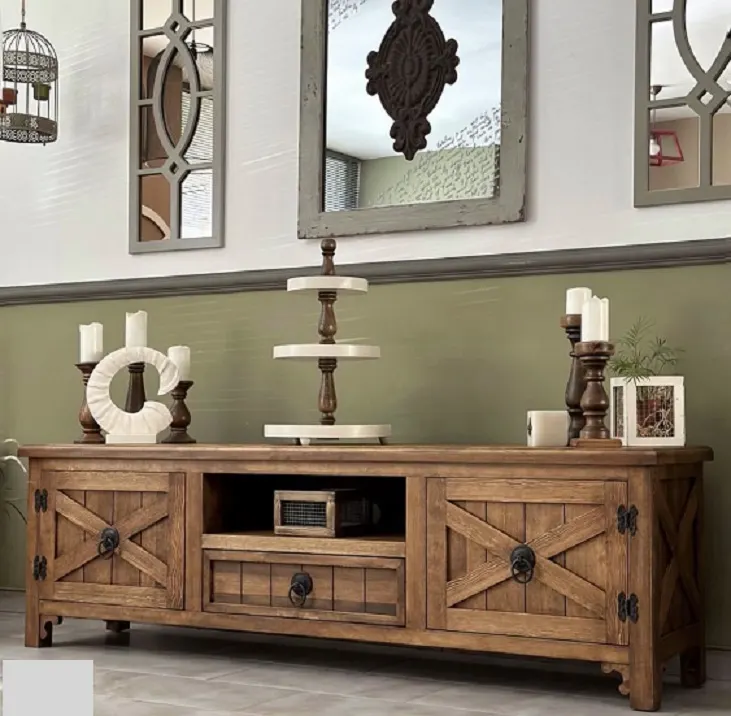
Wooden Console Models Import and Export, Turkey: Engineering, Material Science, and OEM Manufacturing Standards for Global Buyers
In the competitive landscape of international furniture procurement, Wooden Console Models Import and Export, Turkey: Engineering, Material Science, and OEM Manufacturing Standards for Global Buyers represents the critical technical benchmark separating high-margin, defect-free retail collections from costly supply chain failures.
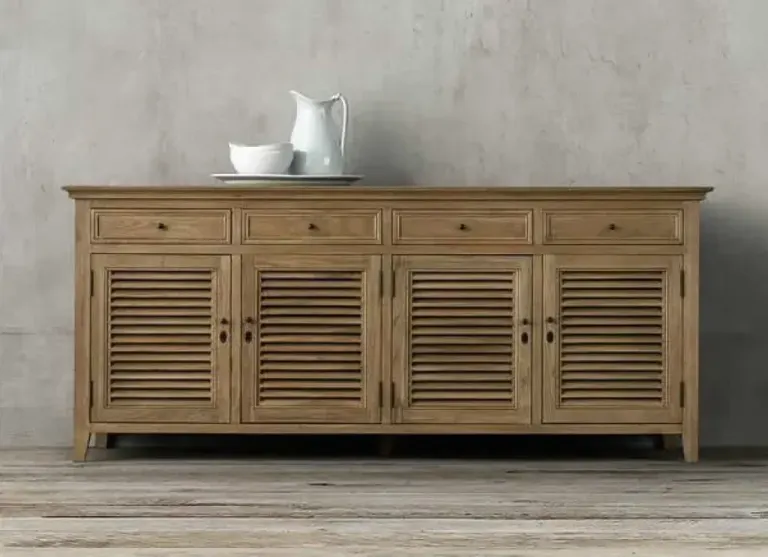
While macroeconomic trade agreements and tariff advantages open the door to Turkish sourcing, long-term commercial success in Wooden Console Models Import and Export, Turkey: Engineering, Material Science, and OEM Manufacturing Standards for Global Buyers depends entirely on industrial engineering, wood technology, precision CNC machining, and verifiable quality assurance protocols.
This exhaustive technical treatise examines the material science, joinery mechanics, surface coating chemistry, and Original Equipment Manufacturing (OEM) / Original Design Manufacturing (ODM) workflows governing Wooden Console Models Import and Export, Turkey: Engineering, Material Science, and OEM Manufacturing Standards for Global Buyers.
1. Wood Anatomy, Timber Grading, and Kiln-Drying Protocols in Turkish Manufacturing
Every structural failure in cross-border wood furniture—whether cupping, bowing, twisting, or glue-line delamination—originates in improper timber preparation prior to milling. In the sphere of Wooden Console Models Import and Export, Turkey: Engineering, Material Science, and OEM Manufacturing Standards for Global Buyers, mastering timber hygroscopicity is paramount.
Botanical Selection and Mechanical Properties
Turkish furniture manufacturers source both domestic Anatolian hardwoods and certified imported European/North American timber. Understanding the physical properties of each species ensures appropriate engineering for load-bearing console tops and slender architectural legs:
Wood Species Botanical Name Janka Hardness (lbf) Specific Gravity (12% MC) Primary Structural Application in Consoles
Anatolian Walnut Juglans regia 1,010 – 1,220 0.56 – 0.64 Luxury live-edge slabs, architectural veneers, carved aprons
Oriental Beech (Steamed) Fagus orientalis 1,300 – 1,450 0.65 – 0.72 Internal structural frames, turned legs, mortise-and-tenon rails
Anatolian Sessile Oak Quercus petraea 1,290 – 1,360 0.67 – 0.74 Heavy-duty tabletops, fluted tambour doors, wire-brushed bases
European Ash Fraxinus excelsior 1,320 – 1,480 0.65 – 0.71 Steam-bent curved console frames, high-stress leg assemblies
Black Sea Chestnut Castanea sativa 750 – 850 0.52 – 0.58 Rustic consoles, distressed finishes, lightweight carcass panels
Computerized Kiln-Drying and Equilibrium Moisture Content (EMC)
Raw green timber felled in Turkey’s Black Sea or Taurus mountain regions possesses a moisture content exceeding 45% to 60%. Before entering production for Wooden Console Models Import and Export, Turkey: Engineering, Material Science, and OEM Manufacturing Standards for Global Buyers, timber must undergo multi-stage computerized kiln drying:
1. Pre-Steaming Phase: Relieves internal growth stresses and equalizes core-to-shell moisture gradients (particularly critical for Oriental Beech to prevent honeycombing).
2. Drying Schedule Execution: Automated sensors monitor wet-bulb and dry-bulb temperatures alongside air velocity (2.5 to 3.5 m/s) across timber stacks separated by uniform 25mm kiln stickers.
3. Conditioning and Equalization: A final high-humidity conditioning phase eliminates case-hardening—a residual tension where the outer wood shell is drier than the core, which causes immediate warping once the board is ripped on a gang saw.
4. Target EMC Calibration:
• Exports to Northern/Central Europe & North America: 8.0% ± 0.5% EMC.
• Exports to Arid Middle Eastern / GCC Markets: 6.5% ± 0.5% EMC.
• Exports to Tropical / High-Humidity Coastal Zones: 10.0% ± 0.5% EMC.
2. Engineered Substrates and Architectural Veneering Technology
Because wide solid wood planks naturally expand and contract across their tangential grain up to 8% with seasonal humidity shifts, modern Wooden Console Models Import and Export, Turkey: Engineering, Material Science, and OEM Manufacturing Standards for Global Buyers relies heavily on engineered core substrates clad in genuine hardwood veneers.
Core Substrate Specifications
• High-Density & Medium-Density Fiberboard (HDF/MDF): Leading Turkish manufacturers utilize domestic E0 or E1 grade MDF (produced by industry giants such as Kastamonu Entegre, Yıldız Entegre, or Çamsan) with a core density of 720 to 780 kg/m³. High internal bond strength (> 0.65 N/mm²) ensures crisp CNC routing for fluted designs without fiber tear-out.
• Baltic Birch & Beech Plywood: Specified for structural drawer boxes, curved tambour substrates, and high-load console shelves. Multi-ply cross-banded construction (11 to 15 plies per 18mm sheet) using phenolic WBP (Weather and Boil Proof) glue provides superior screw-holding capacity compared to particleboard.
• Blockboard (Panel-Core): Composed of softwood strips sandwiched between hardwood cross-bands, offering exceptional stiffness-to-weight ratio for extra-long console tables (200 cm to 280 cm spans) without mid-span sagging.
Precision Veneer Splicing and Hydraulic Pressing
In high-tier Wooden Console Models Import and Export, Turkey: Engineering, Material Science, and OEM Manufacturing Standards for Global Buyers, veneer application follows strict industrial protocols:
• Flitch Selection & Guillotining: Quarter-sawn or crown-cut natural veneers (0.6mm standard thickness; 1.2mm–1.5mm architectural thick-cut for sandability) are trimmed on twin-knife hydraulic guillotines for microscopic edge straightness.
• Zig-Zag Thread vs. Butt-Joint Splicing: High-end factories employ longitudinal butt-joint veneer splicers (such as Kuper or Fisher+Rückle systems) that apply urea-free adhesive directly to the veneer edge, eliminating internal glue-thread telegraphing through ultra-thin matte lacquers.
• Balanced Construction: Every veneered console panel must receive an identical balancing veneer (or equivalent density phenolic backer) on its underside to neutralize tensile pull and prevent panel bowing.
3. CNC Machining Tolerances and Structural Joinery Mechanics
Modern Turkish factories operating at the forefront of Wooden Console Models Import and Export, Turkey: Engineering, Material Science, and OEM Manufacturing Standards for Global Buyers utilize 5-axis CNC machining centers (Homag, Biesse, SCM) capable of holding tolerances within ±0.15 mm across batch runs of thousands of units.
Structural Joinery Engineering for Export Durability
Consoles experience unique mechanical stresses—specifically racking forces (lateral sway when pushed from the side) and cantilever loads on narrow footprints (typically 30 cm to 42 cm deep). Turkish engineering teams deploy four primary joinery architectures:
1. Haunched Mortise-and-Tenon Joinery (Assembled Luxury Consoles):
• CNC-milled floating tenons (e.g., Festool Domino XL industrial equivalents) or integral haunched tenons bonded with D4-rated polyvinyl acetate (PVAc) or one-component polyurethane (PUR) adhesives.
• Provides maximum shear resistance against lateral racking during container vibration and retail floor handling.
2. Corner-Block Reinforced Apron Assemblies:
• Solid hardwood triangular corner blocks glued and screwed into the console apron rails, housing dual hanger bolts that anchor solid wood legs. This hybrid approach allows legs to ship detached (KD configuration) while preserving rigid frame stability once assembled.
3. Precision Cam-Lock & Steel Dowel Systems (Flat-Pack / RTA Consoles):
• Engineered using heavy-duty zinc-alloy eccentric cams (15mm or 20mm diameter) paired with steel-reinforced expanding dowels and fluted beech positioning dowels.
• Requires CNC boring accuracy within ±0.10 mm to ensure flush seam alignment without consumer frustration.
4. Mitered Waterfall Edge Construction:
• 45-degree lock-miter CNC profiles reinforced with internal spline tongues or biscuits, creating seamless continuous grain flow from the horizontal console top down the vertical side panels.
4. Industrial Surface Finishing Chemistry and Testing Protocols
Surface finishing represents up to 30% of production cost and 80% of immediate visual perceived value in Wooden Console Models Import and Export, Turkey: Engineering, Material Science, and OEM Manufacturing Standards for Global Buyers. Turkish finishing lines increasingly replace manual spray booths with automated reciprocating spray robots, flat-line UV roller coaters, and pressurized dust-free positive-pressure curing rooms.
Coating Systems Used in Export Production
• Acrylic-Polyurethane (PU) Two-Component Systems: The gold standard for export wooden consoles. Unlike standard PU coatings that yellow under UV exposure, non-yellowing aliphatic acrylic-polyurethanes preserve the natural cool tones of bleached oak and ash while delivering exceptional scratch resistance.
• UV-Cured Roller Coatings: Applied to flat console tops and side panels, cured instantaneously under mercury and gallium ultraviolet lamps. Yields 100% solids conversion, near-zero VOC emissions, and extreme surface hardness.
• Waterborne Low-VOC Lacquers: Formulated to meet strict Scandinavian, German (Blue Angel), and Californian environmental mandates while maintaining warm wood pore definition.
• Natural Hardwax Oils: Plant-based oil-wax blends (linseed, carnauba, candelilla) penetrated into open-pore solid walnut or oak, offering easily repairable matte aesthetics favored by boutique European interior architects.
Laboratory Coating Performance Benchmarks
Reputable manufacturers in Wooden Console Models Import and Export, Turkey: Engineering, Material Science, and OEM Manufacturing Standards for Global Buyers validate finishes against international ISO/EN test standards:
• Cross-Cut Adhesion Test (ISO 2409): Must achieve Classification 0 or 1 (less than 5% lattice flaking).
• Taber Abrasion Resistance (EN 15185): Measures revolutions required to wear through the topcoat; export tabletops require a minimum of 350 to 500 cycles.
• Chemical & Stain Resistance (EN 12720): 24-hour exposure to coffee, red wine, ethanol, acetone, and olive oil with zero blistering, softening, or permanent discoloration.
• Dry & Wet Heat Resistance (EN 12722 / EN 12721): Withstanding 70°C dry heat and 55°C wet heat for 20 minutes without ring formation.
5. OEM and ODM Product Development Workflow in Turkey
For international retail chains, e-commerce brands, and hospitality procurement firms, executing an OEM (manufacturing buyer-designed models) or ODM (customizing factory-designed models) program is the most profitable pathway within Wooden Console Models Import and Export, Turkey: Engineering, Material Science, and OEM Manufacturing Standards for Global Buyers.
Stage-Gate Engineering Protocol
Development Stage Key Deliverables Engineering & Quality Verification Typical Timeline
1. Brief & Concept Mood boards, target FOB price, target dimensions, container load goals Feasibility review, wood species & substrate cost engineering 3 – 5 Days
2. CAD / 3D Engineering SolidWorks / AutoCAD 2D shop drawings, exploded BOM (Bill of Materials) Structural load simulation, joinery stress check, hardware specification 5 – 10 Days
3. Prototype (T1 Sample) Physical working prototype, finish control panels (3 sheen variants) Dimensional audit, color matching under D65 daylight booth, drawer cycle check 14 – 21 Days
4. Packaging Engineering Die-cut carton CAD, EPE foam mold layout, multilingual assembly manual ISTA 3A drop test, vibration simulation, carton burst strength verification 5 – 7 Days
5. Pilot Run & Golden Sample Sealed Golden Sample signed by both parties, mass production SOP Pre-production line trial (5–10 units) to verify CNC jig repeatability 7 – 10 Days
6. Mass Production Full batch manufacturing, inline QC, third-party Pre-Shipment Inspection Moisture checks, AQL 1.5/4.0 visual & functional audit prior to container loading 25 – 40 Days
Intellectual Property (IP) Protection in Turkish OEM Contracts
International buyers engaging in Wooden Console Models Import and Export, Turkey: Engineering, Material Science, and OEM Manufacturing Standards for Global Buyers should protect proprietary console designs through:
• Bilingual NNN Agreements (Non-Disclosure, Non-Use, Non-Circumvention): Drafted under Turkish Commercial Law (Türk Ticaret Kanunu), explicitly prohibiting the factory from displaying the buyer’s custom models at trade fairs (such as IIFF) or selling to competing regional distributors.
• Industrial Design Registration (Endüstriyel Tasarım Tescili): Filing design patents with TÜRKPATENT (Turkish Patent and Trademark Office) or via the Hague System (WIPO) covering Turkey and the EU simultaneously, providing enforceable injunctive relief against unauthorized replication.
6. Structural Mechanics and International Furniture Testing Standards
Before entering major retail channels in North America or Europe, consoles produced under Wooden Console Models Import and Export, Turkey: Engineering, Material Science, and OEM Manufacturing Standards for Global Buyers must pass rigorous mechanical testing:
• EN 12521 (European Domestic Tables – Strength, Durability, and Safety):
• Horizontal Static Load Test: Applies repeated lateral forces to simulate leaning or pushing.
• Vertical Static Load Test: Applies 100 kg (1,000 N) to the center and cantilevered edges of the console top to verify zero structural yielding or leg splay.
• Vertical Impact Test: Drops a standardized impactor onto the tabletop surface from calibrated heights to ensure solid wood/veneer panels do not fracture.
• EN 14749 (Domestic and Kitchen Storage Units and Worktops):
• Governs consoles equipped with drawers or doors. Requires drawer runners to survive 40,000 to 50,000 open/close cycles under rated load without failure, and validates drawer stops against accidental pull-out.
• BIFMA X5.5 (Desk/Table Products – Commercial/Contract Standard):
• Mandatory when supplying Turkish-manufactured consoles to international hotel chains, corporate lobbies, or luxury multi-family residential developments.
7. Packaging Engineering for Zero-Damage Cross-Border Transit
Even the finest craftsmanship in Wooden Console Models Import and Export, Turkey: Engineering, Material Science, and OEM Manufacturing Standards for Global Buyers fails commercially if transit damage exceeds 1.5%. Turkish export leaders engineer packaging to survive multi-modal handling (forklift clamps, ocean roll/pitch, and last-mile parcel courier drops):
1. Corrugated Board Specification: Double-wall BC-flute kraft corrugated cartons with a minimum Edge Crush Test (ECT) rating of 44 to 48 lbs/in and bursting strength exceeding 275 psi.
2. Internal Cushioning Architecture:
• High-density closed-cell EPE (Expanded Polyethylene) foam profiles (density 25–30 kg/m³) rather than brittle EPS (Styrofoam), which shatters on initial impact and leaves corners unprotected for subsequent drops.
• Laminated honeycomb paperboard edge protectors along all 12 perimeter edges of the carton.
3. Surface Micro-Abrasion Prevention: Wrapping high-gloss or ultra-matte satin surfaces in non-woven spunbond polypropylene fabric sheets before poly-bagging, preventing plasticizer migration or fine hairline scuffing caused by harmonic container vibration.
4. ISTA 3A / ISTA 2A Certification: Subjecting packaged consoles to rotational edge drops, flat drops onto concrete from 46 cm to 76 cm (depending on parcel weight), and random vibration tables prior to mass-shipment approval.
8. Cost Engineering and Value Optimization Without Compromising Quality
Experienced sourcing directors operating in Wooden Console Models Import and Export, Turkey: Engineering, Material Science, and OEM Manufacturing Standards for Global Buyers reduce unit FOB costs by 12% to 22% through intelligent value engineering rather than squeezing factory margins:
• Dimensional Optimization for Container Geometry: Adjusting console depth from 42 cm to 39 cm or leg height by 1.5 cm can allow three cartons to stack abreast instead of two inside a 40-foot High Cube container (internal width 235 cm), boosting container load factor by up to 25% and slashing per-unit ocean freight costs.
• Hybrid Material Allocation: Utilizing solid Anatolian oak or walnut for high-touch areas (bullnose edges, sculpted legs, drawer fronts) while specifying color-matched architectural veneer over E0 MDF for wide flat carcasses and internal shelves.
• Standardized Hardware Platforms: Consolidating drawer depths across an entire console collection so the factory can bulk-purchase a single SKU of concealed soft-close undermount runners, unlocking tier-1 volume rebates.