Hotel Vanity Cabinet Mirror Frames and Shelves: Should They Be Part of the Joinery Package?
Deciding who supplies the mirror surround and ledge is a scope question, not just a design one. This guide compares bundling and separate buying so you can price and coordinate your hotel bathrooms with fewer gaps.
Whether vanity mirror frame joinery belongs in the cabinet order is one of the most common scope gaps in hotel bathroom packages. In many projects the cabinet maker supplies the unit and top, the glazier supplies the mirror, and nobody is clearly responsible for the frame, the ledge or the strip between them. Deciding this at RFQ stage is far cheaper than discovering it on site.
This article looks at the scope decision itself: what a mirror surround and back shelf actually include, when bundling them with the cabinets makes sense, and when a separate supplier is the better route.
What we mean by mirror frame and shelf
Terms vary between consultants, so define them in your specification. Otherwise two bidders will price two different things.
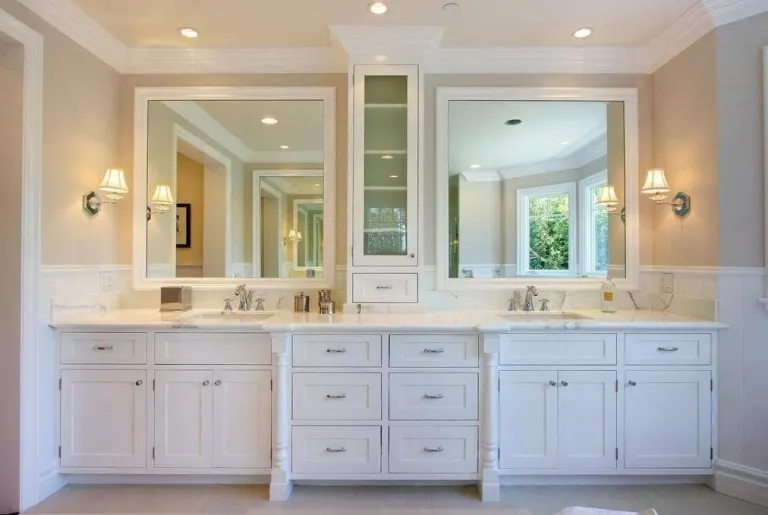
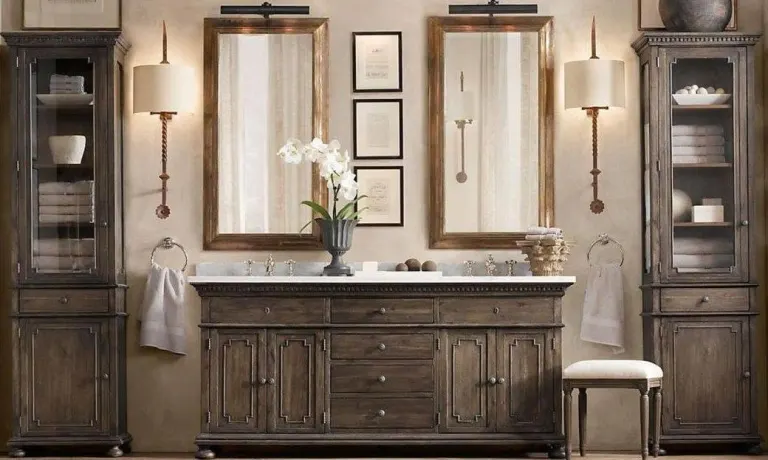
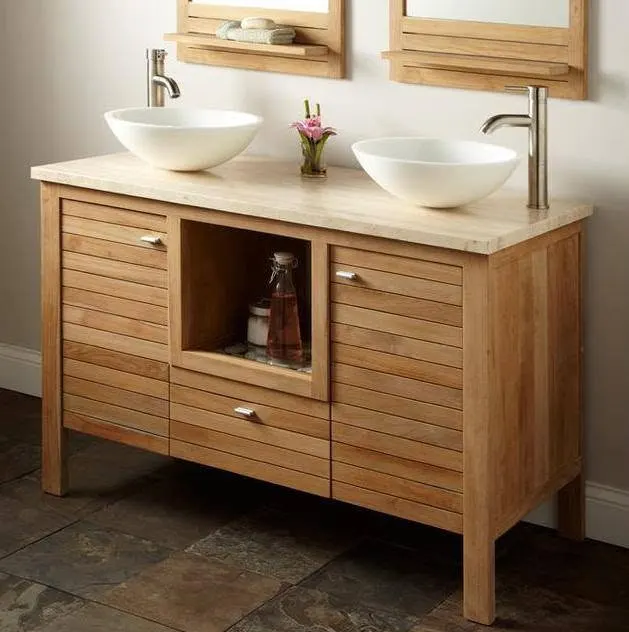
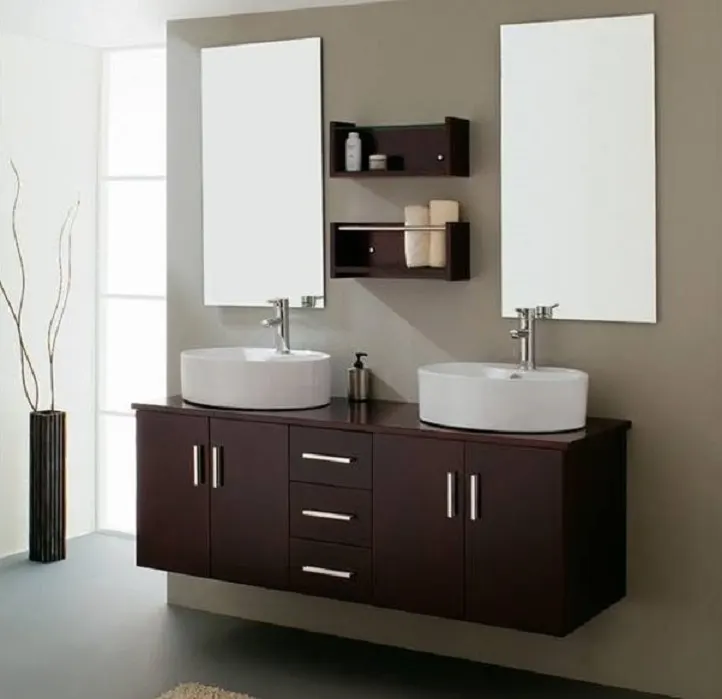
- Mirror frame or surround: a timber, veneered, laminated or metal border fixed around the mirror glass, or a recessed reveal the mirror sits in.
- Mirror panel backing: a board fixed to the wall onto which the mirror is bonded, often combined with the frame.
- Vanity back shelf or ledge: a narrow horizontal shelf between the top and the mirror, used for toiletries, a phone or a small tray.
- Splash panel or upstand: the vertical strip behind the basin. It is related, but usually treated as part of the top.
Write down which of these are in scope, and which are only coordinated with another trade.
Why the question matters for a mirror panel in a hotel bathroom
A mirror panel in a hotel bathroom sits where the wall, the top, the lighting and the plumbing all meet. That junction is where tolerances stack up. A frame that is built by one factory to drawings, while the cabinet is built by another, leaves a gap that someone has to close on site.
It also affects the order of work. Mirrors, lights, sockets and tiles all have a sequence, and a frame that arrives late can hold up the sealing and final cleaning of an entire floor.
Option 1: Include frames and shelves in the joinery package
Bundling means the joinery manufacturer supplies and, ideally, installs the cabinet, the frame and the shelf as one coordinated set. The mirror glass itself may still come from a glass supplier, or it may be supplied by the factory as a joinery mirror supply item.
Advantages
- One set of drawings: cabinet height, shelf position and frame size are drawn together, so alignment is controlled in one place.
- Matching finish: veneer, lacquer or laminate comes from the same batch, which reduces colour variation between cabinet and surround.
- Clear responsibility: if a gap or misalignment appears, there is one supplier to resolve it.
- Simpler shipping: items are packed by room number with the cabinets, so each bathroom arrives as a complete set.
Limitations
- The factory needs finished mirror and lighting dimensions early, because the frame depends on them.
- If the mirror is supplied by someone else, there is a handover risk at the glass edge.
- Your overall price for the joinery line rises, which can make a like-for-like comparison with other quotes harder unless scope is normalised.
Option 2: Buy frames and shelves separately
Some owners prefer a local glazier or metal fabricator to supply the mirror with its frame, particularly when the design calls for a steel or brass surround, a backlit mirror or a smart mirror with built-in electronics.
Advantages
- Specialist suppliers may offer finishes or electronics the joinery factory does not make.
- Local supply can simplify replacement of damaged glass, which is breakable and heavy to ship.
- Shipping risk is lower for the cabinet shipment, since fragile mirrors travel separately or are bought near the site.
Limitations
- More interfaces to coordinate: cabinet, top, mirror, lighting and tiles.
- Dimensions must be confirmed twice, once by each supplier.
- The shelf and the cabinet may not match in colour or grain unless samples are exchanged and approved together.
Decision table: which route fits your project?
| Situation | Usually better route | Reason |
|---|---|---|
| Timber or veneer surround matching the cabinet | Bundled in joinery | Same material batch and same drawings |
| Metal-framed or backlit mirror | Separate specialist | Needs metalwork and electrical expertise |
| Smart mirror with sensors or heating | Separate, with coordination | Electronics supplier defines size and cable route |
| Large hotel with many room types | Bundled, if mirror supply is also included | Fewer variants and one packing sequence |
| Remote site with limited glass supply | Case by case | Weigh breakage in transit against local replacement |
| Fast programme with late design changes | Separate, with defined interface drawings | Items can be released at different times |
Common scope gaps to close before ordering
Most disputes arise from small details that nobody wrote down. Check these points on both sides of the interface:
- Who supplies the mirror glass, including thickness, safety backing and edge finish?
- Who fixes the mirror to the wall, and with what adhesive or clips?
- Is the back shelf part of the top material, or a separate timber or metal piece?
- Who provides cut-outs in the frame for light fittings, sensors and sockets?
- Which trade seals the gap between the frame and the tiled wall?
- Is the frame fixed to the wall or the cabinet, and what happens if the wall is out of plumb?
Moisture and hygiene considerations
A frame sits close to splashes, steam and cleaning products. Unsealed board edges, open veneer joints or untreated backs are weak points, just as they are in the cabinet itself. Specify moisture-suitable boards and sealed edges for any timber-based frame, and confirm that the adhesive used behind the mirror is compatible with the mirror coating, because some adhesives can damage the silvering over time.
A narrow back shelf collects water and cosmetics. Consider a slight fall, a sealed surface and a shape that housekeeping can wipe in one pass. Deep grooves and decorative profiles look good in renders but are harder to keep clean.
How scope affects quotation comparison
If one supplier includes the frame, shelf and mirror and another prices only the cabinet, the two numbers cannot be compared. Ask each bidder to list the items separately: cabinet, top, frame, shelf, mirror, fixing and installation. This also lets you move a line from one package to another later without re-tendering.
We recommend a simple approach for international projects. Decide early which items are joinery, which are glass, and which belong to the electrical or smart-room supplier. Then issue a drawing that shows the interface lines clearly.
Using the mock-up room to settle the question
A mock-up bathroom is the best place to test the frame and shelf together. Check the shelf depth against the tap reach, the frame against the light position and the mirror height against guests of different heights. Photograph the junctions and record measurements, then use them to finalise the drawings before mass production starts.
Shipping and installation planning
If frames and shelves are bundled, they should be labelled by room number and packed with the cabinet they belong to. Edges and corners need protection, and any mirror glass should be crated separately with clear handling marks. Agree early whether installation is included, because a frame that needs to be scribed to an uneven wall is better fitted by the people who built it.
Shipping terms such as FOB or DAP also affect who carries the risk for breakage, so confirm the responsibility for mirrors in your contract, not only for the cabinets.
Conclusion
Including mirror frames and shelves in the joinery package usually gives you better alignment, matching finishes and a single point of responsibility. Buying them separately makes sense when the design needs specialist metalwork, lighting or electronics. Either route works if the interfaces are drawn, the scope is written down and each quotation lists the items separately.
If you are planning a hotel bathroom package, send us your bathroom elevations or room schedule. We will review the frame, shelf and mirror interfaces with you and come back with a scope proposal and a quotation for your project.
Sıkça Sorulan Sorular
Should a mirror frame be supplied by the vanity cabinet manufacturer?
Often yes, when the frame is timber, veneer or laminate and must match the cabinet. One supplier then controls alignment and finish. For metal-framed, backlit or smart mirrors, a specialist supplier is usually more suitable, provided interface drawings are agreed with the joinery maker.
What is a vanity back shelf in a hotel bathroom?
It is a narrow ledge between the vanity top and the mirror, used for toiletries or small items. It can be part of the top material or a separate timber, metal or stone piece. It should be sealed and easy to wipe clean.
Can the joinery factory also supply the mirror glass?
Many factories can supply mirror glass as part of a joinery mirror supply scope, but it depends on the project. Glass is fragile and heavy to ship, so some buyers prefer local glass supply. Discuss this early, together with packing and replacement arrangements.
How do I compare quotes when scope differs on frames and shelves?
Ask every bidder to price items on separate lines: cabinet, top, frame, shelf, mirror, fixing and installation. Then normalise the scope so each quote covers the same items. This makes differences visible and avoids hidden extras after the order.
What information does a factory need to quote a mirror frame?
Send bathroom elevations with mirror size, frame profile, shelf depth, light and socket positions, finish samples and the wall build-up. Tell us who supplies the mirror and who installs it. Clear interface drawings let us quote accurately without assumptions.
Every hotel project is different. Send us your drawings or room schedule for a tailored proposal on materials, lead time and shipping.