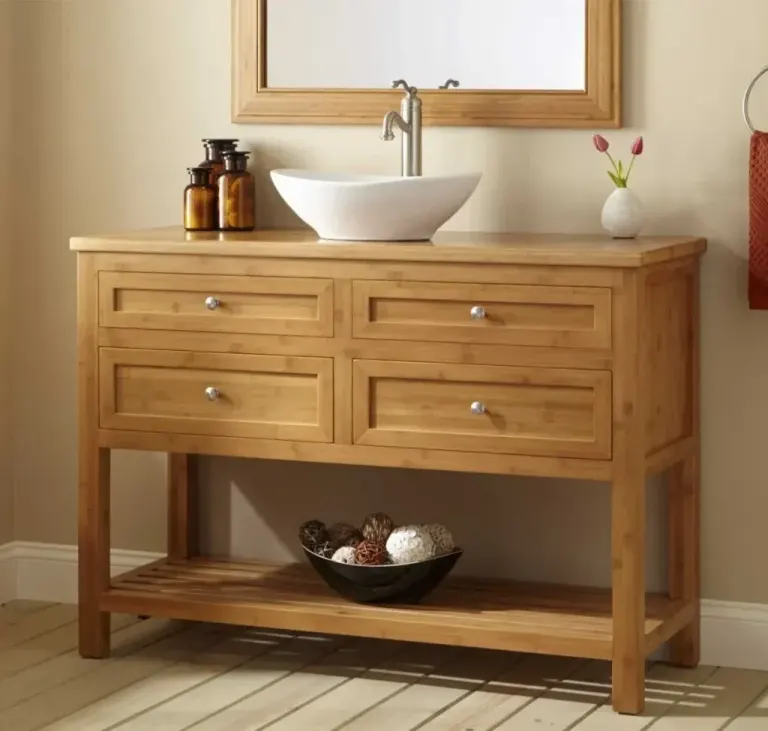
Sanitaryware Consolidation, Micro-Living Modular Engineering, and Emerging Trade Corridors for the Import and Export of Kitchen and Bathroom Cabinets in Turkey
The global architectural supply chain is rapidly consolidating around single-source turnkey procurement, elevating the import and export of kitchen and bathroom cabinets in Turkey into a unified multi-category sourcing ecosystem. Beyond standalone woodworking, Turkey ranks among the world’s largest producers of vitreous china ceramic sanitaryware, brass faucet mixers, acrylic shower enclosures, and architectural porcelain tiles

This industrial proximity enables international distributors, hospitality contractors, and multi-family developers to execute cross-category container consolidation—combining moisture-proof bathroom vanities and modular kitchen systems with matching ceramic washbasins, concealed cistern frames, and kitchen sinks from a single Turkish supply corridor. Simultaneously, rapid urbanization across Western Europe, North America, and the Middle East has fueled surging demand for micro-living and compact studio cabinetry, challenging Turkish manufacturers to engineer space-maximizing transformable joinery while Turkish importers bring specialized European compact-space mechanisms into Istanbul and coastal metropolitan markets.
Mastering the import and export of kitchen and bathroom cabinets in Turkey across these evolving segments requires deep technical fluency in ceramic-to-cabinet dimensional tolerances, compact space-saving hardware engineering, Pan-Euro-Mediterranean (PEM) diagonal origin cumulation across Balkan and North African markets, and statistical quality control (SPC) defect prevention. A mismatch in ceramic basin overhang tolerances or a failure to apply diagonal cumulation rules when exporting Turkish cabinets built with European hardware into Morocco or Serbia can erode project profitability. This technical manual dissects sanitaryware consolidation logistics, micro-living cabinetry engineering, emerging trade corridor tariff rules, and predictive manufacturing quality systems governing the import and export of kitchen and bathroom cabinets in Turkey.
1. Sanitaryware & Cabinetry Cross-Category Consolidation in Turkey
A decisive competitive advantage in the import and export of kitchen and bathroom cabinets in Turkey is the geographic overlap between Turkey’s major woodworking hubs and its world-leading ceramic sanitaryware clusters across Bilecik (Bozüyük), Eskişehir, Çanakkale, Kütahya, and İzmir.
Engineering & Loading Unified Bathroom Suites
1. Dimensional Synchronization Between Vitreous China Basins and Vanity Carcasses:
• Unlike engineered quartz or cast-marble tops milled to ±0.3mm CNC tolerances, vitreous china ceramic washbasins undergo high-temperature kiln firing (~1,220°C) that introduces ±1.5% dimensional shrinkage variance and subtle perimeter waviness.
• Leading Turkish bathroom vanity exporters solve this interface challenge by either:
• Factory-Paired Batch Matching: Pre-fitting each ceramic basin onto its designated vanity cabinet prior to packaging, applying a calibrated silicone bedding bead, and serializing both cartons with matching pair IDs (Set #042-A Vanity + Set #042-B Basin).
• Overhang Reveal Engineering: Designing vanity top aprons with a deliberate 10mm–15mm peripheral ceramic overhang and flexible EPDM compression gaskets that visually absorb minor kiln curvature while sealing against water runoff.
2. Mixed-Container Weight-to-Cube Balancing (Dengeleme Yüklemesi):
• Wooden and PVC bathroom vanities are volumetric ("cube-out") cargo (~180–240 kg/CBM), whereas ceramic toilets, washbasins, and porcelain tiles are dense ("weigh-out") cargo (~900–1,400 kg/CBM).
• Consolidating heavy ceramic sanitaryware along the lower deck of a 40’ High Cube container (distributed evenly across axle weight limits) and stacking lightweight palletized flat-pack vanities and kitchen cabinets above maximizes both 26-ton payload capacity and 66 CBM cubic volume, cutting per-unit international ocean freight costs by 22% to 35% compared to shipping ceramics and cabinetry in separate containers.
2. Micro-Living, Studio Apartment, and Compact Modular Cabinetry Engineering
Surging urban housing costs across London, Berlin, Paris, New York, Toronto, and Istanbul have triggered a boom in micro-apartments (22–40 m²), co-living developments, and boutique aparthotels. Serving this segment in the import and export of kitchen and bathroom cabinets in Turkey requires specialized space-saving engineering.
High-Density Spatial Engineering Solutions
• Mini-Kitchen Monoblocks (Gizli Mutfak / Pocket Kitchens):
• Turkish architectural joinery factories engineer self-contained 1,200mm to 1,800mm wide pocket-door mini-kitchens housing a two-zone induction hob, compact 45cm dishwasher, under-counter refrigerator, stainless sink, and recirculating carbon-filter hood behind flush-retractable bi-fold or pocket doors.
• Thermal & Electrical Interlock Safety: Export-grade mini-kitchens integrate mandatory magnetic door-cutoff micro-switches that automatically cut electrical power to the induction cooktop and oven whenever the pocket doors are closed, preventing catastrophic heat buildup inside enclosed cabinetry.
• Ultra-Slim Vanity Carcasses & Wall-Hung Concealed-Tank Integration:
• For compact urban bathrooms, Turkish manufacturers produce 350mm to 420mm shallow-depth floating vanities paired with narrow-projection ceramic basins and tall 150mm–200mm pull-out apothecary medicine columns utilizing side-mounted soft-close tandem runners.
• Over-toilet storage cabinets are CNC-notched to mount flush over concealed in-wall cistern frames (e.g., Geberit, Vitra, Serel), creating seamless floor-to-ceiling storage in wet rooms under 3 m².
3. Emerging Export Corridors & PEM Diagonal Origin Cumulation
While the EU-27, UK, and USA represent mature primary destinations, rapid margin expansion in the import and export of kitchen and bathroom cabinets in Turkey increasingly occurs across Balkan, North African, Central Asian (Turkic States), and Sub-Saharan African corridors.
Tariff & Origin Mechanics Across High-Growth Regional Corridors
Trade Corridor & Target Markets Applicable Trade Agreement & Certificate Origin & Tariff Mechanics for Turkish Cabinetry Key Logistical & Regulatory Nuances
North Africa (Morocco, Tunisia, Egypt) Bilateral FTAs + Pan-Euro-Mediterranean (PEM) Convention (EUR.1 / EUR-MED). 0% Customs Duty on Turkish-origin wooden/PVC cabinets (HS 9403.40 / 9403.60) when value-added origin rules are satisfied. Diagonal Cumulation: EU-origin hinges/boards used in Turkish cabinets count as "originating" under PEM rules, making it easy to qualify for 0% duty.
Western Balkans (Serbia, Bosnia & Herzegovina, Albania, North Macedonia) Bilateral FTAs + PEM Cumulation (EUR.1). 0% Customs Duty across all participating Balkan jurisdictions; overland trucking via Bulgaria/Greece takes 2 to 4 days. Ideal corridor for phased hotel and residential tower deliveries using 13.6m curtain-sider mega-trailers.
Central Asia & Caucasus (Azerbaijan, Georgia, Uzbekistan, Kazakhstan) Turkey-Georgia / Turkey-Azerbaijan Preferential Trade Agreements + Middle Corridor transit. 0% duty in Georgia and preferential tariff reductions across CIS/Turkic states; strong brand preference for Turkish interior design. Routed via Baku-Tbilisi-Kars (BTK) railway or Caspian Ro-Ro ferries (Aktau/Turkmenbashi), bypassing northern rail bottlenecks.
Sub-Saharan Africa (Nigeria, Ghana, Kenya, Côte d’Ivoire) MFN Tariffs + Pre-Shipment Verification of Conformity (PVoC) (SONCAP, ICUMS, KEBS). Standard regional ECOWAS/EAC import duties apply; flat-pack (RTA) melamine and PVC vanities dominate volume. Mandatory Certificate of Conformity (CoC) issued by SGS, Intertek, or Bureau Veritas in Turkey prior to vessel sailing.
4. Statistical Process Control (SPC) & Predictive Quality Engineering
To sustain repeat orders from tier-one international retailers and institutional developers, top Turkish factories in the import and export of kitchen and bathroom cabinets in Turkey replace reactive end-of-line sorting with Statistical Process Control (SPC) and predictive machine diagnostics.
Eliminating Dimensional & Finish Defects Before Packaging
1. Automated Optical Board & Lacquer Inspection:
• High-speed camera vision bridges installed at the exit of lamination presses and robotic lacquer tunnels scan 100% of panel surfaces under polarized LED arrays, detecting micro-pinholes, dust nibs (>0.2mm), edge chipping, or sheen deviations in real time and automatically diverting non-conforming panels prior to boring.
2. CNC Tool-Wear Compensation & Barcode Bore Verification:
• Dull diamond-tipped router bits cause melamine edge tear-out and oversized 35mm hinge cup bores. Automated CNC centers track cumulative linear cutting meters per tool bit, triggering automatic tool-changer swaps before cutting tolerances drift beyond ±0.15mm.
3. Moisture-Gradient Mapping Before Container Stuffing:
• Quality engineers log calibrated pinless hygrometer readings across sampled pallets in every production lot—verifying 6.5%–8.5% core moisture—and attach the digital moisture log to the Pre-Shipment Inspection (PSI) report, providing objective proof against post-arrival warping disputes.
5. Frequently Asked Questions (Consolidation, Micro-Living & Emerging Corridors)
Can international buyers combine ceramic toilets, washbasins, and wooden bathroom vanities in a single container from Turkey?
Yes. Consolidating dense ceramic sanitaryware (HS 6910) along the container floor with volumetric flat-pack bathroom vanities (HS 9403.60) and kitchen cabinets (HS 9403.40) stacked above optimizes both payload weight and cubic volume, reducing total sea freight costs by 22% to 35%.
How do Turkish manufacturers ensure safety in compact pocket-door mini-kitchens?
Export-grade mini-kitchen monoblocks incorporate magnetic door-interlock cutoff switches that automatically disconnect power to built-in induction hobs and ovens whenever the pocket doors are closed, paired with heat-reflective aluminum side shields and front-venting appliances.
How does PEM diagonal cumulation help Turkish cabinet exporters selling to Morocco, Egypt, or Serbia?
Under the Pan-Euro-Mediterranean (PEM) Convention, European Union components (such as Austrian Blum hinges or German acrylic foils) incorporated into cabinets manufactured in Turkey count toward originating content, enabling the finished cabinets to enter PEM partner countries like Morocco, Tunisia, Egypt, and Serbia at 0% customs duty under an EUR-MED / EUR.1 certificate.
What pre-shipment inspections are mandatory when exporting Turkish cabinetry to Nigeria, Kenya, or Saudi Arabia?
Exports to Nigeria (SONCAP), Kenya (KEBS PVoC), and Saudi Arabia (SASO SABER) require accredited third-party inspection bodies (SGS, Intertek, Bureau Veritas, or TÜV) to verify product conformity and issue an electronic Certificate of Conformity (CoC) prior to shipment arrival; without it, destination customs will block clearance.