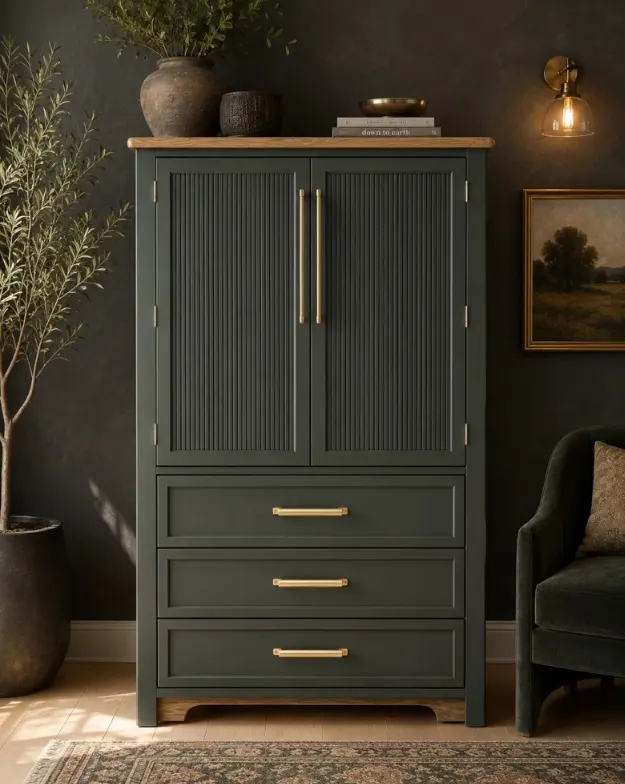
OEM Manufacturing, Smart Hardware Integration, and Sustainable Supply Chains for the Import and Export of Kitchen and Bathroom Cabinets in Turkey
The global architectural millwork industry is undergoing a dual transformation driven by smart-home electrification and mandatory environmental circularity, placing the import and export of kitchen and bathroom cabinets in Turkey at the forefront of international private-label and contract sourcing.
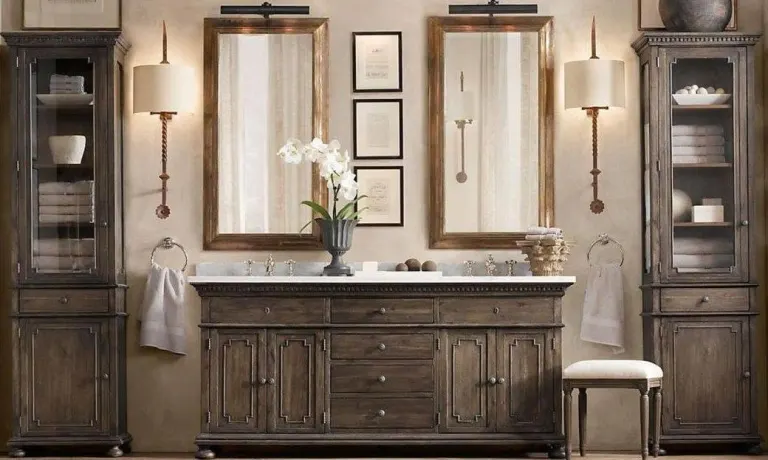
Beyond its established reputation for cost-competitive panel processing and duty-free European market access, Turkey’s cabinetry ecosystem has rapidly evolved into a sophisticated Original Equipment Manufacturer (OEM) and Original Design Manufacturer (ODM) hub. International kitchen retail franchises, sanitaryware conglomerates, and multi-family real estate developers increasingly rely on Turkish factories to engineer white-label modular lines equipped with European motion hardware, integrated IoT lighting, and low-carbon recycled wood substrates.
At the same time, domestic Turkish distributors and luxury residential developers importing bespoke cabinetry systems from Italy, Germany, and Spain must navigate stringent Turkish conformity regimes, localized voltage and plumbing standards, and long-horizon spare-parts lifecycle management. Succeeding in the import and export of kitchen and bathroom cabinets in Turkey requires mastering the technical intersection of automated CNC joinery, low-voltage electrical integration, Environmental Product Declarations (EPDs), and structured OEM intellectual property protection. This comprehensive manual details how global buyers, Turkish exporters, and domestic importers can architect resilient, high-margin supply chains across the import and export of kitchen and bathroom cabinets in Turkey.
1. OEM & ODM Private-Label Architecture in Turkish Cabinetry
For international retail chains, regional distributors, and hospitality brands looking to launch proprietary product lines, partnering with Turkish factories on an OEM or ODM basis provides rapid speed-to-market without capital expenditure on industrial woodworking machinery.
Distinguishing OEM vs. ODM Workflows in Turkey
1. Original Equipment Manufacturing (OEM — Build-to-Print):
• Workflow: The international buyer supplies complete engineering drawings, 32mm system boring schematics, proprietary door profiles, finish specifications, and branded packaging artwork.
• Turkish Factory Execution: Factories in Bursa-İnegöl, Kayseri, or İzmir import the buyer’s exact CAD/CAM files directly into Homag/Biesse production control software, source specified boards and hardware, and produce serialized flat-pack or rigid units under strict Non-Disclosure and Non-Circumvention Agreements (NDA/NCNAs).
2. Original Design Manufacturing (ODM — White-Label Catalog Customization):
• Workflow: The buyer selects proven modular carcass systems, standard cabinet widths (e.g., European 150mm–1200mm increments or North American 3-inch imperial increments from 9" to 42"), and existing door designs from a Turkish manufacturer’s R&D library, applying custom color palettes, handle profiles, and private-label branding.
• Commercial Advantage: Eliminates tooling and prototyping fees, compresses initial production lead times to 20–28 days, and lowers Minimum Order Quantities (MOQs) to a single 40’ High Cube container mixed across multiple door styles.
Dimensional Standardization: European Metric vs. North American Imperial
A critical engineering hurdle in the import and export of kitchen and bathroom cabinets in Turkey is adapting production lines between metric and imperial architectural standards:
• European Metric System (32mm System): Standard across Turkey, the EU, the UK, and the Middle East. Base cabinets typically measure 720mm or 780mm carcass height (plus 100mm–150mm adjustable plinth legs) and 560mm–580mm carcass depth (accommodating 600mm–650mm countertops). Wall cabinets standardly run 360mm, 720mm, or 900mm high by 320mm–350mm deep.
• North American Imperial & Face-Frame/Frameless Standards: Exporting to the United States and Canada requires engineering cabinets to 34.5-inch base cabinet height (reaching 36 inches with a 1.5-inch countertop) and 24-inch base depth, with wall cabinets at 12-inch or 15-inch depth and 30", 36", or 42" height. Export-focused Turkish plants maintain dual parametric CAD libraries capable of switching CNC drilling coordinates between European metric full-overlay frameless construction and North American 3/4-inch solid-wood face-frame construction with pocket-screw or mortise-and-tenon joinery.
2. Smart Hardware, Electrification, and Wet-Zone Safety Compliance
Modern kitchen and bathroom cabinetry is no longer purely passive carpentry; it functions as an electrified architectural system integrating automated motion, task illumination, and hygienic electronics. Managing these components properly is essential in the import and export of kitchen and bathroom cabinets in Turkey.
Integrated Low-Voltage Lighting & Sensor Systems
Turkish exporters and importers frequently incorporate:
• Recessed Aluminum LED Channels: Milled directly into the underside of upper kitchen wall cabinets, inside pantry tall units, and beneath floating bathroom vanities, utilizing high-CRI (CRI > 90) 24V DC COB (Chip-on-Board) LED strips for dot-free linear illumination.
• Infrared (IR) Door & Drawer Proximity Switches: Automated micro-sensors routed into carcass side panels that trigger interior cabinet illumination when a door opens or wave-activated dimmers under wall units.
• Smart Bathroom Mirror Cabinets: Combining anti-fog PET demister heating pads, adjustable Kelvin color-temperature LED frames (2700K–6500K), digital clocks, and Bluetooth audio modules.
Cross-Border Electrical & Ingress Protection Standards
Regulatory Domain Technical Requirement for Cabinetry Mandatory Certification & Marking Operational Impact on Trade
European Union & Turkey 220V–240V AC, 50Hz input converted via Class II SELV (Safety Extra-Low Voltage) 12V/24V DC drivers. CE Marking under Low Voltage Directive (2014/35/EU), EMC (2014/30/EU), and RoHS (2011/65/EU). Mandatory for EU customs entry and Turkey’s TAREKS import safety clearance.
North America (USA & Canada) 110V–120V AC, 60Hz input; Class 2 low-voltage power units with UL/ETL-listed quick-disconnect wiring harnesses. UL 962 (Household and Commercial Furnishings) or UL 1598 / CSA C22.2 for integrated luminaires. Non-UL-listed electrical components inside cabinets fail US municipal building inspections.
Bathroom Wet-Zone Ingress Protection All drivers, junction boxes, and LED strips within Zone 1 and Zone 2 of bathtubs/basins must block water splashes. Minimum IP44 rating (splash-proof from any direction); IP65 required near open shower enclosures. Prevents short-circuit liability and satisfies hotel/residential electrical codes.
Mechanical Motion Hardware & Load Engineering
While Turkey hosts robust domestic hardware manufacturers (such as Samet and Yeniler) producing soft-close hinges and telescopic/undermount drawer slides, international architectural specifications frequently mandate Austrian or German flagship hardware (Blum, Hettich, Grass).
• Tax-Free Hardware Integration via DİR: When a foreign buyer specifies Austrian Blum Legrabox drawers or Servo-Drive electric opening units for a project manufactured in Turkey, the Turkish factory imports those exact hardware SKUs duty-free and VAT-free under an Inward Processing Regime (Dahilde İşleme Rejimi – DİR) license, assembling them into the exported cabinets without inflating the final FOB price with local import taxes.
3. Sustainable Forestry, Circular Substrates, and Green Building Credits
Real estate developers across Europe, North America, and the Middle East increasingly mandate green building certifications—such as LEED v4.1, BREEAM, and DGNB—for commercial and multi-family residential towers. To win these contracts, stakeholders in the import and export of kitchen and bathroom cabinets in Turkey must document environmental compliance across every material layer.
Chain-of-Custody Forestry & Recycled Wood Content
1. FSC® and PEFC™ Certification: Major Turkish wood-panel producers and tier-one cabinet manufacturers maintain active Forest Stewardship Council (FSC Mix / FSC Recycled) and PEFC Chain-of-Custody certifications. To preserve certification validity, the Turkish factory’s FSC certificate code must appear explicitly on both the commercial invoice and the packing list; otherwise, the buyer cannot claim FSC credits toward LEED or BREEAM material points.
2. High Post-Industrial Recycled Content: Modern Turkish particleboard lines incorporate 65% to 85% recycled wood fiber reclaimed from sawmill offcuts, clean pallet waste, and forestry thinnings, paired with bio-based or ultra-low-emitting formaldehyde (ULEF) resins.
3. Environmental Product Declarations (EPDs): Export-oriented Turkish panel and cabinet manufacturers increasingly publish third-party verified Type III EPDs compliant with ISO 14025 and EN 15804, quantifying embodied carbon (Global Warming Potential – GWP) per square meter of finished cabinetry. Providing verified EPDs gives Turkish exporters a decisive edge in European public-sector housing tenders and Scandinavian retail procurement.
EUDR Geolocation Compliance in Practice
Under the EU Deforestation Regulation (EUDR), placing wooden cabinetry (HS 9403) onto the EU market requires submitting an electronic Due Diligence Statement (DDS) reference number on the EU customs declaration.
• Turkish exporters must collect upstream DDS reference numbers and WGS84 GPS polygon coordinates from their panel mills (covering both domestic Turkish forestry plots and any imported European or non-EU logs/veneer sheets) and pass those traceability records digitally to the European importer prior to vessel arrival.
4. Plumbing Cut-Out Engineering & Sanitaryware Compatibility
A frequent source of costly on-site delays in international construction projects occurs when imported bathroom vanities or kitchen sink cabinets clash with local plumbing rough-ins, trap geometries, or countertop overhang tolerances.
Synchronizing Cabinetry with Regional Plumbing Codes
• Drawer-Box U-Cutouts vs. Space-Saving Traps: Modern floating bathroom vanities feature deep top drawers directly beneath the washbasin. Turkish factories engineer these top drawers using either a CNC-routed central U-shaped siphon cutout reinforced with PVC/aluminum edge trim, or pair the vanity with European space-saving low-profile bottle traps (such as Geberit or Viega flat-trap systems) that tuck flush against the rear wall, preserving 100% of usable drawer storage depth.
• Rear Service Void (Tesisat Boşluğu): Export-grade kitchen base cabinets and bathroom vanities must incorporate a standardized 40mm to 60mm rear service cavity behind the 8mm grooved back panel. This recess allows hot/cold water supply lines, drain pipes, and electrical conduits to run horizontally behind the cabinets without requiring installers to hack into structural back panels on-site.
• Basin & Countertop Tolerances: When Turkish factories supply bathroom vanities topped with cast-marble (cultured marble), solid-surface acrylic (Corian-equivalent), vitreous ceramic, or sintered porcelain basins, shop drawings must account for kiln shrinkage tolerances in ceramic basins (typically ±1.5% to ±2.0%). Top-tier exporters laser-scan or physically template ceramic basin batches prior to CNC-cutting vanity carcass top rails, ensuring flush perimeter alignment and clean silicone bead lines.
5. Importing Cabinetry into Turkey: Luxury Retail, After-Sales, and Warranty Infrastructure
While exports dominate volume, importing high-end kitchen and bathroom systems into Turkey represents a lucrative, high-margin segment concentrated in Istanbul, Ankara, İzmir, Bodrum, and Antalya.
Operational Requirements for Turkish Importers & Showrooms
1. Turkish Consumer Protection Law (Law No. 6502) & Mandatory Warranty (Garanti Belgesi): Under Turkish consumer legislation, commercial importers bringing finished kitchen and bathroom furniture into Turkey for retail sale must provide a minimum 2-year mandatory statutory warranty covering manufacturing defects, delamination, and hardware failure, accompanied by a Turkish-language warranty certificate and assembly/care guide.
2. After-Sales Spare Parts Inventory (Satış Sonrası Hizmet Yeterlilik Belgesi): Importers distributing branded bathroom vanities or modular kitchen systems must maintain local spare-parts availability (hinges, drawer runners, LED drivers, plinth clips, and touch-up kits) to fulfill warranty claims within the statutory 20-business-day repair window, avoiding mandatory product replacement or full refund liabilities.
3. Customs Duty Optimization for European Luxury Brands: Turkish showrooms importing complete kitchens from Italy, Germany, or Spain must verify that the European manufacturer issues an electronic A.TR Movement Certificate via customs authorities at origin. Without a valid A.TR, EU-made cabinets lose their 0% Customs Union privilege upon arrival at Istanbul Ambarlı or Erenköy customs terminals and are assessed standard MFN tariffs.
6. Intellectual Property Protection & Brand Security in Cross-Border Trade
When international brands outsource proprietary cabinet designs to Turkish OEM factories, or when Turkish manufacturers export original patented modular systems abroad, safeguarding intellectual property (IP) is essential.
Practical IP Safeguards
• Design Registration via WIPO Hague System & TÜRKPATENT: Both Turkey and the European Union/USA are contracting parties to the Hague Agreement Concerning the International Registration of Industrial Designs. International buyers can extend industrial design protection for unique fluted vanity fronts, integrated handle profiles, or proprietary modular joining hardware into Turkey via a single WIPO filing—or register directly with the Turkish Patent and Trademark Office (TÜRKPATENT)—enabling Turkish customs authorities to block unauthorized copycat exports at the border.
• Bilingual NNN Agreements (Non-Disclosure, Non-Use, Non-Circumvention): Standard Western NDAs are insufficient in cross-border manufacturing. Contracts with Turkish OEM partners should incorporate enforceable NNN clauses governed by Turkish commercial law or international arbitration (ISTAC/ICC), explicitly prohibiting the factory from selling the buyer’s custom CAD models, proprietary door molds, or excess production overruns to third-party distributors or displaying them at trade fairs (such as Intermob or Istanbul Furniture Fair – IIFF).
7. Frequently Asked Questions (OEM, Sustainability & Technical Execution)
Can Turkish cabinet factories manufacture to North American imperial dimensions and face-frame specifications?
Yes. Export-specialized factories in Bursa, Kayseri, and İzmir operate parametric CAD/CAM systems capable of producing both European 32mm metric frameless cabinets and North American imperial (3-inch increment) solid-wood face-frame or frameless cabinets, complete with ANSI/KCMA A161.1 structural reinforcement and EPA TSCA Title VI formaldehyde certification.
How do Turkish manufacturers handle LED lighting compliance for exports to the USA versus the EU?
For EU and UK exports, factories install 220V–240V AC to 12V/24V DC drivers and LED channels carrying CE (LVD, EMC, RoHS) and IP44 wet-zone ratings. For US and Canadian exports, factories switch to 110V–120V AC UL/ETL-listed Class 2 power supplies and plug-and-play UL-certified wiring harnesses so the cabinetry passes North American electrical and municipal building inspections without field rewiring.
What environmental certifications can Turkish cabinetry exporters provide for LEED or BREEAM projects?
Tier-one Turkish manufacturers can supply FSC® or PEFC™ Chain-of-Custody invoices, Type III Environmental Product Declarations (EPDs) verifying embodied carbon, ULEF / E0.5 / TSCA Title VI ultra-low formaldehyde emission test reports, and documentation confirming 65%–85% post-industrial recycled wood content in particleboard substrates.
What is the typical tooling and prototyping timeline for a custom OEM cabinet line in Turkey?
For custom CNC-routed doors, bespoke lacquer color matches, and tailored carcass modules, Turkish OEM factories typically produce physical engineering samples within 10 to 15 business days after CAD sign-off. Once samples are approved, full container-load production takes 25 to 35 calendar days.