
Mastering the Import and Export of Solid Wood Kitchen and Bathroom Cabinets in Türkiye: A Comprehensive 2026 Trade, Engineering, and Regulatory Blueprint
The global trade architecture surrounding the import and export of solid wood kitchen and bathroom cabinets in Türkiye has evolved into one of the most technically demanding and economically vital segments of the Eurasian timber-processing and architectural millwork sector.
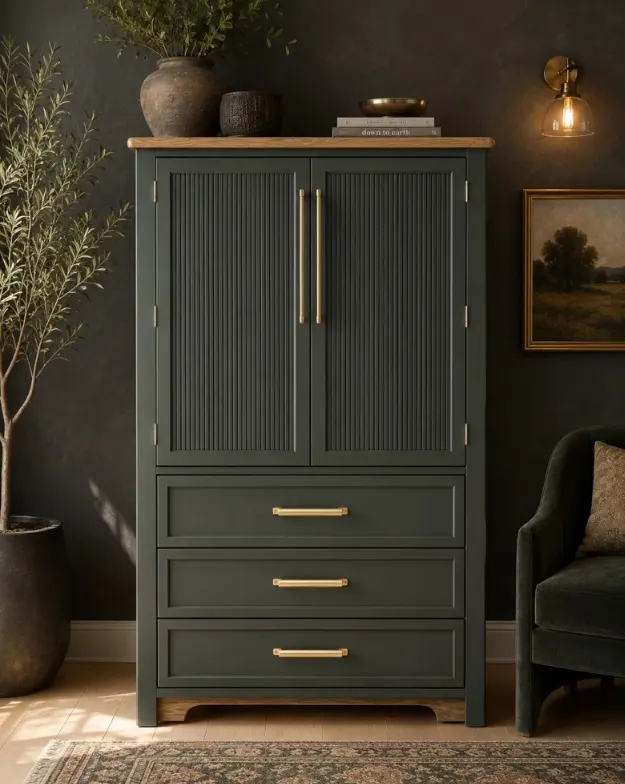
Situated at the geographic nexus of European Union (EU) regulatory standards, Middle Eastern mega-project procurement, and North American residential construction demand, Türkiye has established itself as a premier manufacturing and transshipment powerhouse. According to data from the Republic of Türkiye Ministry of Trade and industry tracking reports, Türkiye’s broader furniture sector achieved $4.58 billion in exports in 2025 under Harmonized System (HS) codes 9401–9404, while the combined furniture, paper, and forest products cluster reached $8.4 billion. Within this ecosystem, the import and export of solid wood kitchen and bathroom cabinets in Türkiye represents a high-margin, engineering-intensive niche where raw hardwood procurement, kiln-drying thermodynamics, CNC precision joinery, and international customs compliance intersect.
For international procurement directors, architectural specifiers, customs brokers, and Turkish export-import executives, navigating the import and export of solid wood kitchen and bathroom cabinets in Türkiye requires far more than superficial market awareness. Unlike flat-pack melamine or medium-density fiberboard (MDF) cabinetry, solid wood cabinetry—predominantly crafted from kiln-dried Anatolian beech (Fagus orientalis), Turkish oak (Quercus spp.), walnut (Juglans regia), chestnut (Castanea sativa), and imported North American or European hardwoods—behaves as a hygroscopic, anisotropic engineering material. Consequently, every phase of the import and export of solid wood kitchen and bathroom cabinets in Türkiye is governed by strict moisture-equilibrium tolerances, phytosanitary protocols, formaldehyde emission ceilings, and multi-jurisdictional tariff classifications.
1. Macroeconomic Architecture and Trade Flow Dynamics of Solid Wood Cabinetry in Türkiye
Understanding the import and export of solid wood kitchen and bathroom cabinets in Türkiye begins with disaggregating macro-level trade statistics into specific product classifications, regional industrial clusters, and bilateral trade corridors. While Türkiye ranks among the top seven furniture exporters globally, solid wood kitchen and bathroom cabinetry occupies a specialized tier characterized by higher unit values per kilogram compared to upholstered seating or panel-based bedroom sets.
Export Trajectory and Primary Destination Markets
In the import and export of solid wood kitchen and bathroom cabinets in Türkiye, export flows are heavily weighted toward markets with stringent structural building codes and high architectural customization demands. Trade records compiled by WITS World Bank and bilateral customs manifests tracked on Trade Data Pro demonstrate that shipments under HS 9403.40 (wooden kitchen furniture) and HS 9403.60 (other wooden furniture, encompassing bathroom vanities and linen towers) flow along three primary corridors:
1. The North American Corridor (United States and Canada): Driven by multi-family residential developments, boutique hospitality renovations, and custom kitchen dealerships along the US East Coast (notably the ports of New York/Newark, Norfolk, and Port Everglades), American buyers source solid wood Shaker-style and European frameless cabinetry from Türkiye to diversify supply chains away from East Asian anti-dumping and countervailing duty (AD/CVD) regimes. However, exporters managing the import and export of solid wood kitchen and bathroom cabinets in Türkiye must actively navigate shifting US tariff policies, including the 25% additional customs tariffs introduced in late 2025 on specific wooden cabinetry categories.
2. The European Union and United Kingdom Corridor: Germany, France, the Netherlands, Romania, and the UK represent mature, high-compliance markets. European importers prioritize FSC-certified solid oak and ash cabinetry, zero-VOC waterborne finishes, and seamless integration with European hardware ecosystems (such as Blum, Hettich, and Grass). Under the EU-Türkiye Customs Union (Decision No 1/95), Turkish-manufactured solid wood cabinets enter the EU duty-free when accompanied by a validated A.TR Movement Certificate, provided raw timber inputs meet origin and sustainability mandates.
3. The Middle East and Gulf Cooperation Council (GCC) Corridor: Iraq remains Türkiye’s largest overall furniture export destination by volume, while Saudi Arabia, the United Arab Emirates, and Qatar drive demand for luxury solid walnut and ornate carved solid beech kitchen and bathroom installations for royal villas, five-star resorts, and high-rise residential towers. Export growth to Saudi Arabia surged by over 200% in 2025, fueled by Vision 2030 construction tenders.
Import Dynamics: Raw Lumber, Veneers, and Luxury European Cabinetry
The "import" half of the import and export of solid wood kitchen and bathroom cabinets in Türkiye operates on two distinct levels:
• Upstream Industrial Inputs (Inward Processing): Turkish cabinet manufacturers import substantial volumes of specialized temperate hardwoods—such as American Black Walnut, White Oak, Red Oak, and European Ash—alongside German and Austrian precision hinges, undermount drawer slides, and polyurethane/UV-curable coatings. Much of this is imported under Türkiye’s Inward Processing Regime (Dahilde İşleme Rejimi - DİR), which exempts manufacturers from customs duties and Value Added Tax (KDV) on raw materials destined for re-export as finished cabinetry.
• Finished Luxury Imports: According to the Republic of Türkiye Ministry of Trade, Türkiye imported $1.05 billion in total furniture in 2025, led by China, Italy, and Germany. In the solid wood kitchen and bathroom cabinet segment, finished imports consist overwhelmingly of ultra-high-end architectural systems from Italy (e.g., bespoke solid timber and brushed-lacquer systems) and Germany for luxury residential developments in Istanbul, Bodrum, and Ankara, alongside mass-market flat-pack units from Asia.
Trade Dimension Primary HS / GTİP Codes Leading Partner Countries Key Regulatory & Tariff Instruments Primary Logistics Gateways
Turkish Exports (Finished Cabinets) 9403.40.10, 9403.40.90, 9403.60.90 USA, Iraq, Germany, UK, Saudi Arabia, UAE, France A.TR (EU), EUR.1 (UK/EFTA), US Section 232/301/Reciprocal Tariffs, SASO Saber (KSA) Ambarlı (Istanbul), Evyap/İzmit, Gemlik (Bursa), Alsancak (İzmir), Mersin
Turkish Imports (Finished Cabinets) 9403.40.10, 9403.40.90, 9403.60.10 Italy, Germany, China, Spain, Poland Turkish Customs Tariff Schedule, Additional Customs Duty (İGV), CE Marking, KKDF Ambarlı Port, Halkalı Customs, Kapıkule Land Border
Turkish Imports (Hardwood Lumber & Hardware) 4407.91 (Oak), 4407.92 (Beech), 8302.42 (Fittings) USA, Ukraine, Romania, Germany, Austria, Croatia Inward Processing Regime (DİR), Phytosanitary Certificates, EUDR Due Diligence Derince, Gemlik, Tekirdağ, Mersin
2. Regional Manufacturing Clusters Driving Solid Wood Cabinetry Production in Türkiye
A rigorous analysis of the import and export of solid wood kitchen and bathroom cabinets in Türkiye must account for the country’s decentralized, cluster-based industrial geography. Rather than relying on isolated mega-factories, Türkiye’s production network spans six major hubs, each possessing distinct engineering capabilities, tooling infrastructure, and export specializations.
Istanbul (Masko, Modoko, and Tuzla/Gebze Industrial Zones)
Istanbul serves as the commercial, design, and high-end architectural engineering nerve center for the import and export of solid wood kitchen and bathroom cabinets in Türkiye. Recording $3.5 billion in broader furniture exports in 2025, Istanbul hosts bespoke architectural millwork factories in Tuzla, Dudullu, and neighboring Gebze (Kocaeli). Manufacturers here specialize in custom architectural projects, combining solid European oak, American walnut, and smoked ash with integrated stone countertops, brass inlays, and smart LED lighting systems. Proximity to Ambarlı and İzmit ports enables rapid container consolidation for transatlantic and European shipments.
Bursa – İnegöl Cluster
Recognized as Türkiye’s furniture capital, İnegöl houses approximately 3,000 registered furniture enterprises and nearly 120,000 skilled workers. While widely known for residential living and dining sets, İnegöl’s proximity to the Uludağ and Black Sea timber belts gives its solid wood cabinet manufacturers direct access to Anatolian beech and chestnut sawmills. Factories in the İnegöl Organized Industrial Zone operate 5-axis CNC machining centers, automated UV finishing lines, and vacuum membrane presses, exporting modular solid wood kitchen carcasses and solid timber Shaker doors through Gemlik Port.
Ankara (Siteler and Sincan/Akyurt Industrial Zones)
Ankara’s historic Siteler district comprises over 10,000 small and medium-sized workshops alongside roughly 10 large-scale industrial manufacturers. Siteler is the premier hub for hand-carved, classical, and neo-classical solid wood kitchen and bathroom vanities exported to Gulf royal families, luxury hotels, and diplomatic residences. Master joiners in Siteler execute traditional mortise-and-tenon, dovetail, and hand-rubbed French polish or patina finishes that cannot be replicated on automated flat-line machinery.
İzmir (Kemalpaşa and Torbalı) and Kayseri
• İzmir: Positioned on the Aegean coast with direct access to Alsancak and Aliağa ports, İzmir’s factories excel in contemporary Mediterranean architectural cabinetry, utilizing solid olive wood accents, thermally modified ash, and marine-grade moisture-resistant solid timber vanities designed for coastal climates.
• Kayseri: Home to 440 furniture companies and 35,000 workers in the Kayseri Organized Industrial Zone—generating $600 million in 2025 furniture exports—Kayseri specializes in high-volume, repeatable industrial production. Manufacturers here produce standardized, flat-pack (RTA - Ready-to-Assemble) solid wood face-frame cabinets for North American wholesale distributors, shipping via rail and highway to Mersin Port.
Bolu – Düzce Timber and Panel Belt
Located halfway between Istanbul and Ankara along the North Anatolian forest corridor, Bolu and Düzce serve as Türkiye’s primary wood-processing, kiln-drying, and engineered solid-wood panel (finger-jointed and edge-glued solid panels) hub. Nearly every major participant in the import and export of solid wood kitchen and bathroom cabinets in Türkiye sources kiln-dried solid timber blanks, solid wood drawer boxes, and multi-ply birch/beech cores from this region.
3. Harmonized System (HS / GTİP) Classification and Customs Tariff Engineering
Misclassification of goods is the single most frequent cause of customs delays, retroactive duty assessments, and administrative fines in the import and export of solid wood kitchen and bathroom cabinets in Türkiye. Under the Turkish Customs Tariff Schedule (Türk Gümrük Tarife Cetveli - TGTC), which aligns with the World Customs Organization (WCO) 6-digit HS nomenclature and the EU Combined Nomenclature (CN) at the 8-digit level, solid wood cabinets are classified with strict functional specificity.
Critical GTİP (12-Digit Turkish HS) Codes
• 9403.40.10.00.00 — Fitted kitchen units of wood (Ahşaptan gömme mutfak üniteleri): This code applies to modular base cabinets, wall-hung cabinets, tall pantry units, and sink bases designed to be permanently affixed to walls or floors as part of a fitted kitchen system. Whether shipped fully assembled (rigid) or knocked-down (RTA) in flat-pack cartons, complete cabinetry units fall here.
• 9403.40.90.00.00 — Other wooden furniture of a kind used in the kitchen (Mutfakta kullanılan diğer ahşap mobilyalar): Covers freestanding wooden kitchen islands, butcher-block carts, Welsh dressers, and standalone larder cupboards that are not permanently built into the wall structure.
• 9403.60.90.90.00 — Other wooden furniture (Bathroom Vanities & Linen Cabinets): Because the Harmonized System does not assign a dedicated 6-digit subheading to bathroom furniture, solid wood bathroom vanities, under-sink cabinets, and mirrored wall cabinets are classified under 9403.60. Crucial Engineering Caveat: If a solid wood bathroom vanity is imported or exported together with a ceramic, marble, or quartz washbasin countertop in the same shipment, customs authorities apply General Interpretative Rule (GIR) 3(b) (essential character). Because the solid wood cabinet imparts the primary functional and aesthetic character, the entire set—including the integrated sink—is classified under 9403.60.90, rather than ceramic sanitaryware (6910) or worked stone (6802).
• 9403.91.00.00.00 — Parts of furniture, of wood: Applies strictly to standalone solid wood cabinet doors, drawer fronts, face frames, toe-kicks, crown moldings, and filler strips shipped separately as replacement parts or OEM components.
Import Duties, Additional Customs Duties (İGV), and Tax Architecture in Türkiye
When importing finished solid wood kitchen or bathroom cabinets into Türkiye from non-FTA countries (such as the United States or China), importers must calculate a multi-layered landed cost structure:
1. Customs Duty (Gümrük Vergisi): Under the EU-Türkiye Customs Union, imports originating from the EU-27 (with an A.TR certificate) or FTA partners (such as the UK, South Korea, and EFTA states with an EUR.1 / Origin Declaration) face a 0% customs duty. For Most Favored Nation (MFN) third countries, standard base duty rates under HS 9403.40 and 9403.60 typically range from 0% to 2.7% depending on the exact 12-digit sub-line.
2. Additional Customs Duty (İlave Gümrük Vergisi - İGV): To protect domestic manufacturers, Türkiye levies an İGV—frequently ranging from 15% to 25%—on wooden furniture imported from non-FTA countries. Crucially, if a European distributor re-exports Chinese-made solid wood cabinets to Türkiye under an A.TR certificate, Turkish customs requires a Certificate of Origin (Menşe Şahadetnamesi) to verify non-preferential origin and collect the applicable İGV.
3. Resource Utilization Support Fund (KKDF): A 6% levy applies to imports financed via deferred payment terms (such as Open Account or Cash Against Documents), whereas imports paid via Advance Payment (Peşin Ödeme) or irrevocable Letter of Credit prior to customs declaration are exempt from KKDF.
4. Value Added Tax (KDV): Calculated at 20% (or reduced rates where specific housing incentive decrees apply) on the cumulative CIF value plus all customs duties, İGV, and customs clearance fees.
4. Wood Science, Engineering Specifications, and Moisture Thermodynamics
Successful execution of the import and export of solid wood kitchen and bathroom cabinets in Türkiye hinges on wood science. Kitchens and bathrooms are hostile micro-environments characterized by rapid fluctuations in relative humidity (RH), ambient temperature spikes from cooking appliances and hot showers, steam condensation, and chemical exposure to detergents, oils, and acids. Solid wood expands tangentially and radially as it absorbs moisture and shrinks as it desorbs moisture. If a Turkish exporter ships solid oak cabinets dried to 14% moisture content (MC) into a centrally heated home in Chicago or Munich where winter indoor equilibrium moisture content (EMC) drops to 6%, the panels will split, warp, and delaminate within weeks.
Kiln-Drying Protocols and Equilibrium Moisture Content (EMC) Targets
Leading Turkish solid wood cabinet exporters operate computer-controlled vacuum and conventional dehumidification kilns, strictly calibrating final timber moisture content to the destination climate zone before milling:
• Exports to North America and Northern/Central Europe (Dry/Heated Interiors): Timber must be kiln-dried to an exact 6% to 8% Moisture Content (MC), with maximum intra-board variance not exceeding ±1.0%.
• Exports to the United Kingdom, Coastal Western Europe, and Maritime Climates: Target MC is calibrated to 8% to 10%.
• Exports to Arid Middle Eastern Markets (e.g., Riyadh, Baghdad, Dubai): Despite desert heat, air-conditioned luxury interiors maintain stable RH levels between 35% and 45%, requiring a target MC of 7% to 8%.
• Domestic Turkish Market & Coastal Mediterranean: Target MC ranges from 8% to 10% for Istanbul and the Black Sea coast, and 7% to 9% for Central Anatolia (Ankara/Kayseri).
Structural Joinery Engineering for Hygroscopic Movement
To prevent seasonal wood movement from destroying cabinet geometry during transit or installation, experienced manufacturers in the import and export of solid wood kitchen and bathroom cabinets in Türkiye enforce strict structural standards:
1. Five-Piece Cope-and-Stick / Mortise-and-Tenon Door Construction: Solid wood doors are never milled from a single wide plank, which would cup severely. Instead, stiles and rails (typically 20 mm to 22 mm thick and 55 mm to 75 mm wide) are joined via precision haunched mortise-and-tenon or micro-finger-jointed cope-and-stick profiles. The center solid wood raised or flat panel floats inside a 10 mm deep groove, cushioned by neoprene space balls (elastomeric expansion spheres) that allow 3 mm to 4 mm of cross-grain expansion without stressing the stile-and-rail glue joints.
2. Carcass Construction (European Frameless vs. North American Face-Frame):
• North American Spec: 19 mm (3/4-inch) solid birch or poplar face frames attached via pocket-screws and dowels to 18 mm multi-ply birch plywood carcasses (CARB Phase 2 / EPA TSCA Title VI compliant), paired with 16 mm solid beech or hard maple dovetail drawer boxes.
• European / Domestic Turkish Spec: 18 mm or 19 mm frameless carcasses utilizing either solid edge-glued timber panels (laminated staves of 40–50 mm width to neutralize internal growth-ring tension) or high-density moisture-resistant cores faced with thick 2.0 mm sawn hardwood veneers and solid wood lippings.
3. Bathroom Vanity Water-Barrier Engineering: Bathroom vanities require EN 204 D4-rated waterproof polyurethane (PUR) or cross-linked PVA structural adhesives. All end-grain surfaces—especially the bottom edges of vanity legs, toe-kicks, and sink cutouts—must receive two coats of two-component epoxy or polyurethane sealer prior to topcoat application to block capillary water wicking from wet bathroom floors.
Hardwood Species Botanical Name Janka Hardness (lbf) Tangential / Radial Shrinkage Ratio Primary Sourcing Origin Ideal Cabinetry Application
Anatolian Beech Fagus orientalis ~1,300 11.8% / 5.8% (High movement; requires strict kiln control) Black Sea Region (Bolu, Zonguldak, Sinop) Dovetail drawer boxes, painted Shaker frames, internal framing
Turkish / European Oak Quercus robur / petraea ~1,120–1,360 7.8% / 4.0% (Moderate, stable when quarter-sawn) Thrace (Istranca), Croatia, Ukraine, France Flagship kitchen fronts, luxury bathroom vanities, island panels
American Black Walnut Juglans nigra ~1,010 7.8% / 5.5% (Highly dimensionally stable) Imported from USA (Pennsylvania, Indiana, Ohio) Ultra-luxury contemporary flat-panel and fluted vanities
European Ash Fraxinus excelsior ~1,320 7.8% / 4.6% (Excellent shock resistance and bending) Black Sea Coast, Romania, Germany Thermally modified (Thermo-Ash) humid bathroom cabinetry
Anatolian Chestnut Castanea sativa ~540–700 6.5% / 3.4% (Naturally high tannin & rot resistance) Marmara & Black Sea Regions Rustic Mediterranean kitchens, wet-zone bathroom bases
5. International Regulatory Compliance, Timber Legality, and Chemical Standards
Anyone overseeing the import and export of solid wood kitchen and bathroom cabinets in Türkiye must maintain audit-ready technical files proving compliance with environmental, forestry, and chemical safety regulations in both origin and destination jurisdictions.
1. European Union Deforestation Regulation (EUDR) and Timber Legality
Under Regulation (EU) 2023/1115 (EUDR), solid wood kitchen and bathroom cabinets fall directly within the scope of Annex I commodities (HS Chapter 94 / Chapter 44 wood inputs). Turkish exporters shipping to the EU-27—and European manufacturers exporting solid wood cabinetry into Türkiye—must provide verifiable Due Diligence Statements (DDS) proving that the timber is deforestation-free (harvested after December 31, 2020) and legally harvested under the laws of the country of harvest.
• Geolocation Traceability: Exporters must collect polygon GPS coordinates of the specific forest plots where the beech, oak, or walnut logs were harvested, alongside harvesting permits issued by Türkiye’s General Directorate of Forestry (Orman Genel Müdürlüğü - OGM) or equivalent foreign forestry authorities.
• FSC and PEFC Chain-of-Custody (CoC): Major Turkish cabinet manufacturers maintain FSC (Forest Stewardship Council) and PEFC Chain-of-Custody certifications, segregating certified timber inventory from non-certified stock throughout milling, warehousing, and container loading.
2. Formaldehyde Emission Limits (TSCA Title VI, CARB Phase 2, and EU REACH)
Even when cabinetry is marketed as "100% solid wood," secondary components such as cabinet back panels, drawer bottoms, or laminated cores frequently incorporate plywood or engineered wood substrates, and adhesives/finishes may contain trace volatiles.
• United States Exports: Every shipment of wooden cabinetry entering the US must carry a valid EPA TSCA Title VI (and California CARB Phase 2) compliance label and importer certification, restricting formaldehyde emissions to ≤ 0.05 ppm for hardwood plywood and ≤ 0.09 ppm for MDF cores.
• European Union & Türkiye Domestic Standards: Compliance with EN 13986 (E1 class, ≤ 0.1 ppm) and the stricter EU REACH Annex XVII formaldehyde restriction (Regulation (EU) 2023/1464)—which enforces a 0.062 mg/m³ chamber emission limit for furniture articles starting August 2026—is mandatory.
3. Surface Coating Standards and Food-Contact / Wet-Zone Safety
• Heavy Metals & VOCs: Finishes used on kitchen and bathroom cabinets must comply with EN 71-3 (migration of certain elements, ensuring zero lead, cadmium, or hexavalent chromium) and EU Directive 2004/42/EC on Volatile Organic Compounds (VOCs). Turkish export factories increasingly utilize zero-VOC waterborne acrylic-polyurethane systems and 100% solids UV-cured rollers/curtain coaters.
• Mechanical & Chemical Surface Resistance: Institutional and hospitality buyers require third-party laboratory test reports (from accredited bodies such as TSE, SGS, TÜV Rheinland, or CATAS) verifying compliance with EN 14749 (domestic and kitchen storage units safety requirements), EN 12720 (resistance to cold liquids such as coffee, wine, vinegar, and bleach), and EN 12721 (resistance to wet heat up to 70°C–85°C).
4. Phytosanitary Compliance and ISPM 15 Packaging Rules
Solid wood cabinetry itself is exempt from phytosanitary certificates when processed, kiln-dried, and finished (painted, lacquered, or bonded with heat/pressure), as processing eliminates wood-boring pests. However, all solid wood pallets, crates, dunnage, and bracing used inside shipping containers must strictly comply with ISPM 15 (heat-treated to a core temperature of 56°C for at least 30 minutes and stamped with the official IPPC wheat symbol). Non-compliant dunnage at US Customs and Border Protection (CBP) or EU ports triggers immediate container re-exportation at the shipper's expense.
6. Containerization, Packaging Engineering, and Sea/Land Freight Logistics
Because kitchen and bathroom cabinets are high-volume, hollow-core structures, logistics optimization often determines the commercial viability of the import and export of solid wood kitchen and bathroom cabinets in Türkiye. Shipping "air" inside pre-assembled cabinets across oceans can inflate landed unit costs by 35% to 60%.
Assembled (Rigid) vs. Ready-to-Assemble (RTA / Flat-Pack) Economics
Exporters and importers must balance factory assembly labor against ocean freight volumetric efficiency:
• Ready-to-Assemble (RTA) Flat-Pack: Components are CNC-machined with pre-installed concealed cam-locks, wooden dowels, or interlocking aluminum extrusion brackets, then packed flat in high-density double-wall corrugated cartons (BC-flute kraft liner, minimum 275–350 lbs bursting strength). A single 40-foot High Cube (40' HC) container (internal volume ~76.4 m³) can accommodate 450 to 650 RTA kitchen/vanity cabinets, reducing per-unit ocean freight costs by up to 65%.
• Factory-Assembled (Rigid) Cabinets: Preferred by North American custom builders and luxury European contractors who prioritize installation speed and factory-squared glue joints. A 40' HC container holds approximately 110 to 160 assembled cabinets depending on SKU mix (base vs. wall units). To prevent corner crushing during maritime transit, rigid cabinets require 30 mm high-density EPS/EPE foam corner blocks, honeycomb cardboard edge protectors, shrink-wrap moisture barrier film, and silica gel desiccant poles (1.5 kg per 40' HC) to prevent "container rain" condensation during thermal shifts across sea routes.
Key Freight Corridors and Transit Times from Türkiye
1. Maritime Routes to North America: Direct and transshipment container services depart weekly from Ambarlı (Istanbul), Evyap/DP World Yarımca (İzmit), Gemlik (Bursa), and Mersin to New York/Newark, Savannah, Norfolk, Houston, and Los Angeles. Transit times average 16 to 22 days to the US East Coast and 28 to 35 days to the West Coast.
2. Intermodal & Ro-Ro Routes to Europe: Shipments to Germany, France, Italy, and the UK utilize either Ro-Ro ferries from Pendik/Yalova/Çeşme to Trieste (Italy) or Sète (France) followed by rail/trucking (transit time: 6 to 9 days), or direct TIR road freight via the Kapıkule/Hamzabeyli land borders (5 to 8 days door-to-door).
3. Overland & Maritime Routes to the Middle East: Exports to Iraq transit via the Habur Border Gate (Şırnak) by heavy truck (3 to 5 days), while shipments to Saudi Arabia, UAE, and Qatar depart via Mersin or İskenderun ports to Jeddah, Dammam, and Jebel Ali (8 to 14 days).
7. Step-by-Step Operational Workflow for Importers and Exporters
To execute a zero-defect transaction in the import and export of solid wood kitchen and bathroom cabinets in Türkiye, procurement and compliance teams should adhere to a structured six-stage protocol:
1. Architectural Shop Drawing & Bill of Materials (BOM) Freeze: Lock down CAD/CAM shop drawings, specifying exact wood species, grade (FAS/Select vs. Rustic/Knotty), kiln-dried moisture target (e.g., 7% ±1%), finish sheen (matte 10 gloss vs. satin 30 gloss), and hardware brand/part numbers.
2. Pre-Production Prototype & Golden Sample Sign-Off: Commission a physical sample door and corner section to verify stain color matching under D65 daylight lamps, adhesive bond strength, and CNC joinery tolerances (±0.2 mm).
3. Raw Timber & Regulatory Verification: Audit the manufacturer's OGM forestry harvest permits, FSC/PEFC Chain-of-Custody invoices, and EPA TSCA Title VI / REACH test certificates before timber enters the mill.
4. In-Line Quality Control (During Production Inspection - DUPRO): Conduct calibrated pinless/pin hygrometer moisture checks on 10% of milled stiles and rails prior to glue-up, verifying that wood moisture matches the contractual EMC window.
5. Pre-Shipment Inspection (PSI) & Container Loading Supervision (CLS): Perform ISTA 3A drop-test verification on flat-pack cartons, inspect ISPM 15 stamps on all pallets, place temperature/humidity data loggers inside the container, and record seal numbers for the Bill of Lading.
6. Customs & Preferential Origin Documentation Issuance:
• Commercial Invoice & Packing List: Itemized by exact 12-digit GTİP (9403.40.10.00.00 vs. 9403.60.90.90.00), net/gross weights, and wood species botanical names.
• Origin Certificates: A.TR for EU Customs Union shipments, EUR.1 or Exporter Origin Declaration for UK/FTA partners, or Certificate of Origin authenticated by the local Chamber of Commerce (İTO, BTSO, ASO, etc.).
• Export Registry & Exporters' Association Approval: Mandatory registration through the relevant Turkish Exporters' Association (e.g., İİB – Istanbul Furniture, Paper and Forest Products Exporters' Association, or OAİB – Central Anatolian Exporters' Unions).
8. Frequently Asked Questions (Technical & Trade Operations)
What is the exact HS code for solid wood bathroom vanity cabinets exported from or imported into Türkiye?
Solid wood bathroom vanity cabinets are classified under HS 9403.60 (specifically Turkish GTİP 9403.60.90.90.00 for other wooden furniture). Unlike kitchen cabinets—which have their own dedicated subheading under 9403.40—bathroom cabinets share the general wooden furniture heading. Even when shipped with an integrated ceramic or stone washbasin, the unit remains under 9403.60 under WCO General Interpretative Rule 3(b).
How does Türkiye’s Inward Processing Regime (DİR) benefit solid wood cabinet exporters?
Under the Inward Processing Regime (Dahilde İşleme Rejimi), Turkish cabinet manufacturers holding an Inward Processing Authorization Certificate (DİİB) can import American walnut lumber, European oak veneers, German drawer slides, and Italian lacquers with 0% customs duty, 0% Additional Customs Duty (İGV), and 0% VAT (KDV), provided the finished cabinetry is exported within the authorized timeframe (typically 6 to 12 months).
What moisture content is required to prevent warping when shipping Turkish solid wood cabinets to North America?
Timber must be kiln-dried to an Equilibrium Moisture Content (EMC) of 6% to 8% prior to CNC machining and assembly. Shipping solid wood cabinetry at 11%–13% moisture content into heated North American homes will cause severe cross-grain shrinkage, panel splitting, and open miter joints during the first winter heating cycle.
Are Turkish solid wood kitchen cabinets subject to EU Deforestation Regulation (EUDR) compliance?
Yes. Because wooden furniture under HS Chapter 94 is listed in Annex I of Regulation (EU) 2023/1115, Turkish exporters and EU importers must submit a Due Diligence Statement confirming the wood is deforestation-free and legally harvested, supported by plot-level GPS geolocation data and Turkish General Directorate of Forestry (OGM) documentation.

