Industrial Materials Science and Manufacturing Blueprint for the Production of Wooden Kitchen Cabinets: Contract FF&E Specifications, Thermodynamic Seasoning, and Advanced Fluid-Barrier Poly
The execution of high-end corporate interiors, luxury multi-family residential developments, and premium hospitality properties (FF&E – Furniture, Fixtures, and Equipment) operates within strict structural asset management metrics.
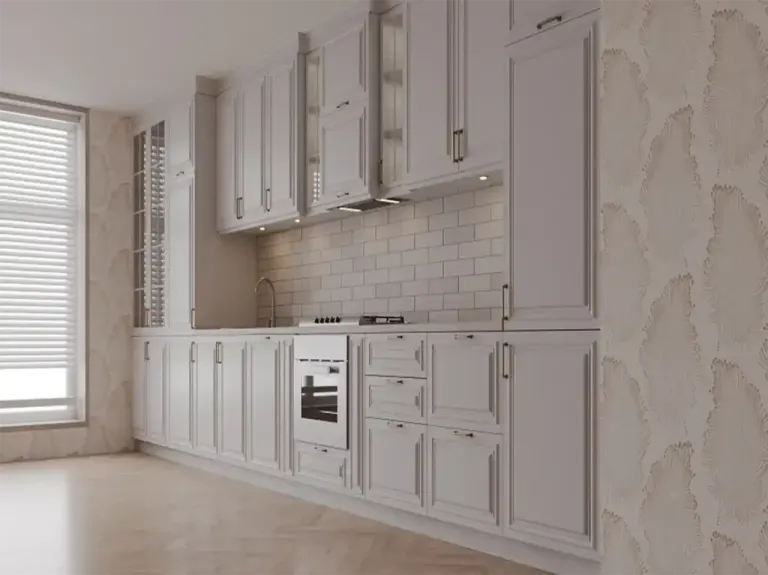
In this demanding ecosystem, the production of wooden kitchen cabinets represents far more than an aesthetic woodworking craft. It is a highly technical materials science discipline that integrates advanced wood anatomy, thermodynamic desiccation, computerized industrial joinery, kinematic hardware engineering, and resilient cross-linked surface chemistry to withstand extreme operational conditions.
Mutfak alanları, bir gayrimenkulün iç mekanındaki en yıkıcı mikroklimatik stres faktörlerine ev sahipliği yapar. Ocaklardan ve bulaşık makinelerinden yükselen kesintisiz sıcak su buharı (\(100^{\circ }\text{C}\)), yemek pişirme işlemlerinin getirdiği ani termal şoklar, sebze-meyve yıkama ünitelerinin sebep olduğu doğrudan sıvı temasları ve ağır döküm mutfak ekipmanlarının dolap raflarına bindirdiği büyük statik yükler, alt segment malzemelerin çok kısa sürede deforme olmasına yol açar. Geleneksel dayanıksız yonga levhaların veya düşük yoğunluklu sunta panellerin neme maruz kaldığında hızla şişmesi, kenar bantlarının (edgebanding) delamine olarak ayrılması ve kapakların eksenel gönyesinden sapması, küresel satın alma profesyonellerini, mimarları ve endüstriyel geliştiricileri production of wooden kitchen cabinets süreçlerinde yüksek performanslı yapısal kompozitlere ve özel fırınlanmış masif sert ağaç türlerine yönlendirmektedir.
This exhaustive technical manual provides an institutional-grade engineering specification detailing the macro-botanical physics, computerized kiln-drying loops, high-shear cabinet construction, advanced edge-sealing methodologies, and environmental compliance frameworks that govern the modern industrial production of wooden kitchen cabinets.
1. Botanical Physics: Macro-Anatomy and Mechanical Wear Classes of Cabinet Woods
A reliable procurement framework for the production of wooden kitchen cabinets begins with a granular understanding of wood anatomy. Wood is an anisotropic, heterogenous, and hygroscopic polymer matrix composed of parallel cellulose strands bound together within an organic structural lignin network. Its physical performance parameters, tensile parameters, and compression values vary dramatically across its longitudinal, radial, and tangential axes.
▲ Longitudinal Axis (Parallel to grain - Highest tensile strength)
│
│ / Radial Axis (Perpendicular to growth rings)
│ /
│ /
└──────────────► Tangential Axis (Tangent to growth rings - Highest shrinkage risk)
In an automated mill environment, industrial design teams must match the botanical characteristics of specific wood species to the distinct operational wear classes found within kitchen cabinetry layouts.
Janka Hardness and Density Matrices
The Janka hardness test calculates a wood species' structural resistance to scratching, impact denting, and mechanical abrasion by measuring the force (expressed in pounds-force, or lbf) required to embed an 11.28 mm diameter steel ball into the timber face to half its diameter. For high-traffic commercial spaces or luxury residential installations, the core species specified for the production of wooden kitchen cabinets focus on premium, dense hard woods:
• European White Oak (Quercus robur): Exhibiting an average dry density of 720–750 kg/m³ and a Janka hardness rating of 1,360 lbf, its cellular anatomy features extensive tyloses—organic bubble-like plugs that naturally seal its water-transporting vascular bundles (xylem). This blocks liquid or vapor penetration, making White Oak ideal for face frames, structural posts, and exposed end panels in high-wear zones during the production of wooden kitchen cabinets.
• European Ash (Fraxinus excelsior): Rated at 1,320 lbf Janka hardness, it possesses a long-fiber structure with exceptional shock resistance and flexibility under bending loads. This structural profile makes it a primary choice for high-volume kitchen seating and complex carved components.
• American Black Walnut (Juglans nigra): Offering a Janka value of 1,010 lbf, Black Walnut represents the pinnacle of luxury cabinetry manufacturing. While slightly softer than Oak, its low volumetric shrinkage metrics make it highly stable over time, reducing dimensional shifting across large drawer fronts and shaker door stiles during the production of wooden kitchen cabinets.
The Tangential-to-Radial (T/R) Shrinkage Coefficient
As solid timber interacts with shifting kitchen ambient humidity, it constantly absorbs and releases water vapor to maintain an Equilibrium Moisture Content (EMC). This hygroscopic behavior triggers structural movement. To predict how a raw wood board will behave, production engineers evaluate the Tangential-to-Radial shrinkage ratio (T/R Ratio):
\(\text{T/R\ Ratio}=\frac{\%\text{\ Tangential\ Shrinkage}}{\%\text{\ Radial\ Shrinkage}}\)
A species with a T/R ratio falling between 1.0 and 1.5 exhibits balanced, uniform movement in all directions, reducing the risk of internal stress cracking, cupping, or twisting. White Oak boasts an ideal T/R ratio of approximately 1.5, whereas lower-tier species can exceed 2.2. Managing these expansion profiles during the production of wooden kitchen cabinets requires selecting species with low coefficients or using rift-sawn or quarter-sawn milling techniques that orient growth rings perpendicular to the face of the board, maximizing its dimensional stability.
2. Advanced Timber Seasoning: Industrial Kiln-Drying and Moisture Equilibrium
A primary risk associated with the industrial production of wooden kitchen cabinets is the danger of post-installation wood movement. If raw timber is brought onto the factory floor with improper internal moisture levels, the completed assemblies will cup, warp, or split as soon as the building's high-performance HVAC systems are activated or when exposed to cooking heat.
┌──────────────────────────────────────────────────────────────────────────────┐
│ INDUSTRIAL KILN-DRYING THERMAL STAGES │
├──────────────────────────────────────────────────────────────────────────────┤
│ 1. Preliminary Air Seasoning (Reduces initial fiber moisture saturation) │
├──────────────────────────────────────────────────────────────────────────────┤
│ 2. Pre-Heating Phase (Gradual thermal ramp-up under high relative humidity) │
├──────────────────────────────────────────────────────────────────────────────┤
│ 3. Controlled Desiccation (Computerized drying loops targeting a tight 8%-10% EMC)│
├──────────────────────────────────────────────────────────────────────────────┤
│ 4. Stress Relief Equalization (Moisture re-introduction to relax fiber stress)│
└──────────────────────────────────────────────────────────────────────────────┘
Computerized Conventional and Vacuum Kiln Systems
To guarantee absolute structural stability, elite manufacturing facilities utilize computerized conventional heat-pump or vacuum kiln drying systems.
• Conventional Drying: Raw boards are separated by wooden stickers and placed in sealed drying chambers. Computer automated loops carefully adjust dry-bulb and wet-bulb temperatures over several weeks based on the wood species and thickness profile.
• Vacuum Drying: For thick timber components used in structural stiles and frames during the production of wooden kitchen cabinets, vacuum kilns are deployed. By lowering atmospheric pressure within the chamber, the boiling point of water is significantly reduced. This allows deep internal moisture to migrate smoothly to the wood surface at lower temperatures, drying thick timber rapidly without causing internal collapse or honeycombing defects.
Target Moisture Matrix for Global Export Climates
In the professional production of wooden kitchen cabinets, timber is never dried to a generic value. Sourcing teams calibrate the target core moisture levels to match the specific microclimate of the destination property:
• Arid or Heavily Conditioned Climates (GCC Region, Desert Climates): Timber is meticulously conditioned to a tight 6% to 8% moisture content.
• Temperate Industrial Zones (Western Europe, UK, Central Europe): Sourcing lines target an equilibrium of 8% to 10% moisture content.
• High-Humidity Equatorial Regions (Tropical Coastal Resorts): The fiber core is stabilized at 11% to 13% moisture content to minimize the risk of post-delivery thickness swelling, a critical quality control step in the production of wooden kitchen cabinets.
3. High-Performance Core Substrates: Plywood and Moisture-Resistant Engineered Composites
While solid wood face frames and door panels define the exterior aesthetic, the interior cabinet box (carcase) requires specific engineered composite substrates. Constructing large cabinet boxes entirely from raw solid planks is not practical for commercial engineering, as wide wood expanses will warp over seasonal transitions. However, utilizing standard retail-grade particleboard will cause the structural chassis to disintegrate under kitchen conditions. Modern production of wooden kitchen cabinets maps carcase components into distinct engineered material layers.
┌──────────────────────────────────────────────────────────────────────────────┐
│ CONTRACT CARCASE MATERIAL SPECIFICATIONS │
├───────────────────┬───────────────────────┬───────────────────┬──────────────┤
│ Substrate Type │ Core Density Baseline │ Elastic Modulus │ Moisture Swell│
├───────────────────┼───────────────────────┼───────────────────┼──────────────┤
│ Premium MDF │ ≥ 760 kg/m³ │ 3,200 N/mm² │ ≤ 8% (EN 317)│
│ High-Density HDF │ ≥ 860 kg/m³ │ 3,800 N/mm² │ ≤ 6% (EN 317)│
│ Plywood (Birch) │ 680 - 720 kg/m³ │ 4,500 N/mm² │ Near Zero │
└───────────────────┴───────────────────────┴───────────────────┴──────────────┘
Marine-Grade Multi-Ply Birch Plywood (BS 1088 Standard)
For sink base modules, integrated dishwasher housing panels, and high-exposure storage zones, the production of wooden kitchen cabinets mandates marine-grade birch plywood conforming to the BS 1088 standard.
• Layer Engineering: Constructed from an odd number of precision-peeled hardwood plies laid at right angles to adjacent layers, multi-ply plywood distributes tensile strength evenly in both directions.
• Adhesive Sintering: Individual plies are cross-laminated using phenolic or resorcinol-formaldehyde adhesives. These structural glues are completely waterproof (WBP – Water and Boil Proof) and will not break down or separate under the heat and steam common to commercial properties.
Moisture-Resistant Medium Density Fiberboard (MR-MDF)
For flat cabinet door slabs, side gables, and internal dry kiler shelves, MR-MDF (conforming to EN 312 Option 2 criteria) is the preferred core substrate in the production of wooden kitchen cabinets. Unlike standard interior MDF, which relies on water-soluble urea-formaldehyde binders, MR-MDF is manufactured using moisture-repelling melamine-urea-formaldehyde (MUF) or polymeric diphenylmethane diisocyanate (pMDI) resin matrices. This chemical setup prevents edge-swelling and thickness distortion when the panel edges encounter humid air.
Low-VOC Emission Protocols and Air Quality Safety
To safeguard guest wellness in enclosed commercial properties, all composite cores utilized in the production of wooden kitchen cabinets must meet strict international clean air standards. Substrates must carry CARB Phase 2 or EPA TSCA Title VI certifications, limiting formaldehyde emissions to under 0.05 ppm. This guarantees that cabinetry deployed in enclosed layouts does not release harmful volatile organic compounds (VOCs) into the indoor air, helping developers secure higher scores in green building metrics (LEED or BREEAM).
4. Contract Joinery Engineering: CNC Wood Processing and Automated Rigid Construction
The structural life of heavy-use commercial cabinetry is defined by its weak points: its joints. Production of wooden kitchen cabinets subjected to high static stone-countertop loads and constant door-slamming dynamics requires specialized industrial joinery to prevent frame racking or mechanical failure over time.
[Mortise and Tenon Joint] [Multi-Dowel Integration]
┌───────────────┐ ┌───┐ ┌───┐
│ │ │ │ │ │
┌─────┘ ┌───────┐ └─────┐ ┌─────┴───┴───┴───┴─────┐
│ │ Tenon │ │ │ │
│ ┌─────┘ (Tongue)└─────┐ │ │ [ Fluted Dowels ] │
│ │ Mortise │ │ │ High-Density Beech │
└───┴─────(Pocket)────────┴───┘ └───────────────────────┘
Multi-Axis CNC Mechanical Tolerances
High-volume manufacturing lines specializing in the production of wooden kitchen cabinets operate with digital workflows connecting CAD/CAM design programs directly to automated multi-axis CNC machinery networks. These robotic setups bore system holes, rout pocket grooves, and shape mortise profiles with tight mechanical tolerances of less than \(\pm 0.02 \text{ mm}\). This precision guarantees that cabinet boxes are perfectly square, preventing face frame misalignments and speeding up on-site installation.
Structural Joinery Configurations
• Industrial Mortise and Tenon Joinery: This remains the structural gold standard for joining solid wood face frames and shaker-style door stiles during the production of wooden kitchen cabinets. The tenon tongue must measure exactly two-thirds the thickness of the receiving rail, ensuring an interlocking fit that handles high lateral loads without breaking.
• Multi-Dowel Box Assembly: For carcase box assembly, automated dowel insertion lines drive fluted hardwood dowels—crafted from ultra-dense European Beech (Fagus sylvatica)—into precision-bored holes. The compressed grooves along the dowel walls allow trapped air and adhesives to vent out during pressing, creating a tight vacuum-sealed bond line.
• Corner-Block Base Reinforcements: The lower corners of sink bases and heavy drawer modules are reinforced with grain-aligned solid wood corner blocks. These blocks are glued and secured using twin-fast steel screws or heavy-duty corner hanger bolts, completely eliminating frame racking forces under heavy marble countertop weight.
Transitioning to Reactive Polyurethane (PUR) Adhesives
Traditional water-based polyvinyl acetate (PVA) wood glues degrade and crystallize over time when exposed to the deep temperature and humidity shifts of commercial properties. The advanced industrial production of wooden kitchen cabinets utilizes cross-linking Reactive Polyurethane (PUR) hot-melt adhesives. PUR glues cure through a chemical reaction with the wood's inner cellular moisture, creating an unbreakable polymer mesh that moves with the timber without separating.
5. Advanced Edge-Sealing Technologies: Laser, Hot-Air, and Zero-Joint Fusion
The exposed edge lines of veneered and laminated panels represent their primary weak point when subjected to moisture penetration and mechanical shock. If water vapor leaks past a cabinet edge, the underlying composite core will swell, causing the decorative face veneer to lift and peel away. Because of this vulnerability, modern production of wooden kitchen cabinets places immense focus on advanced edge-sealing technologies.
┌──────────────────────────────────────────────────────────────────────────────┐
│ EDGEBANDING ADHESIVE PERFORMANCE MATRIX │
├──────────────────────────────┬──────────────────────────────┬────────────────┤
│ Glue / Fusion Technology │ Moisture Vapor Barrier Index │ Heat Resistance│
├──────────────────────────────┼──────────────────────────────┼────────────────┤
│ Standard EVA Hot-Melt │ Poor (Prone to delamination) │ Low (60°C) │
│ Reactive Polyurethane (PUR) │ Exceptional (Waterproof) │ High (150°C) │
│ Laser / Hot-Air Zero-Joint │ Maximum (Seamless Sintering) │ Maximum │
└──────────────────────────────┴──────────────────────────────┴────────────────┘
PUR Edgebanding Lines
Standard ethylene-vinyl acetate (EVA) hot-melt glues are highly vulnerable to the conditions near high-heat cooktops or under-counter ovens. EVA glues melt at around \(60^{\circ }\text{C}\), which can cause edge bands to slip and peel in a busy kitchen.
To prevent this, high-end operators handling the production of wooden kitchen cabinets use specialized PUR edgebanding lines. PUR adhesive forms a micro-thin, waterproof bond line that can handle temperatures up to \(150^{\circ }\text{C}\), sealing the panel core completely against steam entry.
Laser and Hot-Air Zero-Joint Fusion Sintering
The absolute peak of edge protection in the production of wooden kitchen cabinets is achieved through laser or hot-air zero-joint fusion sintering systems.
• The Technology: This workflow utilizes specialized edgeband trims that feature a pre-applied, co-extruded functional polymer layer on their reverse face.
• The Fusion Mechanism: A high-intensity laser beam or compressed hot-air jet melts this functional polymer backing within milliseconds right at the compression point, welding the band directly onto the wood fiber core at a molecular level.
• The Performance Result: This creates a seamless, permanent joint with a completely invisible glue line. It offers unmatched moisture-vapor barrier protection and absolute mechanical bond security, raising the finish standard of production of wooden kitchen cabinets significantly.
6. Industrial Surface Chemistry: High-Performance Architectural Coatings
Raw timber and decorative wood veneers degrade rapidly if their protective surface finish cannot withstand the daily wear of a busy kitchen environment. The durability of commercial production of wooden kitchen cabinets depends on high-performance industrial coatings designed to meet strict chemical resistance (EN 12720) and scratch resistance (EN 438) standards.
┌──────────────────────────────────────────────────────────────────────────────┐
│ COATING RESIN CHEMICAL MATRIX SPECTRUM │
├──────────────────────────────┬──────────────────────────────┬────────────────┤
│ Finish Formulation │ Vapor Barrier Protection │ Surface Hardness│
├──────────────────────────────┼──────────────────────────────┼────────────────┤
│ Conventional Nitrocellulose │ Deficient (Prone to staining)│ Deficient │
│ Two-Component (2K) Polyurethane│ Superior Performance │ Very High │
│ Automated Flat-Line UV Acrylic│ Maximum Vapor Barrier Shield │ Elongated/Hard │
└──────────────────────────────┴──────────────────────────────┴────────────────┘
Two-Component (2K) Aliphatic Polyurethane Coating Systems
For high-exposure custom woodwork, vanity edges, and cabinet frames, a 2K aliphatic polyurethane coating system is the industry standard in the production of wooden kitchen cabinets.
• Cross-Linked Stability: This finish relies on a chemical cross-linking reaction between an acrylic polyol resin base (Component A) and an aliphatic isocyanate hardener (Component B), forming an airtight, dense molecular shield.
• Vapor Barrier Protection: The cured coating forms a tough yet flexible film over the wood. It blocks liquid and steam penetration while flexing with the wood's natural seasonal movements, preventing micro-cracking, flaking, and clouding.
• UV Yellowing Defense: The aliphatic compound ensures the finish remains clear under UV radiation, preventing natural light timbers like Maple, Ash, or Oak from turning yellow or orange over time.
Automated Flat-Line UV Polymeric Curing Tunnels
To optimize throughput for large-scale developments, top-tier factories handling the production of wooden kitchen cabinets deploy automated flat-line UV finishing lines. Wooden panels move along conveyor setups where photo-reactive acrylated polymers are rolled on and cured almost instantly under high-intensity UV lamp arrays. This process produces an ultra-scratch-resistant finish with zero VOC emissions, allowing completed casegoods to be safely packed for shipping straight off the production line.
7. Kinematic Engineering and Anti-Corrosive Metalurgic Hardware
The daily user experience and long-term durability of kitchen casework are directly linked to the engineering quality of its moving parts. Heavy pull-out kiler pantries, deep pot drawer glides, and wide overhead lift systems undergo thousands of mechanical cycles over their operational lifespan. In the professional production of wooden kitchen cabinets, specifying high-end hardware options ensures smooth movement and prevents structural sagging over time.
┌──────────────────────────────────────────────────────────────────────────────┐
│ HARDWARE KINEMATIC PERFORMANCE STANDARDS │
├───────────────────┬──────────────────────────────────┬───────────────────────┤
│ Hardware Unit │ Minimum Lifecycle Certification │ Dynamic Load Rating │
├───────────────────┼──────────────────────────────────┼───────────────────────┤
│ Concealed Hinges │ 80,000 Cycles (DIN EN 15570) │ Self-Closing/Soft-Close│
│ Drawer Runners │ 100,000 Cycles (DIN EN 15338) │ 40 kg to 70 kg Dynamic│
│ Lift Systems │ 40,000 Cycles (Dynamic Lever) │ Weight-Proportional │
└───────────────────┴──────────────────────────────────┴───────────────────────┘
Synchronized Concealed Drawer Slides
Modern drawer configurations require full-extension, synchronized concealed runners equipped with automated soft-closing dampers.
• Frictionless Movement: These slides utilize technical polymer roller bearings driven inside steel tracking channels, providing quiet, smooth movement even under full loads.
• Dynamic Load Handling: Specifying a high dynamic load capacity of 40 kg to 70 kg for deep pan drawers completely eliminates runner sagging when the drawer is fully extended, keeping cabinet faces aligned over years of active use, which is a major factor in the high-end production of wooden kitchen cabinets.
Mandating AISI 304 Stainless Steel Hardware
Sink base cabinets and island modules exposed to direct moisture or grease vapor require high hardware corrosion resistance. Standard nickel-plated steel hinges degrade rapidly when exposed to dishwashing detergents, turning into rusty, stiff joints that strain the wood carcass screws.
To prevent this, quality standards for the production of wooden kitchen cabinets mandate the use of AISI 304 stainless steel or premium coated alloy hardware. This choice protects mechanical joints from rusting, ensures smooth operation, and maintains cabinet frame structural alignment for years.
8. Multi-Material Cross-Bonding: Interlocking Wood with Metals and Natural Stone
Modern premium interior architecture frequently blends wood panels with contrasting textures like brushed metals, back-painted glass, and thick natural stone countertops. The production of wooden kitchen cabinets requires managing the distinct expansion and contraction profiles of these materials to avoid joint failures.
[ CONVENTIONAL RIGID FASTENING ] [ INDUSTRIAL SLOTTED TRACK ASSEMBLY ]
(Cracks panel under humidity) (Allows free atmospheric expansion)
┌───────────────┐ ┌───────────────┐
│ Metal Trim │ │ Metal Trim │
├───────────────┤ ├───────────────┤
│ Rigid Screw │ │ Washer Screw │
│ (No Movement) │ │ (Slides Free) │
└───────────────┘ └───────────────┘
◄─────────────►
Oval Slotted Channel
Managing Movement with Slotted Fastening
Solid wood face frames and doors expand and contract based on humidity shifts, while metal accents or perimeter trim respond strictly to temperature changes. If a brass inlay or stainless steel structural frame is rigidly anchored to a wood panel, the wood's natural movement will eventually buckle the metal or crack the timber face.
To eliminate this stress, all mounting channels feature oval, slotted tracks. Structural connection screws are driven directly into the center of these slots, allowing the wood to adjust smoothly under the metal without creating internal structural tension.
Countertop Weight Distribution
When heavy marble, quartz, or granite slabs are placed over lower cabinet boxes, the static load can cause the wood frame to sag over time. Internal support skeletons must feature concealed vertical hardwood posts that transfer the heavy vertical weight straight down to the floor glides. High-elasticity polyurethane spacers are placed between the stone and wood surfaces to absorb sudden shocks and allow both materials to adjust independently, a crucial structural consideration in the production of wooden kitchen cabinets.
9. Sourcing Logistics, Export Packaging, and Total Cost of Ownership (TCO) Analysis
When managing a high-volume hospitality or commercial budget, savvy procurement teams look past upfront purchase costs (CAPEX) to evaluate the furniture assets' Total Cost of Ownership (TCO) over their entire useful life. Investing in high-performance production of wooden kitchen cabinets pathways balances excellent durability with low maintenance costs.
Comprehensive Cost-Benefit Value Analysis
[ Lower Upfront Cost - Conventional Sunta ] ─────────► [ Strategic Value - Production of Wooden Kitchen Cabinets ]
• Operational Lifespan: 2 to 4 Years • Operational Lifespan: 15+ Years
• Absorbs moisture vapor, leading to core swelling • MR-MDF / pMDI cores provide supreme water resistance
• Fasteners strip easily from low-density fiber beds • High-density substrates ensure excellent screw holding
• Triggers continuous replacement CAPEX cycles • Extends refurbishment timelines; preserves asset ROI
Strict Packing and Protection Protocols
To ensure casegoods arrive at the job site in pristine condition, factories involved in the production of wooden kitchen cabinets enforce strict export packing standards:
• Perimetric Impact Edge Protectors: Dense foam corner guards shield vulnerable edge lines from mechanical hits during handling and transport.
• Airtight Moisture-Barrier Shrouds: Pieces are wrapped in thick polyethylene films to protect the wood from humidity shifts during transit across different climate zones.
• Heavy-Duty Wooden Crates: High-value or fragile items like marble-topped vanities or glass-doored display cases are packed in reinforced wooden crates to withstand container movement.
10. Technical Maintenance Matrix for On-Site Engineering Teams
Even with high-performance industrial finishes, solid timber requires proper care from on-site facility teams. To maximize the operational lifespan of your investment and keep your furniture performing its best, resort management teams should enforce a clear maintenance schedule:
• Microclimate Climate Control: Maintain guestroom relative humidity strictly between 35% and 55% and keep air temperatures stable (\(19^{\circ }\text{C}\) to \(24^{\circ }\text{C}\)). This controls the wood's natural movement, preventing joint cracks and surface checking over time.
• Sanitation Standards: Ban the use of abrasive scrubbers or cleaning sprays that contain silicone oils or harsh ammonia. Silicone can enter micro-cracks in the finish, binding with the wood cells and making it nearly impossible to spot-refinish the furniture later on. Require staff to use mild, pH-neutral cleaners applied with damp microfiber cloths.
• Hinge and Runner Audits: Schedule an annual maintenance check for facility teams to adjust concealed hinges, verify soft-close dampening, and check runner load alignment. Catching minor shifts early keeps drawer faces neatly aligned and prevents cabinet frames from binding.
By combining careful wood selection, controlled kiln-drying, multi-axis CNC joinery precision, and resilient chemical finishes, the manufacturing sector for the production of wooden kitchen cabinets delivers high-performance interior assets built to withstand the demands of global hospitality operations.