Turkish Hotel Furniture Manufacturers vs Local Fit-Out Workshops in Europe: When Each Makes Sense
Choosing between a Turkish factory and a local European joiner is rarely a question of price alone. This guide compares both routes on flexibility, site coordination and project size so you can decide which fits your hotel.
When you compare hotel furniture Turkey vs local manufacturer options for a European project, the honest answer is that neither route wins every time. A Turkish factory tends to suit repeatable room packages of meaningful size, while a local fit-out workshop often suits small, irregular or fast-changing scopes. This article looks at the decision through flexibility, site coordination and project size, rather than unit price alone.
Frame the decision correctly
Many buyers start with two quotations and a spreadsheet. That comparison is useful, but it hides the factors that usually decide whether a project runs smoothly. A lower line price can disappear if site changes are slow, and a convenient local workshop can become a bottleneck if it cannot scale to the number of rooms.
Before you compare offers, define what you are actually buying. Is it repeatable guest room furniture, one-off lobby pieces, or a mix of fixed joinery that must follow irregular walls? The answer changes which supplier type is the better fit.
Where a Turkish manufacturer fits well
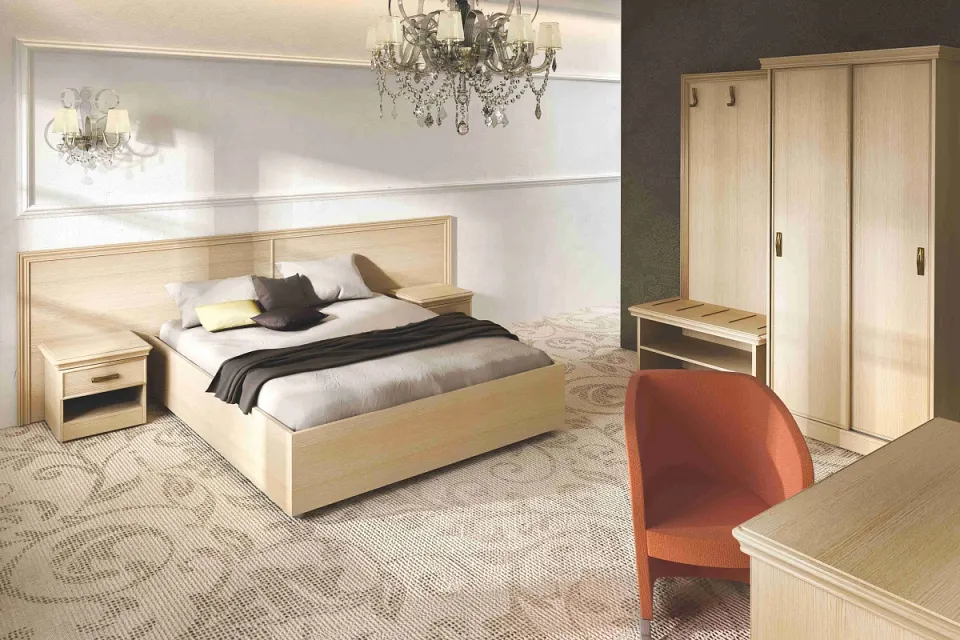
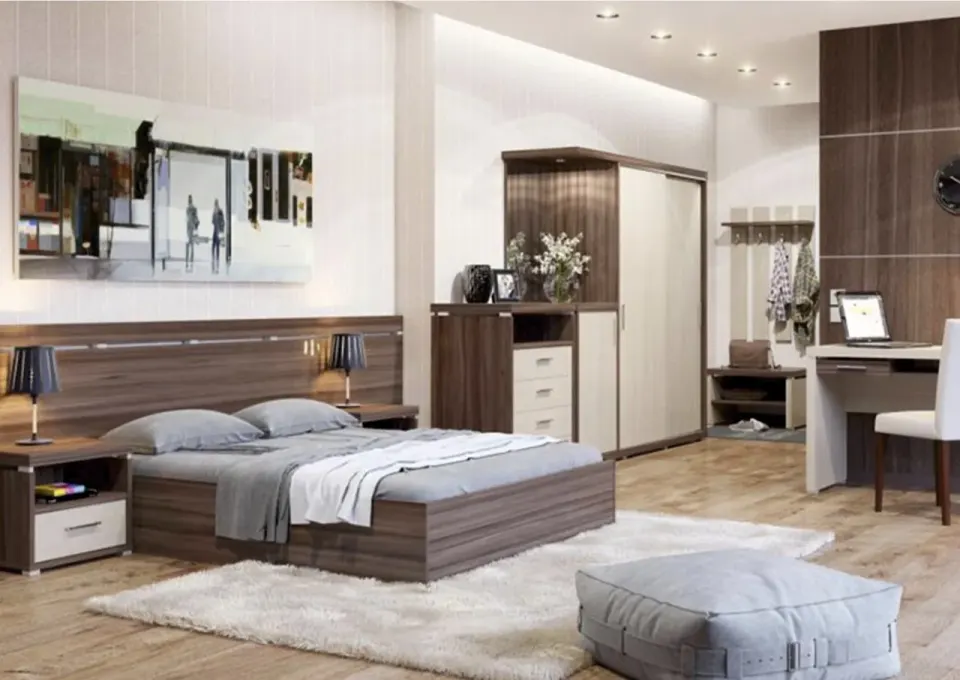
A hotel furniture manufacturer in Turkey typically works from a factory with its own production lines for case goods, panelling, doors and upholstery frames. This is most useful when the scope is large enough to benefit from series production and when drawings are stable.
- Repeatable room types: when you have dozens or hundreds of identical guest rooms, a factory can set up jigs and sequences once and repeat them.
- Broad scope under one roof: wardrobes, headboards, desks, wall panelling and doors can be coordinated as one FF&E or joinery package.
- Custom hotel furniture: bespoke designs can be produced to your shop drawings without relying on catalogue ranges.
- Contract-grade construction: factories used to hospitality work build for heavy daily use, not residential loads.
Turkey also sits close to Europe and the Gulf, which helps with road and short-sea freight options. Exact timing depends on the project, the finishes and the shipping route, so it should be confirmed with the supplier rather than assumed.
Where a local European workshop fits well
A local joiner or fit-out workshop is strongest where proximity matters more than scale. If a design is still moving, being able to visit the workshop in a day and adjust a detail in person is a real advantage.
- Small or boutique scopes: a handful of rooms or a single bar counter may not justify international logistics.
- Irregular buildings: historic conversions often need scribing, on-site trimming and repeated measurement.
- Urgent top-ups: replacing a damaged panel or adding a missing unit can be quicker locally.
- Simple customs and language: no import paperwork, and the same time zone and working language as the site team.
Flexibility: design changes and variations
Flexibility is often misunderstood. A local workshop is flexible in the sense of being physically close, but many small workshops have limited machinery and staff, so a change that affects many pieces can still take time. A factory is less flexible once series production starts, but more capable of absorbing large volumes before that point.
The practical lesson is to freeze the design earlier when you import. Approve shop drawings, finish samples and a mock-up room before mass production begins, so that changes happen when they are cheap. With a local workshop, you can tolerate a looser design process, but you should still control the cost of late changes through written variation orders.
Site coordination and installation
Site coordination is where the two models differ most in daily practice. A local joiner can attend site meetings, take measurements again and respond to other trades within hours. An overseas factory works through drawings, photographs and a project manager, so communication must be more structured.
For imported packages, these steps reduce risk:
- Agree a single point of contact on both sides and a regular reporting rhythm.
- Complete a site survey and confirm tolerances before final shop drawings.
- Use room-by-room coding on packing so installers can work floor by floor.
- Decide early whether installation is carried out by the factory's crew, your contractor or a local installer.
If you expect uneven walls or unresolved building dimensions, consider keeping the most site-dependent items, such as scribed fillers or bathroom joinery, with a local workshop and importing the repeatable pieces.
Project size and repeatability
Size matters because factory set-up effort is spread across the number of identical pieces. There is no fixed room count at which importing becomes the better choice, and it depends on the design complexity and finish level. As a general principle, the more repeated rooms and the more stable the drawings, the stronger the case for a factory.
Very small projects may still benefit from a Turkish supplier if the design is distinctive and the supplier accepts small batches. In that case, ask directly about minimum order expectations rather than assuming either way.
Cost: look at the whole picture
Price differences between regions depend on materials, labour, finish level and exchange rates, so we will not quote figures here. What you can do is compare on a landed-cost basis rather than ex-works price.
- Furniture price and packing
- Freight, insurance and the chosen Incoterm (EXW, FOB, CIF or DAP)
- Import duties and VAT where applicable, depending on origin and trade arrangements
- Installation, snagging and site supervision
- Contingency for transit damage and design changes
A local quotation often already includes delivery and installation, so make sure both offers cover the same scope before judging them.
Quality, compliance and documentation
Both routes can deliver excellent work, and neither is automatically better. What matters is the supplier's quality control, material documentation and experience with hospitality specifications. For Europe, check fire performance requirements for the destination country, board emission classes and any test reports your operator or consultant requires.
For Middle East projects, the same logic applies, with additional attention to climate and local contractor arrangements. A factory in Turkey may be one of several suppliers on a Gulf site, so coordination with the main contractor becomes especially important.
A hybrid approach can work
You do not have to choose one supplier for everything. Many projects split the package: repeatable guest room furniture, wardrobes and panelling from a factory, and site-specific joinery or small additions from a local workshop. This keeps volume where factories are strong and adaptability where locals are strong.
The risk of a split is interface management, so define who is responsible for fixings, finishes matching and final snagging. Put those boundaries in writing before ordering.
Quick comparison table
| Factor | Turkish factory | Local European workshop |
|---|---|---|
| Best project type | Larger, repeatable room packages | Small, irregular or changing scopes |
| Design flexibility | High before production, lower after | Moderate throughout, limited by capacity |
| Site coordination | Remote, needs structured process | Direct, same-day attendance |
| Logistics | Export packing, freight, customs | Local delivery |
| Scale | Suited to many rooms | Depends on workshop size |
Conclusion
The right choice depends on how many rooms you have, how stable the design is and how much on-site adjustment the building will require. Import when volume and repeatability reward a factory; stay local when proximity and adaptability matter more; combine both when the project has clear repeatable and site-specific parts.
If you are weighing these options for a hotel in Europe or the Middle East, send us your drawings or room schedule. We will review the scope and tell you honestly which parts suit factory production and which may be better handled locally.
Sıkça Sorulan Sorular
Is it cheaper to import hotel furniture from Turkey than to use a local joiner?
Not always. Factory production can be cost-effective for repeatable, larger packages, but freight, duties, VAT and installation must be added. Compare offers on a landed-cost basis with the same scope, rather than only looking at ex-works prices.
Can a Turkish manufacturer handle small boutique hotel projects?
Some can, depending on design complexity and the factory's production set-up. Ask about minimum order expectations and batch sizes early. For very small scopes, a local workshop may be simpler, but distinctive custom pieces can still justify import.
How do I manage site changes when furniture is made overseas?
Freeze the design earlier, complete a site survey, and approve shop drawings and a mock-up room before production. Assign one contact on each side and use written variation orders so any later change is priced and scheduled clearly.
When does a local European fit-out workshop make more sense?
Local workshops fit small scopes, historic buildings with uneven walls, urgent replacements and designs that are still evolving. Being able to visit, remeasure and adjust on site quickly is a clear advantage in those situations.
Can I split a hotel package between a Turkish factory and a local joiner?
Yes. Many buyers source repeatable guest room furniture and panelling from a factory and keep site-dependent joinery local. Define responsibilities for fixings, finish matching and snagging in writing before ordering to avoid interface disputes.
Every hotel project is different. Send us your drawings or room schedule for a tailored proposal on materials, lead time and shipping.