Hotel Doors Frequently Asked Questions: What Developers Ask Before Choosing a Design
A practical Q&A for hotel developers choosing door models for the first time, covering design, construction, performance and specification questions. Ordering logistics are left to other guides.
If you are reading a list of hotel doors frequently asked questions, you are probably at the early design stage, comparing models and trying to understand what really matters. This guide answers the questions developers, architects and procurement teams raise most often in the first round of door selection. It focuses on design and specification choices, not on ordering or shipping steps.
The answers are general by nature. Final decisions always depend on your local codes, your brand standards and the opening in question, so treat this as a framework for the conversation with your door manufacturer.
Door model and style questions
Which door model is most common in hotel guest rooms?
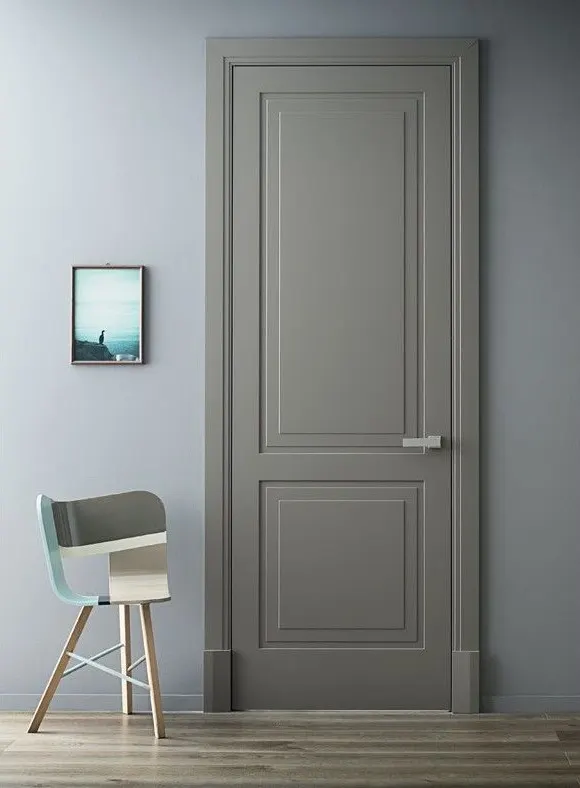
The flush door, usually veneered or lacquered, is the most widely used model for guest room entrances. It is simple to produce, easy to keep consistent across hundreds of openings and straightforward to prepare for locks and closers. Grooved and panelled models are chosen when the brand wants more character in the corridor.
When does a panelled or shaker-style door make sense?
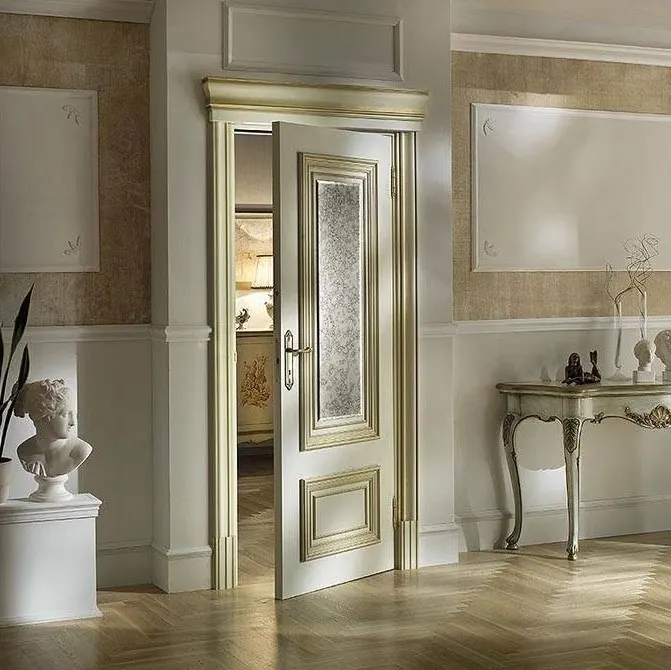
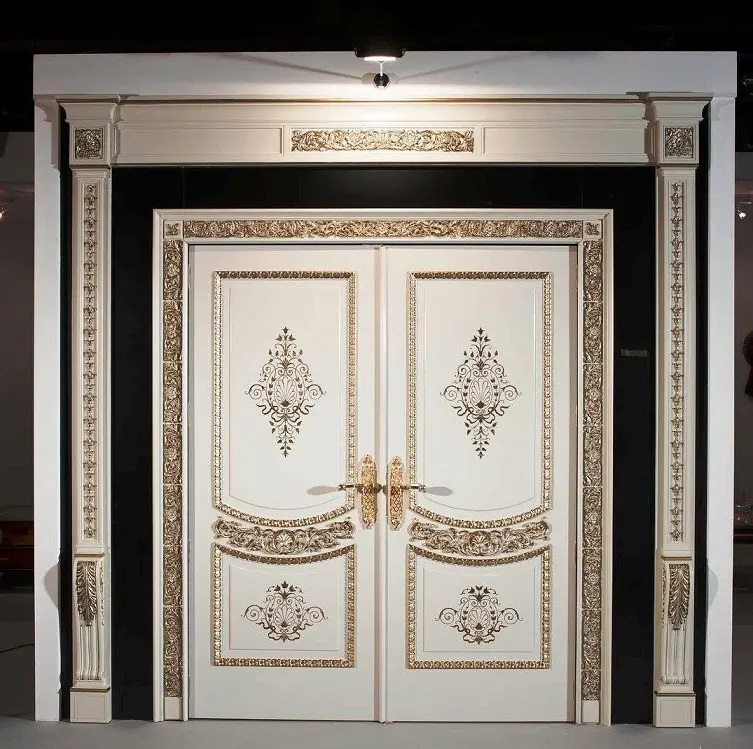
Profiled designs suit boutique, heritage and resort projects where the door is part of the architectural story. They involve more machining and finishing steps, so they usually cost more than a flush leaf. If the budget is tight, consider a grooved flush door that gives some relief without the full profile.
Can one model work across the whole hotel?
Often yes, with variations. Many projects keep one visual language and change the specification by zone, for example:
- Guest room entrances: fire and acoustic performance, electronic lock preparation.
- Bathrooms: moisture-resistant core and sealed edges.
- Wardrobes: lighter leaves, sometimes sliding or slatted.
- Back-of-house: simpler, more robust finishes.
This keeps the look consistent while letting each opening meet its own technical needs.
Are sliding, pocket and barn doors suitable for hotels?
They can be, mainly for bathrooms and wardrobes where swing space is limited. The compromise is usually acoustic and privacy performance, because track systems leave gaps that hinged doors with seals do not. For entrance doors, hinged leaves remain the safer choice.
Construction and material questions
Does a hotel door need to be solid wood?
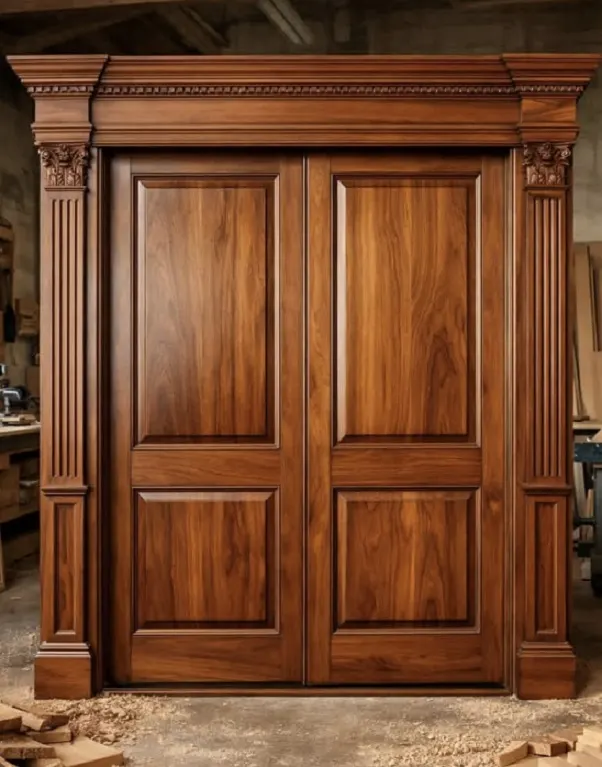
Not necessarily. A fully solid timber leaf is heavy, more prone to movement with humidity changes and rarely required. Engineered constructions with a stable core and a veneer or laminate face often perform better in hotel conditions, and they are easier to match across large quantities. Solid wood still has a place in statement entrances and selected details.
What core should I specify?
The core drives weight, stability, sound and fire behaviour. In broad terms:
- Particleboard or tubular cores: economical, suitable for many standard rooms.
- Solid timber frame with board infill: good stability and screw holding.
- Mineral or fire-rated cores: used where a fire rating is required.
- Honeycomb: light, mostly for wardrobes and low-demand openings.
Ask your manufacturer to confirm which cores suit the rating and hardware you need.
Veneer, laminate, lacquer or HPL: which finish lasts longest?
Durability depends on the product quality and the traffic level. HPL and laminate resist scratches and cleaning chemicals well. Veneer with a good protective lacquer gives a natural look and can be repaired on site. Painted finishes show the look you want but need touch-up planning. Match the finish to the zone: corridors and service areas wear faster than guest room interiors.
How thick should a hotel door leaf be?
Thickness depends on rating, acoustic target and hardware. Guest room entrance doors are commonly thicker than interior doors in apartments, because fire and sound requirements often call for extra layers. Check your local code and brand standard first, then confirm the leaf thickness with the manufacturer.
Performance questions
Do all hotel room doors need a fire rating?
No, but many guest room entrances do, and the requirement depends on the country, the building type and the fire strategy. Bathroom and wardrobe doors usually do not. A rated door is a complete assembly, so frame, seals, hardware and glazing must all fit the tested configuration. Ask your fire consultant for the rating before choosing a model, because it can limit design options.
How much sound insulation can I expect from a wooden door?
Performance varies widely with leaf construction, seals and the gap at the bottom. A heavy leaf with perimeter seals and a drop seal performs far better than a standard flush door with a visible undercut. Request a test report for the exact assembly instead of relying on a general claim, and compare the figures on a like-for-like basis.
What about moisture in bathrooms and humid climates?
Moisture causes swelling and edge failure. Prevent it with moisture-resistant cores, fully sealed edges, including the top and bottom, and finishes suited to wet environments. In humid or coastal regions, apply the same thinking to guest room doors, not only bathrooms.
Why do some doors warp?
Usually from uneven moisture exchange, unbalanced construction, or poor storage and site conditions. A balanced leaf, sealed surfaces and correct storage reduce the risk. Your manufacturer can explain the tolerances they work to.
Size, hardware and detail questions
What are the standard door sizes?
There is no single global standard. Many markets use metric widths such as 800 mm, 900 mm or 1000 mm (31.5, 35.4 and 39.4 in), while North American projects use imperial sizes. Accessibility rules may also set a minimum clear opening. Confirm sizes against your architectural drawings rather than assuming a standard.
Can doors be prepared for electronic locks and smart systems?
Yes. Routing for lock bodies, cable paths and contact sensors is best coordinated with the lock supplier before production. Providing the lock template early avoids on-site cutting, which can damage the finish.
Which hardware should I think about at model stage?
Hinges, closers, stops, seals and the lock. Heavier or taller leaves need more or larger hinges, and the door design may change how hardware can be hidden. Choose the hardware family and the door model together.
Can doors match wall panelling or joinery?
Yes, particularly with veneered or lacquered finishes. Matching grain direction, colour and detailing between doors and wall panels gives a seamless corridor or room. This works best when the same factory supplies both, or when approved samples are shared.
Design and budget questions
How do I keep the budget under control without losing the look?
Standardise the number of models, avoid unnecessary custom profiles and reserve premium details for visible, high-impact areas. Cost is driven by core, finish, size, hardware preparation and complexity, so small changes to those can adjust the budget without changing the overall design intent.
Should I approve a sample before deciding?
Yes. Photos and renders rarely show how a finish looks under your hotel lighting. A physical sample or mock-up lets you judge colour, texture, edge details and hardware fit, and it is the stage where changes are cheapest.
Next step
If you are comparing door models for a new hotel or renovation, send us your door schedule or drawings. We will review the openings and suggest suitable models, cores and finishes for each zone.
Sıkça Sorulan Sorular
What is the most popular hotel guest room door model?
The veneered or lacquered flush door is the most widely specified. It suits large quantities, keeps a clean look, and is easy to prepare for locks, closers and seals. Grooved or panelled models are chosen when the design brief calls for more character in corridors.
Do hotel doors have to be solid wood?
No. Engineered leaves with stable cores and veneer or laminate faces often perform better than fully solid timber because they resist movement and stay consistent across large quantities. Solid wood is typically reserved for statement entrances or selected design details.
Which hotel doors need a fire rating?
It depends on local codes and the fire strategy of the building. Guest room entrances often require a rating, while wardrobe and bathroom doors usually do not. Confirm the requirement with your fire consultant, because a rated door must be supplied as a complete tested assembly.
How can I improve sound insulation on room doors?
Use a heavier leaf, perimeter seals and a drop seal at the bottom, and keep gaps small. Ask for a test report on the exact assembly. Frame fixing and wall construction also affect results, so consider the whole opening, not only the leaf.
Can wooden doors be used in humid climates and bathrooms?
Yes, if they are built for it. Choose moisture-resistant cores, seal all edges including top and bottom, and select finishes suited to damp areas. Good ventilation and correct site storage also help prevent swelling and sticking.
Are standard door sizes the same worldwide?
No. Metric and imperial sizes both exist, and accessibility rules can set minimum clear openings. Check your architectural drawings and local requirements, then confirm the leaf and frame dimensions with the manufacturer before finalising the design.
Every hotel project is different. Send us your drawings or room schedule for a tailored proposal on materials, lead time and shipping.