Door Models for Hotels in Europe: Heritage Buildings, Energy Rules and Style Expectations
Hotel doors in Europe are shaped less by climate than by old buildings, regulation and design expectations. This guide shows what to check before you specify or order.
Specifying hotel doors in Europe usually means working with existing structures, local regulations and guests who notice detail. Many projects are conversions or renovations of older buildings, so the door has to suit an opening that was never built to a modern standard. This article looks at the points that matter most for hotel doors in Europe, with a focus on heritage buildings, regulatory expectations and style, rather than on climate.
Why Europe is a different door market
Much of the European hotel stock sits in buildings that are decades or centuries old. New-build hotels exist, but renovation, conversion and repositioning of historic properties account for a large share of the work that reaches a door manufacturer.
This changes the brief. Instead of ordering a repeat of one standard leaf across hundreds of identical openings, you often deal with irregular sizes, thick masonry walls, existing frames that must stay, and a planning authority with opinions about appearance.
Regulation also varies by country, and sometimes by region or municipality. A European hotel door specification therefore starts with the location, not with a catalogue.
Heritage buildings: openings, frames and appearance
Non-standard and uneven openings
Old walls are rarely square or plumb. Openings may differ from room to room, even on the same floor. For heritage hotel doors, plan for a site survey and measure each opening rather than assuming a standard size.
Typical approaches include:
- Made-to-measure leaves produced against a verified door schedule, with every opening numbered.
- Frames or linings built to match wall thickness, which can be well over 200 mm (7.9 in) in masonry buildings.
- Tolerance planning, so a slightly out-of-square opening is handled by the frame detail rather than by trimming a finished leaf on site.
Matching period character
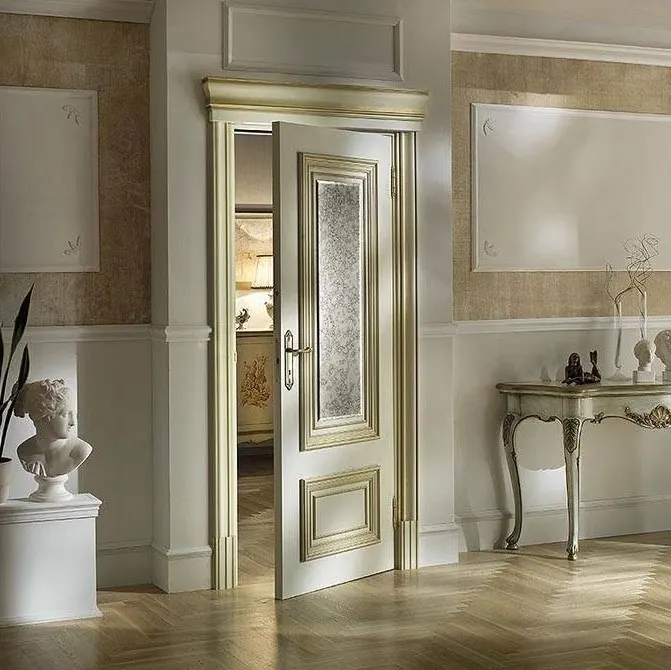
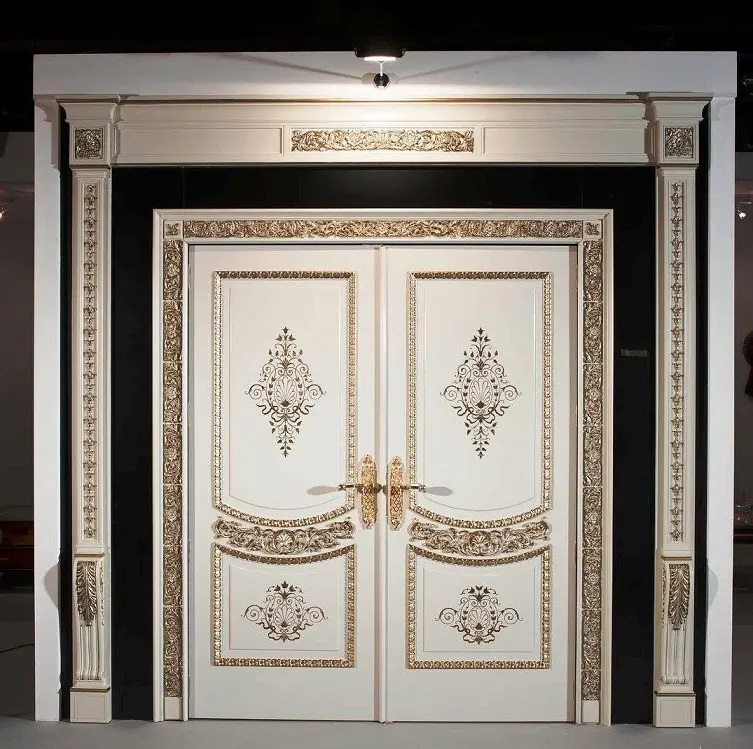
Where the building is listed or protected, the authority may ask for doors that follow the original proportions, panel layout or profile. Panelled, moulded and shaker-style models, sometimes with arched or shaped tops, are common here.
It helps to supply photographs and measured drawings of surviving original doors. A factory can then reproduce the mouldings, panel depth and stile widths, while the core and construction are updated to current performance needs.
Keeping what exists
In some projects, original doors or frames must be retained or restored. Ask early whether the retained element still has to meet fire or acoustic requirements. If it does, the solution may involve upgrading the existing leaf, adding seals, or replacing it with a faithful new copy. This decision affects cost and schedule more than almost any other detail in a heritage job.
Regulatory expectations to check early
Rules differ across countries, so treat the following as a checklist of topics to confirm with your consultant or local authority, not as a statement of what applies everywhere.
Fire performance
Guest room entrance doors and doors in escape routes are commonly required to have a fire rating. Europe uses harmonised classification and test approaches, but national requirements and the way they are applied still differ. In older buildings the rating of the existing frame, wall and ironmongery matters as much as the leaf.
Ask for the project fire strategy, and have the required rating, smoke sealing and self-closing requirement written into your door schedule. Our related guidance on fire-rated hotel doors covers what the ratings mean in more detail.
Energy and thermal performance
Interior doors in a hotel are mostly not part of the thermal envelope, but some are: entrances to heated lobbies, doors to unheated stair cores, and doors from rooms to external balconies or terraces. Energy rules usually target the envelope, so check which openings the designer treats as external or semi-external.
For interior openings, draught sealing and smoke seals can still contribute to comfort and to the performance of ventilation strategies in a tightly built or renovated hotel.
Accessibility
Accessible rooms and routes require adequate clear opening widths, manageable opening force and thresholds that can be crossed without difficulty. Requirements differ by country, and renovation often brings special allowances or conflicts with narrow historic openings. Confirm the clear width after hardware and frame are fitted, not the nominal leaf width.
Acoustics
Boutique and city-centre hotels in older buildings often have light partitions and noisy neighbours. Acoustic ratings for room doors depend on leaf construction, seals, drop-down bottoms and the surrounding wall. A high-performing leaf in a weak frame will not deliver the expected result.
Materials and emissions
European buyers increasingly ask about timber origin, adhesives and emission classes of boards. If your project has a sustainability target or tender requirement, ask the manufacturer which documents can be supplied for the specific materials you choose, and request them before ordering.
Style expectations across European hotel types
Style is not uniform either. A few patterns are useful when shortlisting models:
| Hotel type | Typical door direction | Points to confirm |
|---|---|---|
| Heritage or historic conversion | Panelled, moulded, arched or tall leaves with period profiles | Authority approval, opening survey, retained frames |
| Boutique city hotel | Signature models, veneer or deep colour lacquer, fluted or grooved detail | Finish consistency, hardware style, numbering details |
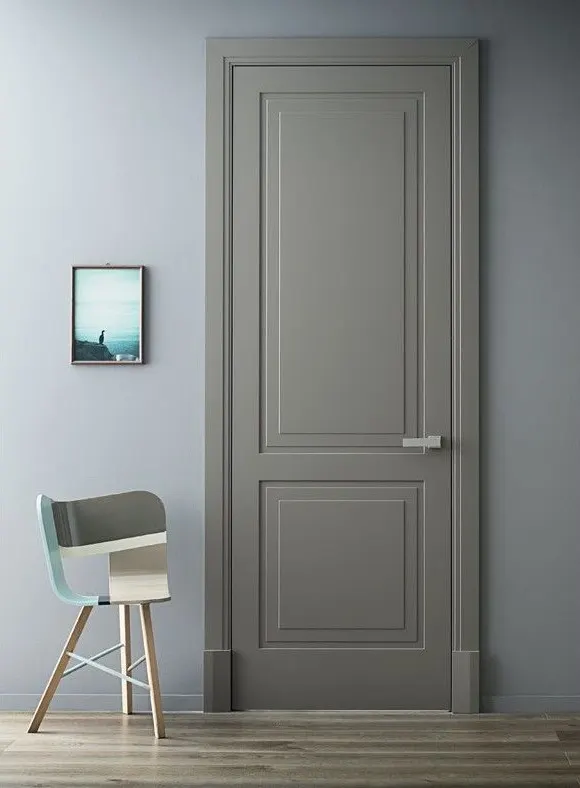
| Modern business or lifestyle hotel | Flush leaves, slim frames, concealed or flush-to-wall solutions | Tolerances, fire rating, acoustic detail |
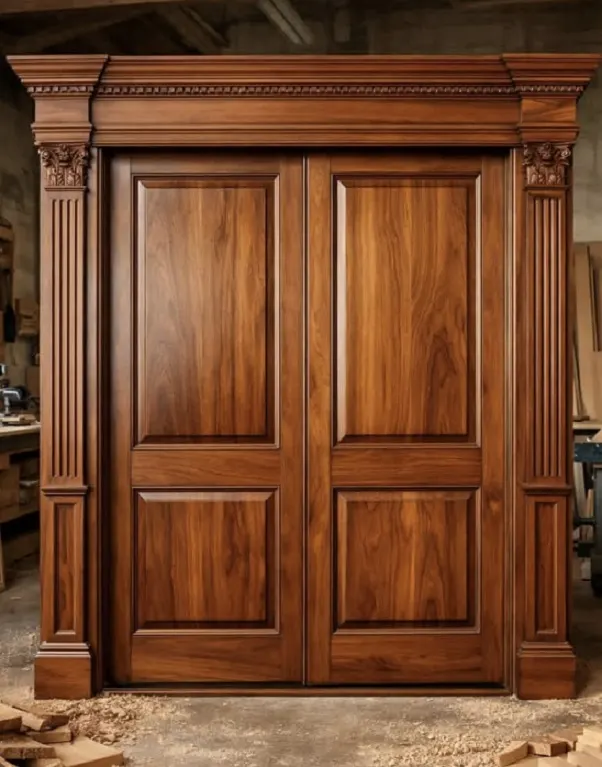
| Resort or countryside hotel | Natural veneers, oak looks, warm tones | Finish durability, maintenance by housekeeping |
Whatever the style, European guests and operators tend to notice alignment, gaps, hardware quality and the feel of a solid, well-hung leaf. These details cost little to get right at design stage and a lot to correct later.
Choosing between standard and custom models
For new-build or modern renovations with regular openings, a standard or lightly adapted model can be efficient. For heritage work, custom is more likely. The decision usually follows three questions:
- Are the openings regular enough to use standard sizes?
- Does the authority or brand require a particular profile or proportion?
- Do the fire, acoustic and accessibility requirements allow a standard construction?
If the answer to the first two is no, plan for custom drawings, a sample and sign-off before production.
Working with a door supplier for Europe from Istanbul
Palmiye produces doors and other interior woodwork in its own factory in Istanbul, to project drawings. For European projects, this typically means exchanging a door schedule, opening survey and finish references, then producing shop drawings and a sample or mock-up for approval.
When you compare a door supplier for Europe, look at how clearly each offer states the following:
- Leaf construction, core type and thickness.
- Fire, acoustic and other performance claims, and which documents support them.
- Finish type, colour reference and how consistency is controlled.
- Hardware preparation and who supplies the hardware.
- Packing, delivery terms such as FOB, CIF or DAP, and delivery sequence.
- Whether installation support is included or quoted separately.
Timing depends on the model, finish, approval process and order size, so we confirm lead times against your specific project instead of quoting a general figure.
A practical sequence for renovation projects
- Survey and number every opening, recording width, height, wall thickness and floor level.
- Confirm fire, acoustic, accessibility and heritage requirements per opening type.
- Build the door schedule, including handing, hardware and finish.
- Approve drawings and a sample door, ideally in a mock-up room.
- Agree packing, marking by room number and delivery sequence by floor.
Next step
If you are planning a new hotel or a renovation in Europe, send us your door schedule, opening survey or drawings. We will review them and come back with model suggestions, points to clarify and a quotation for your project.
Sıkça Sorulan Sorular
Do hotel doors in Europe need to meet one common standard?
No. Europe has harmonised test and classification methods for some properties, but fire, accessibility and acoustic requirements are set nationally or locally. Confirm the rules for your country and building type with your consultant, and write them into the door schedule.
Can new doors replicate the look of original doors in a heritage hotel?
Often yes. With photographs and measured drawings of the originals, a factory can reproduce panel layouts, mouldings and proportions. The leaf construction can be updated for fire or acoustic needs. Check first whether the planning authority must approve the design.
Why do I need to measure every opening in an older building?
Historic openings are often uneven and differ from room to room. Measuring and numbering each one lets the factory produce leaves and frames to fit, which avoids trimming finished doors on site and damaging edges or finishes.
Are interior hotel doors affected by European energy rules?
Mostly not, because energy rules focus on the building envelope. Doors to balconies, terraces, unheated stair cores or external lobbies may be treated differently. Ask the designer which openings count as external, and consider draught and smoke seals elsewhere.
Can Palmiye supply hotel doors to Europe from Istanbul?
Yes. We manufacture doors to project drawings in our Istanbul factory and can support shop drawings, samples, packing and export shipping. Send your door schedule or drawings, and we will advise on models, lead time and delivery terms.
Every hotel project is different. Send us your drawings or room schedule for a tailored proposal on materials, lead time and shipping.