Console Table Stability and Anchoring: Preventing Tip-Over and Wobble in Hotel Use
Slim consoles look elegant, but guests lean on them, bump them and place heavy luggage on them. This guide explains the joinery, leg design and wall anchoring that keep them stable.
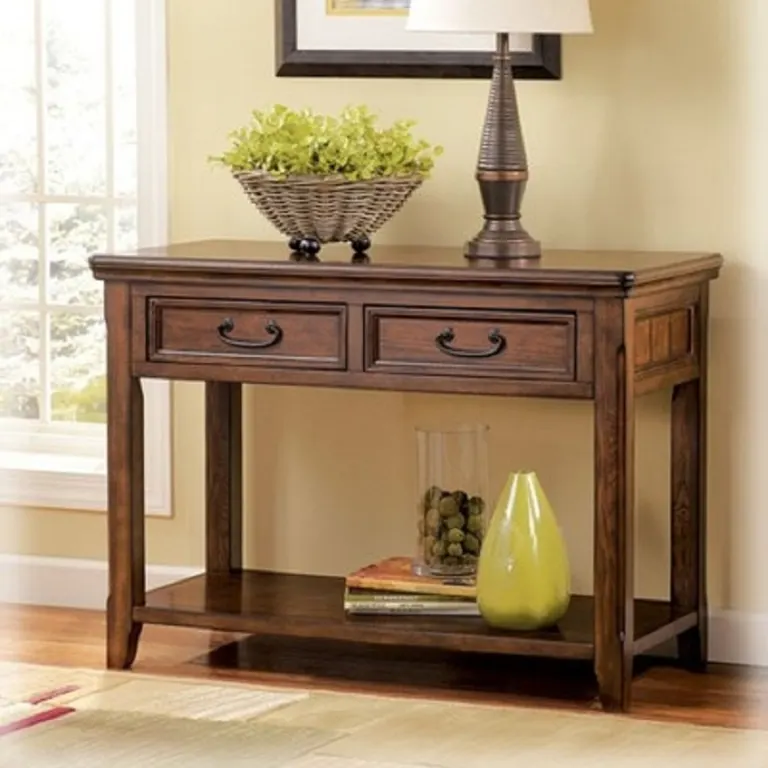
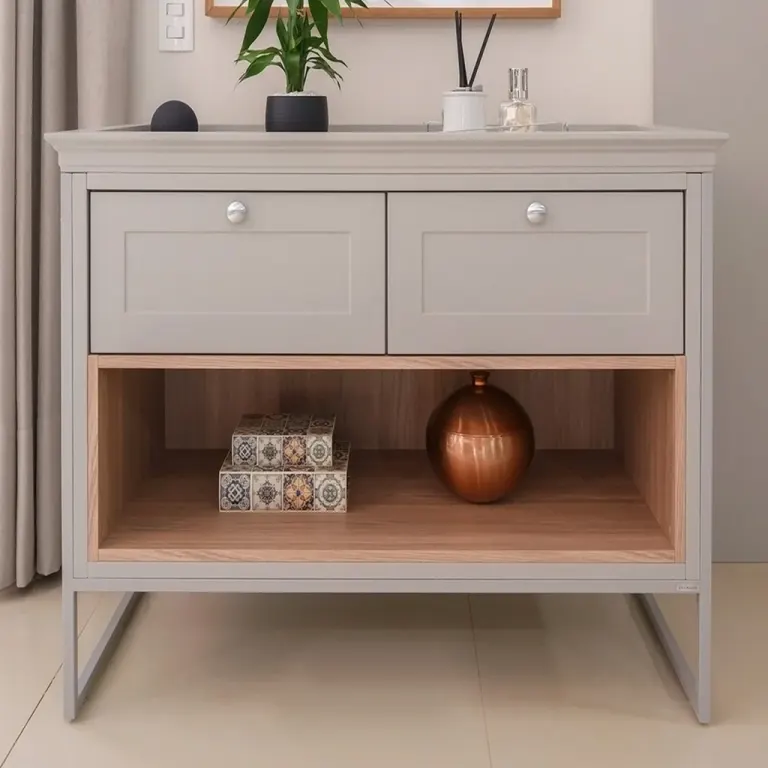
Console table stability is decided long before a piece reaches the hotel: it comes from the footprint, the leg-to-top connection and, where needed, a discreet wall fixing. A slim console is, by nature, a tall and narrow object, so it needs deliberate engineering to cope with guests who lean on it, sit on it or drop a suitcase beside it. This article explains what makes a custom wooden console steady in daily hospitality use, and what to ask your manufacturer.
Why slim consoles are a stability challenge
A console is usually shallow, often 30 to 40 cm (12 to 16 in) deep, and 75 to 90 cm (30 to 35 in) high. That ratio of height to depth leaves little margin against sideways or forward forces. In a hotel, those forces are real and repeated.
Typical situations include:
- Guests leaning on the top while checking a phone or signing a form.
- Luggage trolleys or vacuum cleaners knocking the legs.
- Children pulling on the front edge or on open drawers.
- Heavy decor, lamps or trays placed at one end of the top.
Stability is therefore a question of safety and of long-term appearance, because a wobbling piece is the first thing guests and inspectors notice.
The three things that decide stability
Whatever the design, three factors work together. If one is weak, the others have to compensate.
- Footprint: how far the legs or base extend relative to the height and the top.
- Connections: how the legs, rails and top are joined.
- Fixing: whether the piece is anchored to the wall or floor.
Leg design and footprint
Leg position and splay
Legs set well inside the corners of the top make a piece easier to tip when force is applied at the edge. Setting the legs closer to the corners, or slightly splaying them outwards, widens the effective footprint without changing the look much. For a deeper look at proportion, see the notes on top overhang and leg setback in our related guides.
Leg styles compared
| Base type | Stability behaviour | Points to watch |
|---|---|---|
| Four tapered legs | Good if joined to a rigid apron; weaker if legs attach to the top only | Racking sideways under push |
| Turned legs | Stable with a thick top block at the joint | Thin necks at the joint can crack |
| Sled base | Wide ground contact; resists forward tipping well | Needs accurate levelling on the floor |
| Panel or slab ends | Very stable; large glued area | Weight and wood movement across the grain |
For narrow pieces, panel or sled bases generally give the most margin, while four-leg designs need more attention to the connections.
Leg joint construction
Leg joint construction is where most wobble begins. A leg that is only screwed into the underside of a thin top will loosen over time, because the load acts as leverage on the fixing. A well-built piece spreads that load through a frame.
Common joint types
- Mortise and tenon: the leg or rail has a tongue that fits into a slot, glued and sometimes pinned. It resists racking very well and is a standard choice for solid wood frames.
- Dowel joints: round hardwood pins align and strengthen glued joints. They work well when the number, diameter and depth of dowels are suited to the load.
- Corner blocks and bracing: glued and screwed blocks inside the apron stiffen the corners of the frame.
- Bolt-and-insert fixings: metal inserts with machine bolts allow knock-down assembly. They are practical for export but need sufficient wood around the insert and a rigid frame.
The apron or rail frame
An apron, which is the frame directly under the top, ties the legs together at the point where forces are greatest. Even a slim apron makes a visible difference to rigidity compared with legs fixed to the top alone. If a design has no apron, ask how the manufacturer provides rigidity, for example through a thicker top, a hidden steel plate or a back rail.
Wood movement and glue lines
Timber expands and contracts with humidity, which matters for pieces shipped across climates. Kiln-dried wood, sensible grain direction and joints that allow for movement reduce the chance of cracks and loosened joints. Our related articles on moisture content and panel construction cover this in more detail.
Wall anchoring furniture: when and how
Wall anchoring furniture is the simplest way to remove tip-over risk for tall or narrow pieces. In hotels, it is often combined with a stable base rather than used instead of one. Requirements differ by country and by operator, so check local regulations and brand standards for your project.
Common anchoring methods
- Back rail with wall screws: a solid rail at the rear of the console is fixed to the wall through the rail, with the screw heads hidden by the top or a small cover.
- French cleat or mounting plate: a profile fixed to the wall that interlocks with a matching profile on the piece. It is neat and allows lift-off for maintenance.
- Anti-tip brackets: small metal angles or straps connect the rear of the piece to the wall. They are simple and suitable for retrofit work.
- Floor fixing: sometimes used for pieces in public areas, where the floor construction allows it.
Match the fixing to the wall
The correct plug or anchor depends on the wall type: masonry, concrete, plasterboard on studs or a timber-framed partition. A strong fixing in a weak wall is still a weak fixing. Tell your manufacturer what the walls are made of, and agree with the contractor where reinforcement or blocking is needed behind finishes. If the wall has a skirting board, the rear of the console may need a notch or a spacer so the piece sits flush.
Wobbly table fix: what a contractor can do on site
Even well-made furniture may wobble after delivery because floors are rarely perfectly flat. A wobbly table fix usually starts with diagnosis rather than adding fixings.
- Check whether the floor is uneven. If so, use adjustable feet or levelling glides, which should be specified at design stage.
- Check whether the frame has racked. Push the piece diagonally; if it moves, the joints may need re-gluing or corner blocks.
- Check any knock-down bolts and tighten them to the maker's instructions.
- Check the wall fixing, and make sure the piece is not being held out of true by a skirting board or an uneven wall.
For persistent problems, a repair is better made by someone who can see the construction than by adding random brackets. Report the issue to the supplier with photos so the cause can be identified.
Load and use: what to specify
Define the intended use before design is frozen. A decorative console in a corridor needs different performance from one that guests lean on at a check-in point. Ask the factory to confirm the construction against your expected loads, and request a test or demonstration on the sample if the piece is critical. Do not assume that every slim console is built for the same loads; details of weight limits and load testing are covered in a separate article.
Useful items to include in your specification:
- Overall dimensions and the position of the legs relative to the top edge.
- Joint types between legs, rails and top.
- Wall anchoring method and the wall construction.
- Levelling feet, if floors are uneven.
- Whether the piece ships assembled or knock-down.
Check stability on the sample
The sample is the right moment to test. Press on each corner of the top, push the piece sideways, and apply light downward pressure at the front edge. Look for movement in the joints, noise and flex in the top. Fix any weakness before mass production, because it is far cheaper to change one sample than hundreds of finished pieces.
Planning for export and worldwide delivery
We produce custom wooden consoles to order in our own factory in Istanbul and ship worldwide. For export, joint choice also affects packing: fully assembled frames are the most rigid, while knock-down pieces save volume but depend on correct assembly on site. We can discuss which approach fits your freight terms, your installation team and your anchoring plan.
Next step
If you are planning console tables for a hotel, send us your drawings, wall details and quantities. We will review the stability requirements together with the design and propose joinery, leg and anchoring options suitable for your project.
Sıkça Sorulan Sorular
Do hotel console tables need to be fixed to the wall?
Not always, but it is common for slim or tall pieces in guest areas. Requirements depend on local regulations, brand standards and the piece's proportions. A stable base and a discreet wall fixing together give the most reliable result. Confirm the requirement for your project with the operator and the contractor.
What causes a console table to wobble?
The usual causes are loose leg joints, a frame without an apron, uneven floors and loosened knock-down bolts. Sometimes a skirting board or uneven wall holds the piece out of true. Identify the cause first, then re-glue, tighten, level or re-anchor as needed.
Which leg joint is strongest for a wooden console?
Mortise and tenon joints, glued and well fitted, are widely regarded as very resistant to racking in solid wood frames. Dowel joints with corner blocks also perform well. The best choice depends on the design, timber and load, so ask your manufacturer to explain their construction.
Can knock-down consoles be as stable as assembled ones?
They can be, if the frame is rigid and the inserts and bolts are well designed and tightened correctly on site. Assembled frames are generally the most rigid, while knock-down saves freight volume. Wall anchoring can add extra security in both cases.
How do I fix a console table on an uneven floor?
Adjustable feet or levelling glides are the standard solution. They should be planned at design stage so the base detail stays neat. Fixing the piece to the wall afterwards helps keep it in position, but it should not be used to pull a twisted frame into line.
Every hotel project is different. Send us your drawings or room schedule for a tailored proposal on materials, lead time and shipping.