
Anatolia’s Woodworking Powerhouses: Regional Manufacturing Clusters, Quality Assurance Engineering, and Global Export Architecture for Distressed Solid Wood TV Units in Turkey
Selecting the right manufacturing partner in Turkey is never a one-size-fits-all decision. Across Anatolia and Thrace, furniture production is organized into highly specialized industrial ecosystems, each shaped by distinct historical lineages, timber supply corridors, machinery investments, and labor skill sets. Mapping these industrial geographies alongside institutional quality-assurance protocols is the core objective of Anatolia’s Woodworking Powerhouses: Regional Manufacturing Clusters, Quality Assurance Engineering, and Global Export Architecture for Distressed Solid Wood TV Units in Turkey.
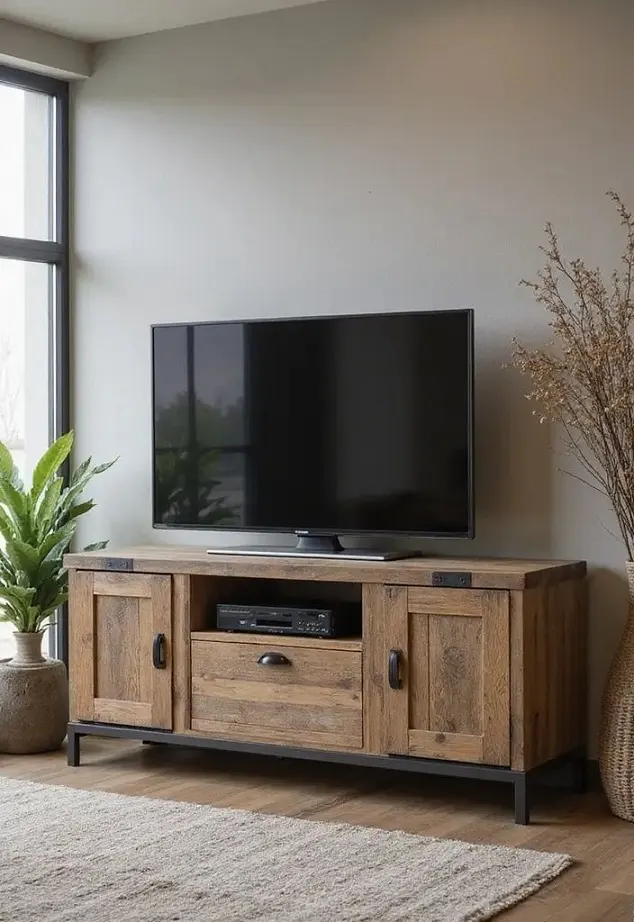
Over the last decade, global retail buyers, hospitality procurement directors, and wholesale distributors have increasingly turned to Turkey for distressed solid wood media consoles—seeking an alternative to long Asian lead times and punitive tariffs. However, an importer sourcing bespoke, hand-carved Anatolian walnut credenzas for a five-star London hotel faces entirely different engineering and logistical realities than an e-commerce distributor ordering twenty containers of ISTA-3A boxed rustic oak TV stands for North American parcel delivery. By dissecting the operational DNA of İnegöl, Ankara (Siteler), Kayseri, İstanbul, and İzmir—and pairing that regional intelligence with rigorous wood science, spectrophotometric color governance, and international customs frameworks—Anatolia’s Woodworking Powerhouses: Regional Manufacturing Clusters, Quality Assurance Engineering, and Global Export Architecture for Distressed Solid Wood TV Units in Turkey equips industry leaders with a comprehensive operational manual.
1. Comparative Anatomy of Turkey’s Five Furniture Manufacturing Clusters
To optimize unit economics, lead times, and artisanal fidelity when navigating Anatolia’s Woodworking Powerhouses: Regional Manufacturing Clusters, Quality Assurance Engineering, and Global Export Architecture for Distressed Solid Wood TV Units in Turkey, buyers and exporters must understand the technical capabilities of each primary region.
1. İnegöl (Bursa): The Vertically Integrated Export Capital
Situated roughly 45 kilometers east of Bursa and within immediate highway reach of the Osmangazi Bridge and Gemlik container ports, İnegöl is the undisputed engine of Turkish furniture exports.
• Industrial Infrastructure: Anchored by the İnegöl Organized Industrial Zone (İnegöl OSB), factories here operate on a vertically integrated model. Leading plants import rough-sawn American White Oak and European Ash directly in 40-foot containers, run their own computer-controlled vacuum drying kilns, mill staves on German Weinig lines, apply multi-step distressed finishes on Italian Cefla spray lines, and print custom corrugated cartons in-house.
• Artisanal vs. Industrial Balance: İnegöl excels at repeatable artisanal scale—producing 50 to 500 identical distressed solid wood TV units per batch while preserving hand-rubbed glaze depth and authentic wire-brushed texture.
• Primary Export Markets: Western Europe (Germany, France, UK, Netherlands), North America, and Gulf Cooperation Council (GCC) states.
2. Ankara (Siteler): The Bespoke Hand-Craftsmanship Ecosystem
Located in the Turkish capital, Siteler is one of the largest concentrated woodworking districts in Eurasia, comprising thousands of specialized workshops, master carvers, hardware foundries, and custom finishing studios.
• Industrial Infrastructure: Rather than massive automated assembly lines, Siteler operates as an agile network of specialized artisans (ustalar). One workshop handles kiln-dried Anatolian chestnut and walnut milling, another executes traditional mortise-and-tenon joinery and hand-gouged distressing, a foundry casts custom antique brass ring pulls, and a master finisher applies multi-layer chemical fuming and hand-waxed patinas.
• Artisanal vs. Industrial Balance: Unmatched customization and zero rigidity. Siteler is the premier destination for one-off architectural prototypes, luxury boutique retail collections, and bespoke hospitality FF&E (Furniture, Fixtures, and Equipment) contracts where minimum order quantities (MOQs) may be as low as 1 to 15 pieces.
3. Kayseri: High-Volume Industrial & Mixed-Material Engineering
Located in Central Anatolia, Kayseri is home to Turkey’s largest industrial furniture conglomerates and high-capacity metal-and-wood production facilities.
• Industrial Infrastructure: Kayseri manufacturers operate sprawling automated plants exceeding 50,000 square meters, leveraging high-throughput CNC nesting routers, automated powder-coating steel fabrication lines, and aggressive raw material purchasing power.
• Artisanal vs. Industrial Balance: Kayseri dominates the rustic-industrial and transitional hybrid segment—pairing wire-brushed solid pine, larch, or oak tops and drawer fronts with laser-cut, matte-black welded steel frames and sliding barn-door tracks.
• Primary Export Markets: Mass-market European catalog retailers, big-box home improvement chains, and price-competitive wholesale importers shipping via Mersin International Port.
4. İstanbul (Masko, Modoko & Tuzla/Hadımköy Industrial Zones)
İstanbul functions simultaneously as Turkey’s commercial design capital and a high-precision manufacturing hub for upscale contemporary-rustic casegoods.
• Industrial Infrastructure: While Masko and Modoko host expansive B2B export showrooms, manufacturing facilities in Hadımköy, Tuzla, and nearby Gebze/Kocaeli specialize in high-design Modern Organic, Wabi-Sabi, and Smart-Integrated solid wood TV units. Proximity to Ambarlı and Haydarpaşa ports enables rapid LCL (Less-Than-Container-Load) consolidation and air-freight sample dispatch.
5. İzmir & The Aegean Cluster: Coastal Aesthetics and Direct Port Velocity
Concentrated around Karabağlar, Torbalı, and Manisa, Aegean manufacturers leverage immediate proximity to deep-water container terminals in Aliağa (Nemport, SOCAR) and İzmir Alsancak.
• Industrial Infrastructure: Aegean factories specialize in bleached, sun-weathered, cerused (limed), and iron-acetate driftwood finishes on solid oak and ash, catering heavily to Mediterranean, French coastal, and Californian interior design aesthetics while eliminating inland trucking costs to Marmara ports.
Regional Cluster Matrix for B2B Procurement
Cluster Location Core Product Specialty Typical MOQ (Per SKU) Primary Export Ports Ideal Buyer Profile
İnegöl (Bursa) Export-grade solid oak/chestnut consoles, repeatable hand-glazing 20 – 50 units Gemlik (Gemport / Borusan), Ambarlı Mid-to-high-end retail chains, DTC e-commerce brands
Ankara (Siteler) Bespoke solid walnut/chestnut, hand-carved & custom patinas 1 – 15 units Mersin, Ambarlı, Air Freight (ESB/IST) Luxury interior designers, 5-star hotel projects
Kayseri Rustic-industrial solid wood + steel frames, high-volume SKUs 50 – 150 units Mersin International Port Volume wholesalers, mass-market retail distributors
İstanbul / Kocaeli Modern Organic, smart-tech integration (Qi/acoustic doors) 15 – 40 units Ambarlı (Marport / Kumport), Gebze Design-led boutiques, European omnichannel brands
İzmir / Aegean Coastal cerused/bleached oak & ash, rattan-accented consoles 25 – 60 units Aliağa (Nemport / SOCAR), Alsancak Mediterranean & North American coastal retailers
2. Timber Import Supply Chains and Raw Material Metallurgy
A foundational pillar of Anatolia’s Woodworking Powerhouses: Regional Manufacturing Clusters, Quality Assurance Engineering, and Global Export Architecture for Distressed Solid Wood TV Units in Turkey is how Turkish manufacturers source, import, and stabilize timber before a single distressing tool touches the wood.
Strategic Dual-Sourcing: Domestic OGM Hardwoods vs. Imported Lumber
Because Turkey’s General Directorate of Forestry (Orman Genel Müdürlüğü - OGM) enforces strict sustainable harvest quotas to protect domestic ecosystems, Turkish manufacturers balance domestic timber auctions with large-scale international lumber imports:
• Domestic Anatolian Hardwoods: Harvested from Black Sea and Marmara forests via OGM electronic auctions, Anatolian Chestnut (Castanea sativa), Turkish Oak (Quercus petraea), and Steamed Beech (Fagus orientalis) provide exceptional density and high tannin concentrations ideal for reactive chemical weathering.
• Imported North American & European Lumber: Rough-sawn, kiln-dried American White Oak (Quercus alba), American Black Walnut (Juglans nigra), European Oak (Quercus robur), and Siberian Larch enter Turkey under HS Code 4407 through Mersin, Gemlik, Ambarlı, and Black Sea ports.
• Duty-Free Raw Material Leverage (DİR): Under Turkey’s Inward Processing Regime (Dahilde İşleme Rejimi - DİR), export factories import American White Oak lumber, European birch plywood, and Austrian/German soft-close hardware 100% free of customs duties and 20% Value Added Tax (KDV), provided the finished distressed solid wood TV units are exported within the authorized timeframe.
Wood Anatomy and Moisture Equilibrium Thermodynamics
Solid wood TV units face severe structural demands: supporting 60 to 90 kg televisions across wide horizontal spans while enduring dramatic temperature and humidity shifts inside ocean containers and centrally heated homes.
• Precision Kiln Calibration: Turkish factories dry all timber in automated vacuum or steam kilns to 7.5% ± 0.5% Moisture Content (MC) for North American and Northern European destinations, and 9.5% ± 0.5% MC for Mediterranean and Middle Eastern markets.
• Stress-Relief Conditioning: Prior to exiting the kiln, timber undergoes high-humidity steam equalization to eliminate shell-to-core moisture gradients and prevent case-hardening—ensuring boards do not bow or split during ripping and planing.
• Balanced Stave Construction: Planks are ripped into narrow 50–80 mm staves and edge-glued with alternating growth-ring orientations using EN 204 D4 waterproof polyurethane adhesives, neutralizing transverse cupping forces. Undersides of wide tops are routed to accept hidden galvanized steel C-channels mounted via slotted screw holes, preventing span deflection while permitting cross-grain wood movement.
3. Advanced Quality Assurance Engineering & Spectrophotometric Color Governance
In distressed solid wood furniture, quality control requires distinguishing intentional artisanal character from structural or finishing defects. Within Anatolia’s Woodworking Powerhouses: Regional Manufacturing Clusters, Quality Assurance Engineering, and Global Export Architecture for Distressed Solid Wood TV Units in Turkey, tier-one factories deploy scientific measurement tools alongside physical inspection gates.
D65 Standardized Lighting and Spectrophotometric Tolerance
Hand-wiped glazes, ammonia fuming, and iron-acetate tannin stains interact differently with every plank depending on heartwood-to-sapwood ratios and grain density. While natural variation is desirable, excessive tonal drift causes retail floor mismatches and customer returns.
1. Three-Panel Control Range Boards: Before mass production begins, the buyer and factory sign off on a physical three-panel range board displaying the Lightest Acceptable, Target Ideal, and Darkest Acceptable stain tones, wire-brush depth, and wormhole density.
2. D65 Daylight Inspection Booths: During Final Random Inspection (FRI), QC engineers evaluate finished TV units side-by-side inside calibrated D65 artificial daylight booths (6500K color temperature)—eliminating the warm yellow distortion of standard factory sodium or LED warehouse lighting.
3. Gloss Meter Verification: Digital 60-degree gloss meters verify that matte polyurethane or hardwax oil topcoats fall strictly within contracted sheen tolerances (typically 6 to 12 gloss units for dead-matte distressed finishes).
Structural, Mechanical, and Chemical Testing Protocols
Export-ready Turkish factories subject production samples to rigorous mechanical stress testing:
• Static Top-Load Deflection Test: A distributed static load of 85 kg is placed across the center of a 200 cm TV unit top for 72 hours; permanent deflection must not exceed 1.5 mm.
• Drawer Cycle & Slide Endurance: Soft-close undermount drawer boxes (loaded with 20 kg of weights) undergo 25,000 automated open-close cycles to verify dovetail joint integrity and slide damping performance.
• Cross-Hatch Adhesion Test (ISO 2409 / ASTM D3359): A multi-blade lattice cutter scores the cured 2K polyurethane finish down to the wood substrate, followed by high-tack tape pull testing—verifying Class 0 / 5B adhesion with zero flaking around distressed edges or wire-brushed valleys.
4. Container Thermodynamics, Moisture Control, and ISTA-3A Packaging
A major hidden risk in exporting distressed solid wood TV units from Turkey is "container rain"—condensation forming inside sealed steel shipping containers during ocean voyages across contrasting climate zones (for example, loading in mild autumn Bursa and arriving in freezing winter Hamburg or New York).
Preventing Hygroscopic Damage at Sea
1. Container Floor Moisture Verification: Prior to loading, inspectors measure the wooden container floor with a pin moisture meter; any container with floor moisture exceeding 14% is rejected to prevent humidity buildup.
2. Calcium Chloride Desiccant Engineering: Loaders suspend eight to ten 1.5 kg calcium chloride desiccant poles along the upper side-wall lashing rings of a 40' High Cube container. Unlike standard silica gel, calcium chloride absorbs up to 300% of its weight in airborne moisture and traps it as a thick non-drip gel, keeping interior container relative humidity safely below 50% throughout a 25-day voyage.
3. Breathable Micro-Foam & Vapor-Balanced Cartons: Units are wrapped in non-abrasive 2 mm EPE foam sheeting rather than sealed plastic shrink-wrap—allowing the wood to breathe gently without trapping localized condensation against the finish film.
ISTA-3A Drop-Test Packaging Architecture
To survive international sea freight and domestic parcel/LTL networks with zero corner crushing:
• 40 mm High-Density EPE Perimeter Frames: Die-cut closed-cell polyethylene foam (≥ 28 kg/m³) cushions all six faces and eight corners of the console.
• Honeycomb Top Armor: A 5 mm double-wall corrugated honeycomb shield protects the distressed tabletop from puncture impacts.
• 7-Ply Triple-Wall Kraft Cartons: Heavy-duty virgin kraft outer boxes (bursting strength ≥ 400 lbs/sq.in) reinforced with heat-sealed polypropylene straps, printed with clear center-of-gravity icons, two-person team-lift warnings, and GS1/UPC barcodes.
5. Global Trade Compliance, Tariffs, and Documentation Architecture
Executing seamless cross-border shipments within Anatolia’s Woodworking Powerhouses: Regional Manufacturing Clusters, Quality Assurance Engineering, and Global Export Architecture for Distressed Solid Wood TV Units in Turkey requires precision customs documentation:
• Tariff Classification (HS Code 9403.60): Distressed solid wood TV units and media consoles classify under HS 9403.60 (Other wooden furniture, of a kind used in dining rooms and living rooms).
• 0% EU Import Duty (A.TR Movement Certificate): Under the EU-Turkey Customs Union, Turkish-manufactured solid wood TV units enter all 27 EU member states completely duty-free (0%) when accompanied by a customs-validated A.TR certificate.
• 0% UK & EFTA Import Duty (EUR.1 / Origin Declaration): Preferential free trade agreements grant 0% tariff entry into Great Britain, Switzerland, and Norway.
• 0% US Import Duty & Section 301 Immunity: Unlike Chinese wooden furniture burdened by 25% Section 301 punitive tariffs, Turkish wooden living room furniture (HTSUS 9403.60.8081) enters the United States at the standard Most Favored Nation (MFN) rate of 0% (Free).
• EUDR & FSC® Chain-of-Custody: Export-certified factories provide complete EU Deforestation Regulation (EUDR) polygon geolocation coordinates proving zero deforestation after December 31, 2020, alongside FSC® CoC and US Lacey Act (PPQ Form 505) botanical species declarations.
Frequently Asked Questions (FAQ)
Which Turkish furniture cluster is best for importing distressed solid wood TV units?
İnegöl (Bursa) is best for repeatable, mid-to-high-end retail and e-commerce volume (20–500+ units per SKU) thanks to vertically integrated kilns and modern finishing lines. Ankara (Siteler) is ideal for low-MOQ bespoke solid walnut/chestnut luxury pieces, while Kayseri excels at high-volume rustic-industrial wood-and-steel units.
How do Turkish exporters prevent solid wood furniture from warping or molding inside shipping containers?
Factories kiln-dry timber to 7.5% ± 0.5% moisture content, reject shipping containers whose wooden floors exceed 14% moisture, wrap units in breathable EPE micro-foam rather than sealed plastic, and hang calcium chloride desiccant poles inside the container to prevent condensation ("container rain") during ocean transit.
What customs documents are needed to import Turkish solid wood TV units into Europe or the US duty-free?
For the European Union, a validated A.TR Movement Certificate grants 0% customs duty. For the UK and EFTA countries, a EUR.1 certificate or approved exporter origin declaration secures 0% duty. For the United States, a standard Certificate of Origin and Lacey Act declaration (PPQ Form 505) allow entry under the 0% MFN tariff rate (HTSUS 9403.60.8081).
How is color consistency maintained on hand-distressed solid wood finishes across repeat orders?
Top Turkish factories use signed Three-Panel Control Range Boards (showing lightest, target, and darkest acceptable tones) and inspect every batch inside D65 standardized artificial daylight booths (6500K) alongside digital 60-degree gloss meters before approving container loading.


